
In my years of practice, I have lost count of how many patients walked into my hospital asking for help with a drinking problem, only for us to discover something deeper sitting underneath it. A quiet depression. An anxiety that never really goes away. Trauma from years ago that nobody ever asked them about.
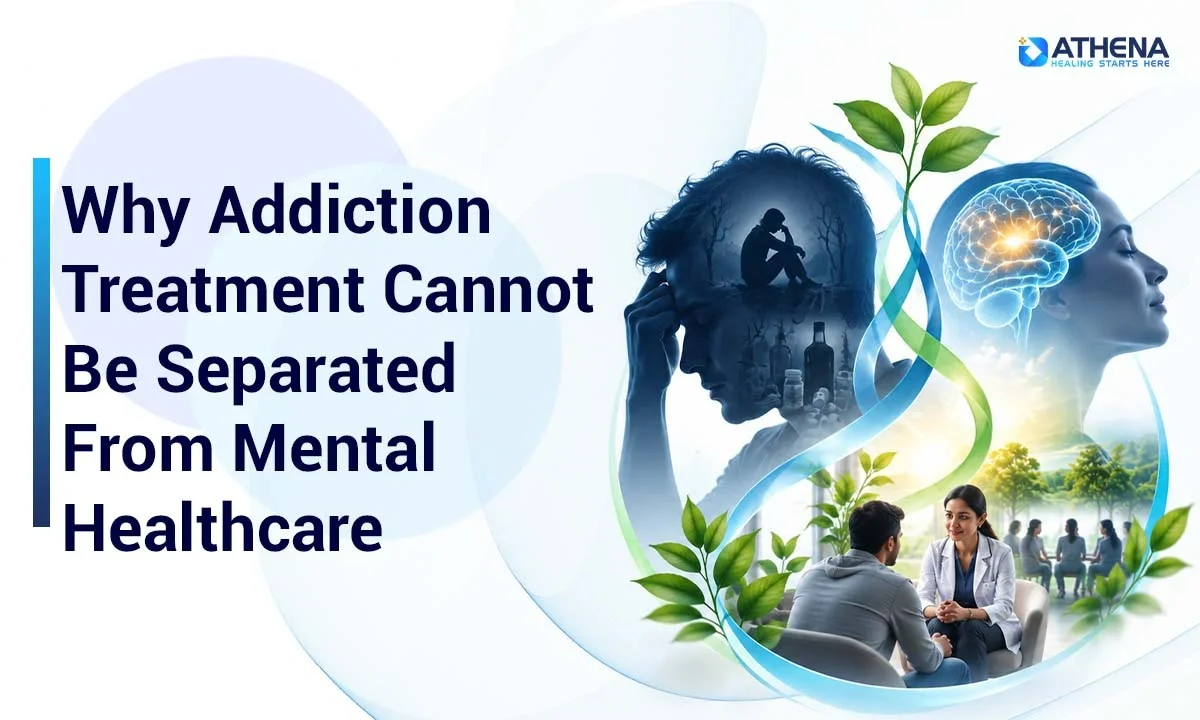
This is the pattern I see again and again, and it is the reason I want to talk openly about something the addiction treatment industry has ignored for far too long. You cannot treat addiction without treating the mind behind it.
Addiction treatment and mental healthcare are often placed in two different boxes, two different departments, two different specialists, sometimes even two different buildings. But in the human body, and more importantly in the human brain, they were never separate to begin with. A patient does not stop being anxious the moment they stop drinking. A patient does not stop feeling depressed the moment they detox from drugs. If anything, those feelings often become louder once the substance is gone.
How Many People Actually Have Both An Addiction And A Mental Illness
Here is something most patients and families are never told clearly. Addiction almost never comes alone. In most cases, there is a mental health problem sitting right next to it, whether or not anyone notices it. Once you look at the numbers below, it becomes easy to understand why treating just the addiction is not enough.
- Approximately 21.2 million adults in the US suffer from co-occurring disorders such as mental illness and substance use. (SAMHSA, 2024 NSDUH)
- Of all adults suffering from any kind of mental illness, 34.5% also suffer from substance use disorder. (SAMHSA, 2024 NSDUH)
- For adults having a serious mental illness, this figure is even higher as it rises to 47.3%. (SAMHSA, 2024 NSDUH)
- Around 41.2% of those suffering from co-occurring disorder do not receive any treatment for either of them. (SAMHSA, 2024 NSDUH)
- 14.5% of those having both disorders receive treatment for the dual diagnosis simultaneously. (SAMHSA, 2024 NSDUH)
- 94-96% of all adults having a gambling problem also have another type of mental health problem as well. (NY Council on Problem Gambling)
- In India, around 86% of adults in need of assistance for substance abuse are not treated properly. (NMHS 2015-16)
Even though mental health awareness in India has grown a lot, addiction is still one of the most ignored conditions in the country, more ignored than depression or anxiety.
Why Rehab Alone Often Doesn't Work Without Mental Health Treatment?
Detox handles the body. It does very little for the mind, and this gap has been measured directly in clinical studies.
One study followed patients recovering from alcohol use disorder for four months. Those without a co-occurring anxiety disorder had a relapse rate of about 21 percent. Those whose anxiety disorder went untreated alongside the addiction relapsed at over 50 percent in the same window.
Another study, tracking a similar group over six months, found relapse under 40 percent for patients without an untreated mental health treatment condition, and above 70 percent for patients whose depression or anxiety was left unaddressed.
That gap between 21 and 70 percent relapse is the entire argument for why addiction treatment cannot function without mental healthcare sitting right beside it.
Is Addiction Only About Alcohol And Drugs
Alcohol and drugs get most of the attention, but addiction is a much wider category. Clinically, it includes any compulsive behavior a person cannot stop despite ongoing harm, because the brain's reward pathway has adapted to depend on it.
Type of Addictions | Mental Health Condition Most Commonly Linked To It |
Alcohol addiction | Depression, anxiety, trauma, insomnia |
Drug addiction (opioids, stimulants, cannabis) | Depression, anxiety, PTSD, bipolar disorder |
Prescription medication misuse | Chronic anxiety, unresolved pain, insomnia |
Gambling addiction | Depression (about 70 percent), anxiety (about 41 percent) |
Internet or smartphone addiction | Social anxiety, loneliness, low self-esteem |
Gaming addiction | ADHD, depression, social withdrawal |
Nicotine addiction | Anxiety, chronic stress |
Food addiction and binge eating | Depression, anxiety, body image distress |
Shopping addiction | Anxiety, low self-worth |
There is no row on this table where the addiction stands alone. That pattern is exactly why dual diagnosis treatment needs to be the default approach, not a special add-on offered only to complicated cases.
What Is Dual Diagnosis Treatment And What Does It Include?
Dual diagnosis is defined as treating the addiction and the psychiatric condition concurrently, using the same professional and medical staff in the hospital as opposed to dealing with one while leaving the other to resolve itself.
- Components used in creating a proper dual diagnosis treatment protocol by hospitals include:
- A psychiatric evaluation conducted during admission together with the addiction assessment rather than several weeks later.
- Medications for cases of depression, anxiety, bipolar disorder or post-traumatic stress disorder combined with careful coordination with detoxification.
- One-on-one therapy, which could be CBT or DBT, which deals with both addiction behavior and its underlying emotional cause.
- Group therapy where patients realize that they are not battling two different battles alone.
- Family therapy because addiction and the psychiatric illness will alter family dynamics besides those of the patient.
- Structured aftercare long after discharge.
These are clearly measurable results. According to a study that involved 804 patients undergoing treatment for alcohol abuse and a mental illness in a residential setting, 68 percent were in remission 12 months later and there had been an 88 percent reduction in days of intoxication compared to when the treatment was initiated.
Do I Need Dual Diagnosis Treatment or Regular Rehab?
Families often ask how to know if a standard rehab program will be enough, or if something more integrated is required. If two or more of the following apply, a dual diagnosis assessment is worth pursuing before enrolling anywhere.
- Repeated attempts to quit followed by returning to the same substance or behavior.
- Mood symptoms, anxiety, depression, or emotional instability that predate the addiction.
- Addiction that visibly worsens during stressful or emotionally difficult periods.
- Little relief from low mood or anxiety even during periods of sobriety.
- A previous rehab stay that worked briefly, followed by relapse within weeks or months.
- A family history involving both addiction and mental illness.
My Honest Take On Why This Gets Missed So Often
When a hospital treats alcohol addiction treatment or drug addiction and does not ask a single question about your past, your sleeping habits, your moods, and the history of mental illnesses in your family, then their treatment plan is inadequate. It might be effective for some time, but it operates with only half the information.
And I say the same thing to all families. The brain keeps the trauma that drove someone into addiction in the same file as the addiction. It is one file. So separating the process of treatment into two teams that communicate almost never is not consistent with the reality of the problem.
How To Choose The Right Addiction Treatment Hospital
What To Checks | Why It Matters |
Psychiatric evaluation alongside addiction assessment | Prevents a co-occurring condition from being missed |
One shared treatment plan across specialists | Avoids fragmented or conflicting care |
Medication management for both withdrawal and psychiatric symptoms | Reduces complications in early recovery |
Family therapy built into the core program | Strongly linked to better long-term outcomes |
Structured aftercare beyond discharge | Recovery does not end the day treatment ends |
How Athena Behavioral Health Approaches Dual Diagnosis Care
I have worked closely with hospitals that treat this as a checkbox exercise, and I have seen how differently things play out at a place like Athena Behavioral Health, where integrated care is not an add-on service offered to a few complicated cases. It is simply how every treatment plan is built from the start, with the addiction specialist and the psychiatrist reading from the same file instead of updating two separate ones.
Here is what that actually looks like on the ground, in numbers families can verify.
Parameters | Details |
Accreditation | NABH accredited, with more than 50,000 patients treated to date |
Treatment completion rate | 91%, well above the 70 to 85 percent seen globally |
Doctors' training background | AIIMS and NIMHANS |
Family participation rate | 98% of families actively involved in treatment |
Hospital locations | Gurgaon (male), Athena OKAS-Gurgaon (female only), Athena LUXUS-Delhi, Noida, Guwahati |
Out of everything on this list, the 91 percent completion rate is the number that tells me the most about dual diagnosis treatment. Over the years, I have noticed patients rarely leave treatment because the clinical protocol has failed them. They leave because the environment feels impersonal, or because only one part of what they are struggling with is being addressed while the rest waits. A model built around both the addiction and the mind behind it, with families involved every step of the way, is what closes that gap.
My Advice To Patients And Families
If someone you love is struggling with any form of addiction, alcohol, drugs, gambling, gaming, food, or anything else, please do not settle for a program that only looks at the addiction. Ask the hard questions. Look for hospitals, such as Athena Behavioral Health, that are actually built around treating the mind and the addiction together, not just claiming to on a website.
Recovery is not just about stopping a substance or a behavior. It is about becoming whole again. And you cannot get there while one half of your health is left completely unattended.