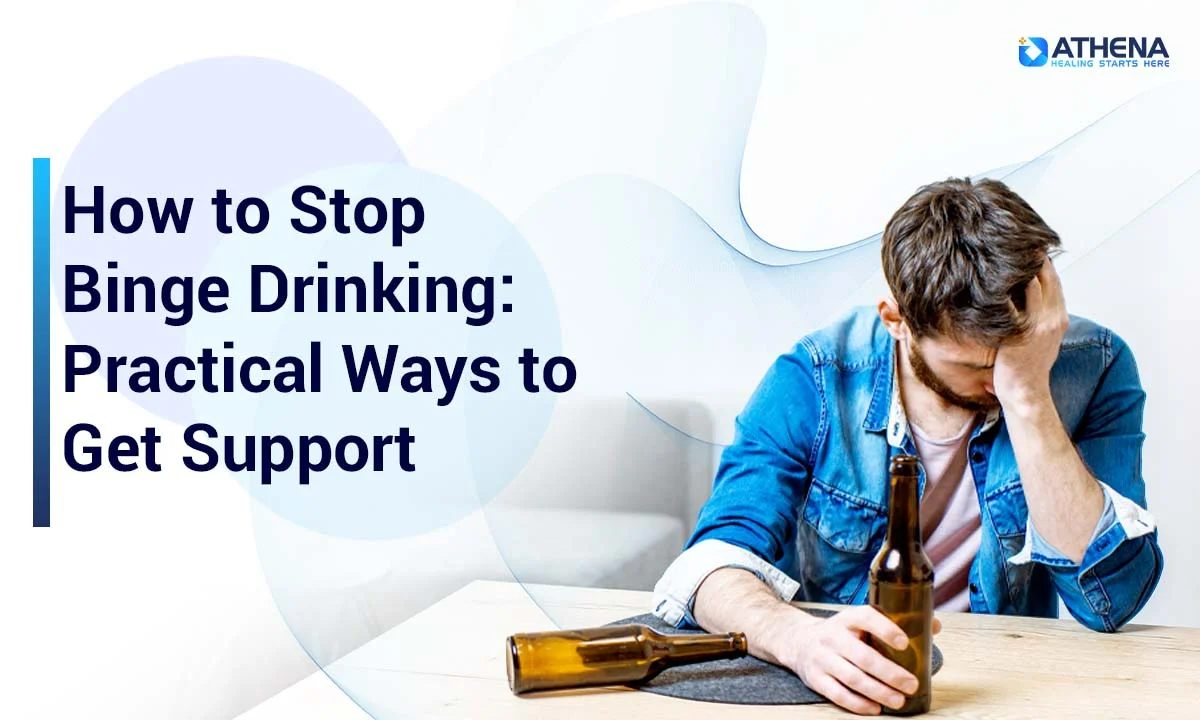

If you have ever promised yourself “just two drinks” on a Friday night, then woken up on Saturday with a pounding head and wondering how to stop binge drinking, you are far from alone. The problem frequently begins with just catching up with friends, having a game day, or relaxing at the end of a busy week; and before you know it, the tally has silently doubled itself by midnight. Fortunately, this particular habit proves very responsive to a structured approach and appropriate guidance. This guide will explore everything you need to know about binge drinking, including its effects on the body, how to break the cycle in eight steps, and where to get help if necessary.
What is Binge Drinking?
Binge drinking is a form of drinking where you increase the amount of alcohol in your body to 0.08% or higher. It is concerned with the amount of alcohol you drink at one time, not the frequency of your drinking; hence, one can binge drink even if he or she drinks only once in a month. Binge drinking involves drinking five or more drinks within two hours.
How Many Drinks Are Binge Drinking?
The threshold is lower than most people assume, and it differs for men and women. The table shows where moderate, binge, and high-intensity drinking begin.
Drinking levels | Men | Women |
Moderate (per day) | Up to 2 drinks | Up to 1 drink |
Binge drinking (about 2 hours) | 5 or more | 4 or more |
High-intensity drinking (one occasion) | 10 or more | 8 or more |
A standard drink holds about 14 grams of pure alcohol, and many Indian servings count as more than one. Converting your usual order gives a more honest total.
A 650 ml strong beer (8%) is close to 3 drinks.
A 650 ml regular beer (5%) is about 1.8 drinks.
A 60 ml peg of whisky is about 1.3 drinks.
Two large strong beers already take a man to nearly 6 drinks.
What Is Weekend Binge Drinking, and Is It Harmful?
Weekend binge drinking is where a person either refrains from consuming any alcohol throughout the week or binge drinks on Friday, Saturday, and Sunday. The activity might appear innocent in that it happens within a gathering or party or match setting, but your body organs are still going to respond depending on how much you drink regardless of the day. In America, studies have shown that one-sixth of the adult populace binge drinks four times every month with seven drinks consumed on average.
Six drinks or more in a single evening on a Saturday night constitutes binge drinking.
Over half of the total binge drinks happen among individuals aged 35 years or older.
The occasional binge drinker does not realize the issue until it is too late.
What Are the Health Effects of Binge Drinking?
Health impacts of binge drinking begin with one night of excessive drinking and increase with frequency. Binge drinking is associated with more than half of the 88,000 deaths that occur annually due to alcohol consumption. The table categorizes the common effects of alcohol binge drinking depending on their occurrence time.
When | What can happen |
Same night | Blackouts, vomiting, falls, injuries, alcohol poisoning |
Next day | Poor sleep, low mood, anxiety, weak focus |
After many episodes | Liver disease, high blood pressure, heart disease, pancreatitis |
Long term | Higher risk of cancers of the mouth, throat, liver, breast, and colon |
Alcohol also dulls judgment, which raises the risk of road accidents, fights, and unsafe sex.
What Are the Signs of a Binge Drinking Problem?
You do not need to hit rock bottom to change. If alcohol is costing you health, money, or peace of mind, that is reason enough to act. See how many of these sound like you.
You drink more than you planned once you start.
You cannot remember parts of the night.
You feel shaky, anxious, or low the next day.
People close to you have mentioned your drinking.
You have tried to cut down and slipped back.
For a private self-check, the free Rethinking Drinking tool from the US National Institute on Alcohol Abuse and Alcoholism lets you compare your weekly intake with low-risk limits.
How to Stop Binge Drinking: 8 Steps That Work
Since binge drinking is based on habits, stress, and environment, a clear-cut strategy will be more effective than making a general promise to cut down on drinking. Take the following steps in order and allow yourself a few weeks to master each step.
Set a target amount of alcohol before leaving home: Set an amount, say, 2 drinks, and inform a friend.
Count all drinks for 2 weeks: You will realize that you have been underestimating your consumption.
Recognize your triggers: They can include stress, payday, cricket games, particular companies.
Eat first and drink slowly: Drink water after each alcoholic drink.
Go for weaker or smaller amounts: Light beer and peg are less alcoholic but not less fun.
Plan Sunday morning: A visit to the gym or meeting your family will help you to cut drinking short.
Prepare an excuse in advance: "I am driving" or "I am reducing my drinking this month" works well.
Tell your aim to one person: It makes your decision harder to retract once made.
How Do You Control Alcohol Cravings?
Cravings often rise and fade within about 20 to 30 minutes, so the aim is to get through the urge rather than fight it forever. Over time, therapy changes the habit loop itself, because cognitive behavioral therapy rewires your brain to respond differently when a trigger appears. Until that skill builds, small actions can carry you past a strong urge.
Wait 20 minutes before the first drink and do something else.
Start with water or a soft drink.
Step outside, call a friend, or take a short walk.
Notice the thought behind the urge, such as "I deserve a drink," and question it.
What Is the Best Treatment for Binge Drinking?
The best binge drinking treatment depends on how often you binge and what sits behind it. Counselling works well for many people, and those whose drinking is tied to anxiety, low mood, or stress usually do better when that is treated too. A psychiatrist in an outpatient psychiatry setting can assess both without a hospital stay.
Counseling: helps build a personalized treatment plan to address the triggers.
Medical examination: looks at liver, high blood pressure, and sleeping.
Mental Health Treatment: addresses the anxiety or depression causing alcohol consumption.
Programs: provide constant daily help if you binge drink often.
Is It Safe to Stop Binge Drinking Suddenly?
For people who binge now and then, stopping is usually safe. If you drink heavily or daily, quitting overnight can trigger withdrawal, and sometimes it is dangerous. Speak to a doctor first, because medical detoxification under supervision keeps you safe while alcohol leaves your body.
Mild symptoms: trembling hands, sweating, nervousness, lack of sleep, and nausea.
Severe symptoms: confusion, hallucinations, convulsions, or an accelerated heartbeat, which require immediate medical attention.
How Can You Help Someone Who Binge Drinks?
Helping someone close to us can be difficult, and we must be careful with our words.
Select an appropriate time; don't try to talk the next morning after a night gone wrong.
Use words that come out of your concern for them: "You didn't look well yesterday and I was concerned".
Don't preach or threaten or shame.
Be ready to take them to a physician or therapist.
Remember your health as well.
Alcohol Addiction Treatment at Athena Behavioral Health
If the binge drinking habit has evolved to be one that is beyond your control, then treatment can help in speeding up the process. Athena Behavioral Health provides confidential, judgment-free alcohol addiction treatment, starting with an assessment of your drinking pattern, health, and daily life, then a plan built around you.
Assessment conducted by experienced clinicians.
Treatment and counseling tailored to your drinking behavior.
Supervision provided by doctors during detoxification.
Family involvement and relapse prevention after treatment.
Ready to Stop Binge Drinking? Take the First Step Today
You do not have to wait for things to get worse, and you do not have to do this alone. Book a confidential consultation with Athena Behavioral Health today and start a plan that fits your life.