
Best Rehabilitation Centre in Gurgaon
Athena Behavioral Health's Rehabilitation centre in Gurgaon combines medical treatment, psychological support and practical relapse prevention, so patients leave with more than sobriety alone. Recovery is rarely just about stopping a substance. It is about rebuilding a life that no longer needs it.
- Medical Detoxification
- Detailed Psychiatric Evaluation
- Psychotherapy & Counselling
- Mindfulness, Yoga & Wellness
- Aftercare and Relapse Prevention
- In-Patient and Out-Patient Programs
Book Your Appointment
Accredited, Licensed & Trusted Care
Every aspect of our care is backed by proper accreditation and licensing. From patient safety to treatment protocols, we meet the standards that matter most to your family's trust and wellbeing.
NABH Accredited
Our facility follows nationally recognized healthcare standards and strict safety protocols, ensuring every treatment step meets certified clinical benchmarks for quality care.
Licensed by State Mental Healthcare Act, Haryana
We operate under full authorization from the Haryana State Mental Healthcare Act, meeting all regulatory and legal requirements for safe, ethical treatment.
Govt. Licensed De-Addiction Center
As a government licensed centre, we provide structured, medically supervised de-addiction and rehabilitation programs built for lasting recovery and wellbeing.

Rehabilitation Centre in Gurgaon: How Gurgaon's Work Culture Fuels Substance Dependence
Athena Behavioral Health has seen how Gurgaon runs on ambition, and that ambition comes with a cost few people talk about openly. A demanding corporate environment, high pressure targets, frequent networking events built around drinking, and a workforce largely living away from family support systems create conditions where substance use can quietly shift from social habit to daily dependence.
This is why choosing the right alcohol rehabilitation centre in Gurgaon matters more than choosing the nearest one. At Athena, we begin by understanding what led to the dependence in the first place, including work stress, personal history and physical health, rather than jumping straight into a standard program.
If someone you know is showing signs of an overdose or dangerous withdrawal, contact emergency services immediately. This is a medical emergency that cannot wait for a scheduled appointment.
Our Dedicated Treatment Team for Rehabilitation Centre in Gurgaon

Prof. (Dr.) Nimesh G. Desai

Dr. Ashish Mittal

Dr. Rahul Rai

Dr. Supriya Mathur

Dr. Adwitiya Ray

Dr. Mrigakshi Parasor

Dr. Anindo Mitra
Key Factors That Separate a Good Rehab Centre From an Average One
Round the clock medical presence
Withdrawal from alcohol or certain drugs can turn dangerous without immediate intervention, so continuous medical availability is non-negotiable.
A multidisciplinary team
Look for psychiatrists, psychologists and trained counsellors on staff, rather than general wellness coaches handling clinical cases.
Transparent treatment timelines
A good centre explains what determines program length for a specific patient, rather than quoting a fixed duration upfront.
Clear confidentiality policies
Privacy practices should be explained before admission, not introduced only when questions come up.
Realistic aftercare planning
Discharge planning should be discussed from day one, not treated as an afterthought once treatment nears its end.
A respectful environment
The setting should feel clinical and supportive rather than restrictive or punitive.
Clinical Excellence
A Full Clinical Team Behind Every Recovery Plan
At Athena's Best rehab centre in Gurgaon, no single professional carries the full weight of a patient's recovery. Psychiatrists lead the medical side of detox and any required medication, while psychologists and counsellors work through the behavioural and emotional drivers behind substance use, always with the patient's consent guiding how information is shared.

A common misconception is that the best rehabilitation centre in Gurgaon is simply the one with the longest program. In reality, treatment duration should be based on the substance involved, how long it has been used, and the individual's physical and mental health, which is exactly what our intake assessment is designed to determine.
Recovery plans go beyond detox alone. Structured psychotherapy and counselling are built into every program, helping patients develop the internal skills needed to maintain sobriety well after treatment ends, rather than depending solely on willpower once they return to daily life.
Long standing dependence, particularly where alcohol or prescription medication has been used for years, typically responds better to a phased approach than a single short intervention. Our team supports that longer arc of recovery with consistent reviews and a judgment free environment throughout.
Modern Lifetime Challenges
How Families Usually Discover the Problem
Substance dependence in a professional or family setting rarely reveals itself all at once. It tends to show up gradually, in missed commitments, unexplained financial gaps, mood shifts or a general withdrawal from people who were once close. Many families initially attribute these changes to work stress or a rough patch, until the pattern becomes too consistent to overlook. Left unaddressed, these behaviours often deepen, making eventual treatment more complicated than it needed to be. Identifying the problem early, rather than after a crisis, generally leads to a smoother and faster recovery.
Very few families reach out the moment they notice something is wrong. Typically, there is a period of hoping the situation resolves itself, followed by repeated private conversations that do not lead to lasting change, before professional help starts to feel necessary.
Alcohol Related Dependence: A pattern where drinking, once tied to social occasions, becomes a near daily requirement, often accompanied by defensiveness or physical discomfort when attempting to stop.
Work Related Substance Use: Reliance on stimulants, sedatives or alcohol as a way to manage relentless work pressure, often starting subtly and escalating alongside career demands.

Physical Dependence vs Psychological Dependence: Knowing the Difference
Families often assume addiction shows up the same way in everyone, but dependence generally falls into two categories that require different treatment focus. Understanding this distinction helps set the right expectations before treatment begins.
| Type of Dependence | How It Shows Up | What Treatment Typically Involves |
| Physical Dependence | The body has adapted to the substance, causing withdrawal symptoms such as tremors, sweating or nausea when use stops | Medical detox under supervision, followed by therapy to prevent relapse |
| Psychological Dependence | A strong mental or emotional reliance on the substance to cope with stress, emotions or social situations, even without severe physical withdrawal | Structured psychotherapy and counselling, with less emphasis on medical detox |
| Combined Dependence | Both physical and psychological patterns are present together, which is common in long term substance use | A phased approach starting with detox, followed by intensive therapy and long term aftercare |
This distinction is a general guide, and a proper clinical assessment is needed to understand exactly which pattern applies to a specific individual.
Behaviours That Often Signal a Growing Problem
Some behavioural changes do not seem serious in isolation, which is exactly why families often miss them until a clearer pattern emerges over time.
Unexplained Absences
Missed workdays, skipped family commitments or vague excuses for being unreachable start to happen more often. Over time, these absences tend to increase in frequency and become harder to explain away.
Defensiveness Around the Topic
Irritability or sharp reactions surface whenever substance use comes up, even in a casual or caring way. This defensiveness often grows stronger the more the subject is raised.
Broken Promises to Cut Back
Commitments to reduce or stop use are made with sincerity but rarely hold for more than a few days. This cycle of promising and relapsing can repeat for months before it is acknowledged as a real problem.
Physical Withdrawal Symptoms
Tremors, sweating or nausea appear when the substance is not available, signalling that the body has developed a physical dependence. These symptoms are sometimes mistaken for unrelated illness at first.
Distance From Familiar Routines
Friendships, hobbies and daily habits that once mattered are gradually set aside without any clear explanation. What used to feel like a normal part of life starts to feel unimportant or too difficult to maintain.
Financial Strain and Secrecy
Money seems to disappear faster than visible spending would explain, often paired with vague or evasive answers about where it has gone. This pattern tends to worsen quietly until it becomes impossible to ignore.
Not Sure If This Is You? Talk to a Specialist
Confidential Support, available 24×7
ABOUT THERAPY AT ATHENA
Inside Athena's Rehabilitation Program in Gurgaon
Individualised Treatment Mapping
Every patient's plan is built around their specific substance history, work situation and health profile, rather than a standard sequence applied to everyone.
Supervised Medical Detoxification
Withdrawal is managed continuously by trained medical staff, with attention to both physical safety and comfort throughout the process.
Structured Talk Therapy
Individual and group sessions use approaches such as CBT to work through the underlying causes of dependence and build coping strategies that hold up under real world pressure.
Integrated Wellness Practices
Yoga, mindfulness and guided breathing are included as part of the daily routine, supporting the body and mind through the more difficult stages of recovery.
Why Choose Us
What Sets Athena Apart in Gurgaon

Every clinician working on a case, from psychiatrist to therapist, operates from a single shared treatment record, keeping decisions coordinated rather than fragmented across separate providers.
We recognise that psychiatrists in Gurgaon often worry about how seeking treatment might affect their career or reputation, which is why confidentiality and a non-judgmental approach remain central to how our team operates.
Both residential and out-patient formats are available depending on the severity of the situation, backed by a helpline that stays active around the clock for families needing urgent guidance.
How We Help
What to Expect From Your First Contact With Us
Starting treatment does not need to feel like a major undertaking. The steps from your first message to actual treatment are kept direct and predictable.
Reach out by phone, WhatsApp or our website form, and a trained team member responds promptly to understand the situation and answer initial questions.
A combined psychiatric and physical assessment identifies the substance involved, the severity of dependence and any immediate medical concerns.
Based on the evaluation, our team proposes a specific course of action, discussed openly with both the patient and family before proceeding.
Care moves through detox where necessary, into therapy, with regular reviews ensuring the plan adapts as recovery progresses.
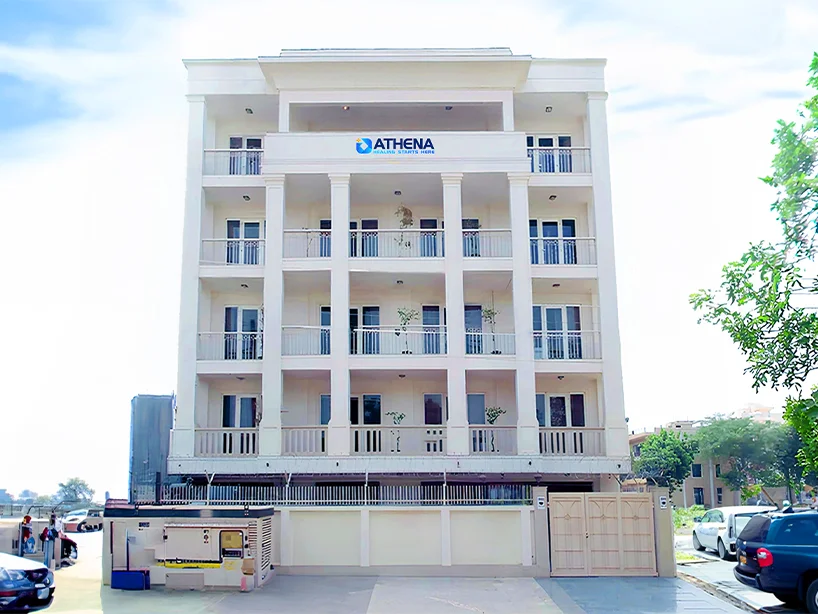
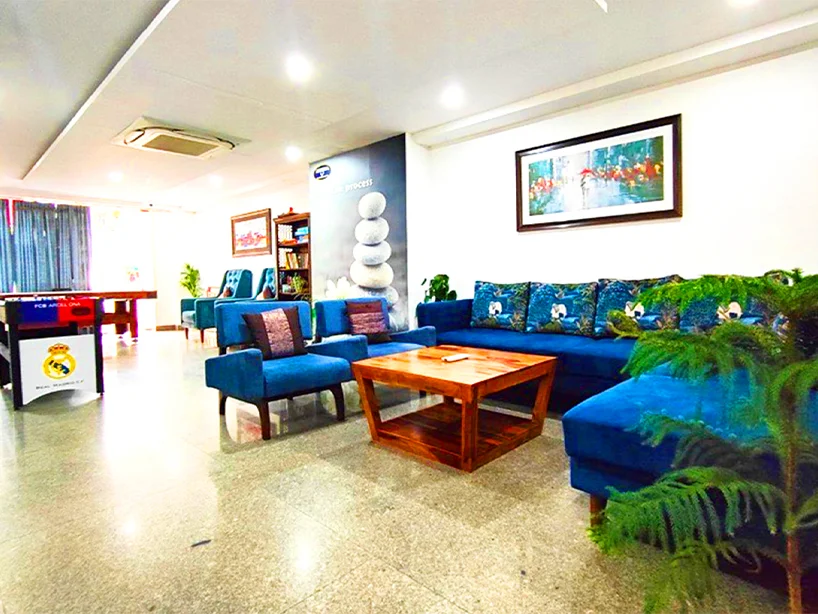
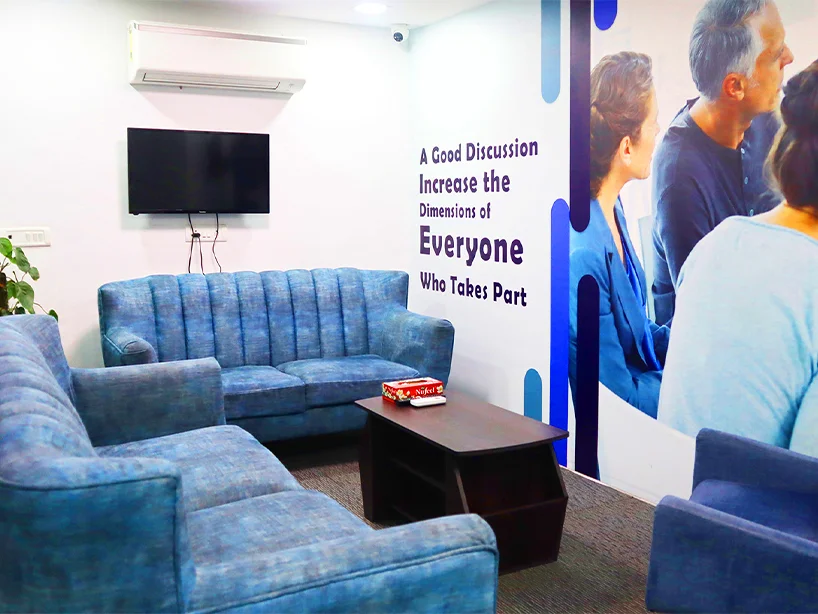
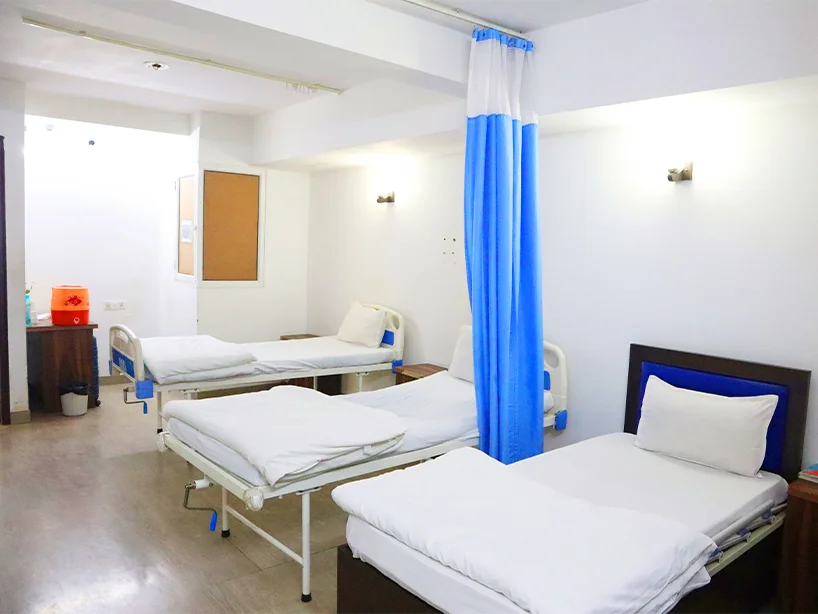
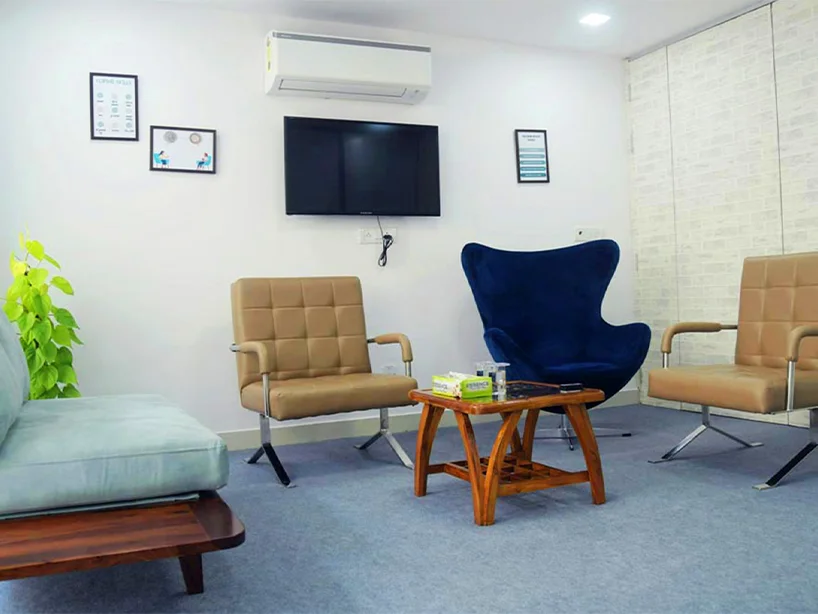
Take a Look Inside Our Gurgaon Facility



Conditions We Treat













.png)






WHAT OUR PATIENTS SAY
Frequently Asked Questions
Focus on the clinical team behind the centre rather than amenities alone. Ask specifically about medical supervision during detox, therapy approaches used, and what aftercare support looks like once treatment ends.
Approaching the person privately and without accusation is usually more effective than involving others immediately. Our team can guide you on how to have that initial conversation and what support options exist.
Confidentiality is a core part of how we operate, and no information is shared with employers, family or anyone else without the patient's explicit consent, barring emergencies.
Yes, treatment plans are built around the specific substance involved, whether that is alcohol, prescription medication or other drugs, since each requires a different clinical approach.
Family involvement is offered where relevant and with the patient's consent, particularly to address dynamics that may affect long term recovery once treatment concludes.
For milder dependence with strong personal discipline, an out-patient program may allow treatment alongside a work schedule. More severe cases generally need a period of residential care before returning to regular responsibilities.
Leaving treatment early increases the risk of relapse, particularly if detox is incomplete. We strongly recommend completing the full assessed program, and our team works with patients to address concerns that might lead to early exit.
This is common, and outright confrontation rarely helps. Our team can advise families on structured approaches to encourage acceptance of treatment without escalating conflict.
In most cases, an initial assessment can be arranged within a day or two, and admission can follow quickly once a treatment plan is agreed upon.
This is precisely why detox is medically supervised at all times. Trained staff can respond immediately with appropriate medical intervention if withdrawal symptoms intensify.
How to reach Athena - Gurgaon
Athena Behavioral Health, Gurgaon
202, Near DPS Public School, Sector 47, Gurugram, Haryana 122001
Landmark: Near DPS Public School, Sector 47
- DLF Phase 1, 2, 3, 4, and 5
- Cyber City and Udyog Vihar
- Sohna Road and Golf Course Road
- MG Road and IFFCO Chowk areas
- Sector 14, 22, 23, 29, 31, 45, 57, and 67
- Manesar and Dharuhera (industrial corridor)
Contact us: +919289086193
Speak to Our Care Team - 24×7 Confidential Support
Confidential help is just a call or chat away. Our team is ready to listen - without judgment, without pressure.