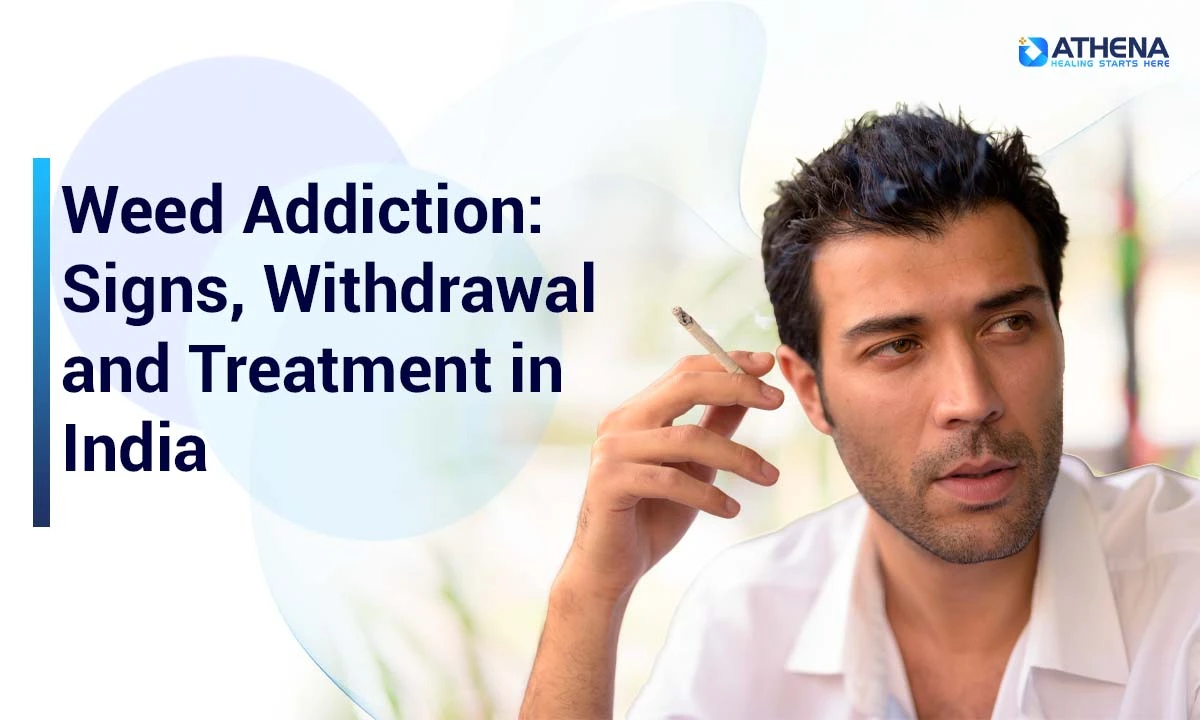

"It's just weed. It's not even a real drug." Many people who struggle with weed addiction have said this to themselves or heard it from friends. Cannabis is widely seen as harmless, so when smoking slowly turns into a daily need, most people don't notice. They notice only when they try to stop and can't.
You are not alone. According to AIIMS' national survey on substance use, around 3.1 crore Indians (2.8% of the population) use cannabis products, and nearly 72 lakh of them need help for harmful or dependent use. The good news is that weed addiction is treatable, and most people recover with the right support.
This guide covers how to recognise weed addiction, why it is so hard to quit, what withdrawal feels like, how to sleep without weed, and how weed addiction treatment in India works.
What Is Weed Addiction (Cannabis Use Disorder)?
Weed addiction, which doctors call cannabis use disorder, means continuing to use weed (ganja, charas, hash, edibles or vapes) even when it is hurting your health, work, studies or relationships, and finding it hard to stop even when you want to.
About 1 in 10 people who use cannabis become dependent. For those who start as teenagers, it rises to nearly 1 in 6. Today's weed is also far stronger than it was decades ago. THC levels have increased several times, and concentrates can contain 60 to 90% THC, so dependence can develop faster.
You don't need to smoke all day to have a problem. The real question is whether you control weed, or weed controls you.
Why Do People Get Addicted? Causes of Weed Addiction
Nobody starts smoking to become addicted. It begins with curiosity or fun, becomes a habit, and slowly turns into a need. These factors push it along:
- Starting young: The brain keeps developing until around age 25, so early use makes dependence far more likely.
- Stress, overthinking and low mood: Many people use weed to "switch off", and over time it becomes their only coping tool. Untreated anxiety and depression are among the most common hidden reasons behind long-term use.
- Friends and surroundings: When everyone around you smokes, it feels normal and saying no gets harder.
- Family history: Genetics account for roughly 40 to 60% of a person's addiction risk.
- Loneliness or past trauma: Weed can feel like relief from emotional pain, which is exactly why it is hard to leave.
- The "it's natural" myth: Weed comes from a plant, but that doesn't make it safe, especially in today's high-potency forms.
Why Is It So Hard to Stop Smoking Weed?
Most people who try to quit are surprised by how hard it is. There are four reasons:
- Your brain adapts: Regular THC changes how your brain's reward and stress systems work. Without weed, you may feel flat, anxious or irritable.
- Withdrawal is real: Poor sleep, mood swings and cravings make quitting uncomfortable enough that many people give in within days.
- Weed becomes your coping tool: If you use it to relax, sleep, socialise or handle stress, quitting means losing your main way of coping, with nothing to replace it.
- Triggers are everywhere: Certain friends, places, evenings and moods can set off strong urges, even months later.
This is not a lack of willpower. It is how dependence works, and it is why support makes such a big difference.
10 Signs of Weed Addiction
Smoking occasionally does not mean you are addicted. But if several of these sound familiar, use may have crossed the line:
- You smoke more, or for longer, than you planned.
- You have tried to cut down or quit and couldn't.
- You get strong cravings, especially when stressed, bored or alone.
- You need more weed than before to feel the same effect.
- A lot of your time goes into getting it, using it or recovering from it.
- You miss classes, work or family time because of it.
- You have lost interest in hobbies and people you once enjoyed.
- You keep using even though it makes you anxious, foggy or low.
- You use it in risky situations, such as before driving.
- You feel irritable, restless or unable to sleep when you stop.
Doctors generally treat 2 to 3 signs as mild, 4 to 5 as moderate and 6 or more as severe cannabis use disorder.
How Do Weed Addicts Behave?
Addiction often shows in behaviour before the person admits it. Common changes include:
- Becoming secretive, or lying about how much they use.
- Mood swings, irritability or getting defensive when weed is mentioned.
- Losing motivation, and dropping grades or work performance.
- Pulling away from family and old friends, and spending time only with people who use.
- Always needing weed before relaxing, sleeping, eating or socialising.
- Running low on money, or constantly asking for it.
- Red eyes, forgetfulness, and a lingering smell on clothes or in the room.
If you are worried about a younger family member, these warning signs of marijuana use in teens cover the changes parents most often miss.
Is One Joint a Day Heavy Use?
Not in terms of quantity, but it is still regular daily use, and that matters. People who use weed every day build tolerance, are much more likely to develop dependence, and often start needing more over time. A better test than counting joints is to ask: Could I skip a week without feeling irritable, anxious or unable to sleep? If the answer is no, it's worth taking seriously.
The 5 Stages of Weed Addiction
Addiction rarely appears overnight. It usually moves through stages:
- Experimentation: Trying weed out of curiosity or peer influence, with no regular pattern.
- Regular use: Smoking on weekends, then more days a week, often tied to stress or social situations.
- Risky use: Using more often and in problem situations. Tolerance grows, and work, studies or relationships start to suffer.
- Dependence: The body and brain now expect weed. Cravings and withdrawal appear when you skip it.
- Addiction: Life revolves around weed. You keep using despite clear harm and can't stop on your own.
The earlier you step in, the easier recovery is. Even at stage 4 or 5, treatment works.
Side Effects of Weed Addiction
Some effects show up quickly: red eyes, dry mouth, a faster heartbeat, slow reactions, poor coordination, short-term forgetfulness, and sometimes sudden anxiety or paranoia.
With heavy, long-term use, the damage goes deeper:
- Memory and focus: trouble concentrating, learning and remembering, plus a drop in motivation. Many regular users describe feeling stuck or "dull".
- Mental health: a higher risk of anxiety and depression. Heavy use in the teenage years is linked to a greater risk of psychosis, including schizophrenia, in people who are already vulnerable.
- Lungs: chronic cough, wheezing and bronchitis from smoke.
- Sleep: many people can't fall asleep without weed, and sleep gets worse once they stop.
- Stomach: some long-term heavy users develop cannabis hyperemesis syndrome, which causes repeated vomiting and severe stomach pain.
- Everyday life: falling grades, job instability, money problems and strained relationships.
Weed Addiction Withdrawal: Symptoms and Timeline
One of the biggest myths is that you can't have withdrawal from weed. Research shows nearly 47% of regular users experience withdrawal symptoms when they stop.
Common symptoms: irritability and anger, anxiety and restlessness, trouble sleeping with unusually vivid dreams, loss of appetite, headaches, sweating, stomach discomfort and strong cravings.
Time after last use | What to expect |
Day 1 to 3 | Irritability, restlessness and poor sleep begin |
Day 2 to 6 | The toughest phase; cravings and mood swings peak |
Week 2 | Appetite and mood slowly start improving |
Week 3 to 4 | Sleep and energy mostly return, though occasional cravings may continue |
Withdrawal is rarely dangerous, but if you feel extremely low, hopeless or anxious, don't push through alone. A supervised medical detoxification can ease symptoms and make this phase safer and more manageable.
Is Stopping Weed Easy?
It depends on how long and how heavily you have used. Someone who smokes occasionally may stop with little trouble. For someone using daily for months or years, stopping is usually not easy, because of withdrawal, cravings and the habits built around weed. That doesn't mean it's impossible. It means you should plan for it and not rely on willpower alone.
How to Stop Smoking Weed Every Day: 7 Practical Steps
If you smoke daily, quitting suddenly can feel overwhelming. These steps make it more manageable:
- Pick a quit date within the next one to two weeks and tell one person you trust.
- Clear your space of weed, rolling papers, grinders and vapes.
- Track your triggers for a few days. Note when and why you smoke, whether it's stress, boredom, evenings or certain people.
- Plan replacements. If you smoke after work, plan a walk, a workout or a call with a friend at that exact time.
- Taper if it helps. Some people cut down gradually for a week or two before stopping completely. Others find a clean break easier. Choose what you can actually stick to.
- Eat and move. Eat on time even without appetite, and walk for 30 minutes daily to ease cravings and lift your mood.
- Ask for help early. If you have tried before and slipped, professional support greatly improves your chances. Slipping is common and doesn't mean you have failed.
For a more detailed plan, read this guide on how to quit smoking weed.
How to Sleep Without Weed
Sleep is the biggest struggle for most people in the first two to three weeks. Weed changes your natural sleep pattern, so your brain needs time to relearn it. What helps:
- Keep a fixed bedtime and wake-up time, even on weekends.
- Avoid caffeine after 4 PM and avoid heavy meals close to bedtime.
- Switch off screens 45 to 60 minutes before bed.
- Exercise daily, but not right before sleep.
- Try a wind-down routine, such as a warm shower, light stretching, deep breathing or meditation.
- Keep your room dark, cool and quiet.
- Don't lie awake for hours. If you can't sleep after 20 minutes, get up, do something calm, then try again.
Expect some bad nights early on, with vivid dreams and light sleep. For most people, sleep improves noticeably within 2 to 4 weeks. If insomnia continues, talk to a doctor instead of trading weed for another sleep aid on your own.
Are You Happier After Quitting Weed?
Many people say yes, though not overnight. The first couple of weeks can feel worse before they feel better. After that, people commonly report:
- Clearer thinking and a sharper memory
- Deeper, more natural sleep
- More energy and motivation
- Less anxiety once the withdrawal phase passes
- Better relationships and more money in hand
- A sense of pride and control
Results differ from person to person, especially if anxiety or depression was already present. That is why treating the underlying cause matters as much as quitting itself.
Weed Addiction Treatment: What Actually Works
There is no single pill that cures cannabis addiction. But treatment works very well when several things come together.
Assessment
A doctor looks at how long and how heavily you have used, your mental health and whether you use other substances. This shapes your plan.
Detox
Mild cases can sometimes manage withdrawal at home. If you have used heavily for years, or have anxiety, depression or sleep problems, supervised detox is the safer choice.
Therapy
Cognitive Behavioural Therapy (CBT) helps you spot triggers and change the thinking behind the urge. Motivational therapy helps you find your own reasons to quit, and family therapy rebuilds trust and support at home.
Treating the root cause
If anxiety, depression or trauma drives your use, quitting weed alone rarely lasts. Specialised cannabis addiction treatment addresses both the habit and the reason behind it, which greatly reduces relapse risk. If weed is mixed with alcohol, pills or other substances, a broader drug addiction treatment programme is a better fit.
Building a new routine
Recovery lasts when life feels good without weed. Yoga, meditation and breathing exercises, as part of mindfulness and wellness therapy, help calm cravings and bring back sleep, focus and energy.
Aftercare
Follow-up counselling and support groups protect your progress long after formal treatment ends.
Weed Addiction Treatment in India: Outpatient or Rehab?
Outpatient treatment works for mild use when you have a stable, supportive home. You live at home and attend scheduled therapy and medical sessions.
Residential rehab is better for moderate to severe addiction, repeated relapses, or when anxiety, depression or other substance use is involved. You stay at the centre with round-the-clock care, away from your usual triggers, which makes the early weeks much easier.
When choosing a centre, look for qualified psychiatrists and psychologists, a treatment plan designed for you, involvement of your family, strict confidentiality and proper aftercare. This guide to the best rehabilitation centre in India explains what to check before deciding.
About Athena Behavioral Health
Athena Behavioral Health is a mental health and addiction treatment centre in India that helps people recover from substance use and the emotional struggles behind it. Our approach is built on a simple belief: addiction is a health condition, not a character flaw, and every person deserves care without judgment.
What makes our approach different
- Treatment for the whole person: We treat addiction together with anxiety, depression and other mental health conditions, because they are often connected.
- Personalised plans: No two people are the same, so no two treatment plans are either.
- Medical and therapeutic care under one roof: From supervised detox to therapy, counselling and wellness programmes, support is available at every stage.
- Family involvement: Recovery is stronger when families understand addiction and heal together.
- Complete confidentiality: Your privacy is protected at every step.
- Support after treatment: Recovery doesn't end at discharge, so we stay with you through aftercare.
Take the First Step Today
Needing weed to relax, sleep or get through the day doesn't make you weak. It means a habit has grown bigger than you planned, and habits can change. The earlier you recognise the signs and ask for help, the easier recovery becomes.
If you or someone you love is struggling with weed, the team at Athena Behavioral Health is here to listen without judgment and in complete confidence. Reach out to an addiction specialist today and take the first step toward getting your life back.