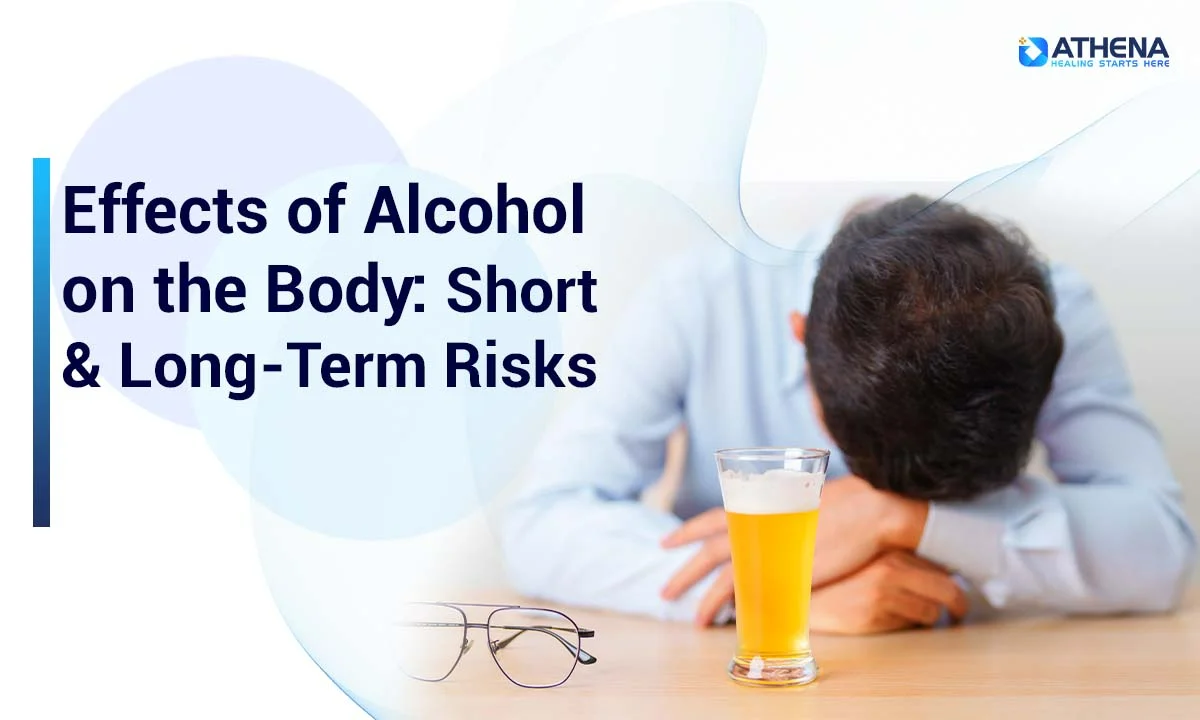

Alcohol is one of the most widely used substances in the world, and for many people it feels like a normal part of social life. The effects of alcohol on the body, however, go far beyond a hangover. According to the World Health Organization, alcohol contributes to around 2.6 million deaths every year and is linked to more than 200 diseases and injury conditions. In India, the AIIMS national survey (Magnitude of Substance Use in India, 2019) found that nearly 1 in 7 people aged 10 to 75 consume alcohol, and many of them need help for alcohol-related problems.
This guide explains what alcohol does to your body, from the first sip to years of regular drinking. You will also learn which warning signs matter, how the body heals after quitting, and where to find professional support.
What Are the Effects of Alcohol on the Body?
Many people ask, "what does alcohol do to your body?" The short answer is that alcohol travels through your bloodstream to almost every organ, slows down brain activity, and puts heavy pressure on the liver, heart and digestive system. Both a single heavy drinking session and years of regular drinking leave their mark.
How Alcohol Moves Through Your Body
When you drink, about 20% of the alcohol is absorbed through the stomach and the rest through the small intestine. It then enters the bloodstream and reaches the brain within 5 to 10 minutes. The liver breaks down most of it, but it can process only about one standard drink (roughly 10 grams of pure alcohol) per hour. Anything beyond that keeps circulating in your blood and organs, which is what causes intoxication.
Factors That Change How Alcohol Affects the Body
How alcohol affects the body differs from person to person. These are the main factors:
- Quantity and speed: More drinks in a shorter time raise blood alcohol levels sharply.
- Body weight and size: Smaller people feel the effects faster.
- Gender: Women generally reach higher blood alcohol levels than men after the same amount.
- Food intake: An empty stomach speeds up absorption.
- Age and health: Older adults and people with existing conditions are more vulnerable.
- Medications: Alcohol can interact dangerously with painkillers, antidepressants, sleeping pills and many other drugs.
Because these factors vary so much, the line between social drinking and risky drinking is not the same for everyone. If you are unsure where you stand, it helps to understand how much alcohol is too much for your age, weight and health condition.
Short-Term Effects of Alcohol on the Body
The short term effects of alcohol start within minutes of drinking and can last for several hours. Some of them feel pleasant at first, such as relaxation and confidence, but they can turn risky very quickly as the number of drinks rises. Here is how different parts of the body respond.
1. Effects of Alcohol on the Body: Brain and Behavior
Alcohol is a central nervous system depressant, which means it slows down the way your brain communicates with the rest of the body. Typical effects include:
- Relaxation and lowered inhibitions
- Slurred speech and poor coordination
- Impaired judgment and slower reaction time
- Mood swings, irritability or aggression
- Memory blackouts after heavy drinking
2. Stomach and Digestion
Alcohol irritates the stomach lining and increases acid production. This commonly causes nausea, vomiting, acidity and abdominal pain, especially when you drink on an empty stomach.
3. Heart and Blood Pressure
Heart rate and blood pressure rise temporarily after drinking. Binge drinking (generally 4 or more drinks for women and 5 or more for men within about 2 hours) can trigger an irregular heartbeat, even in healthy people.
4. Dehydration and Hangover
Alcohol makes you pass more urine, which leads to fluid and electrolyte loss. The result is a headache, fatigue, thirst, dizziness and nausea the next day.
5. Disturbed Sleep
Alcohol may help you fall asleep faster, but it cuts down REM and deep sleep. This is why you often wake up tired and unrefreshed even after a full night in bed.
6. Accidents and Injuries
Impaired judgment and coordination raise the risk of road accidents, falls, burns and violence. Alcohol is a leading contributor to injuries worldwide.
7. Alcohol Poisoning
Drinking a large amount in a short time can shut down the body's vital functions. Watch for these warning signs:
- Confusion or stupor
- Repeated vomiting
- Slow breathing (fewer than 8 breaths per minute) or irregular breathing
- Pale or bluish skin
- Low body temperature
- Unconsciousness
Long-Term Effects of Alcohol on the Body
The long term effects of alcohol develop silently over months and years, and many people notice the damage only when it is advanced. The long term effects of drinking alcohol can touch nearly every organ system, and the risk rises with both the amount you drink and the number of years you drink. These are the most common problems.
1. Effects of Alcohol on the Body: Liver Damage
The liver bears the brunt of alcohol metabolism, so it is usually the first organ to suffer. Damage typically progresses in stages:
- Fatty liver: Fat accumulates in liver cells, often with no symptoms.
- Alcoholic hepatitis: Inflammation and swelling of the liver.
- Cirrhosis: Permanent scarring that can lead to liver failure.
2. Heart and Circulation
Chronic heavy drinking weakens the cardiovascular system over time. It is linked to high blood pressure, cardiomyopathy (weakened heart muscle), irregular heart rhythm, stroke and heart failure.
3. Brain and Mental Health
Long-term alcohol use can shrink brain tissue and impair memory, learning and concentration. It is also strongly associated with depression, anxiety, sleep disorders, vitamin B1 deficiency and a higher risk of dementia. The encouraging part is that the brain can adapt and heal. Therapies like CBT work because they rewire the brain's response to stress and cravings, helping people replace drinking with healthier coping habits.
4. Digestive System
Prolonged drinking inflames and damages the digestive tract. It can cause chronic gastritis, stomach ulcers, pancreatitis and poor absorption of nutrients, which may lead to malnutrition.
5. Cancer Risk
Alcohol is classified as a Group 1 carcinogen by the International Agency for Research on Cancer (IARC). It is linked to at least 7 types of cancer: mouth, throat, voice box, esophagus, liver, breast and colorectal. The more you drink, the higher the risk.
6. Weakened Immunity
Heavy drinking lowers the body's ability to fight infections. People who drink heavily are more prone to pneumonia and tuberculosis, and they tend to recover more slowly.
7. Hormonal and Reproductive Problems
Alcohol disrupts hormone balance. It can cause irregular periods and fertility problems in women, and lower testosterone, erectile dysfunction and reduced sperm quality in men. Drinking during pregnancy can cause fetal alcohol spectrum disorders.
8. Bone and Muscle Weakness
Long-term use reduces bone density and causes muscle wasting, which raises the risk of fractures and physical weakness.
9. Weight Gain
Alcohol provides about 7 calories per gram, nearly as much as fat (9 calories per gram) and far more than carbohydrates (4 calories per gram). These are "empty" calories with almost no nutrition, and they also encourage fat storage around the abdomen.
10. Dependence and Addiction
One of the most serious side effects of drinking alcohol is addiction. Regular drinking builds tolerance, so you need more alcohol to feel the same effect. Over time the body becomes dependent, and stopping suddenly can cause tremors, sweating, anxiety, hallucinations and seizures.
11. Social, Emotional and Financial Impact
Alcohol misuse also affects life outside the body. It strains relationships, lowers work performance and often leads to legal and financial trouble.
Short-Term vs. Long-Term Effects at a Glance
If you prefer a quick summary, this table compares how the effects of drinking alcohol differ between a single session and years of regular use.
Body Areas | Short-Term Effects | Long-Term Effects |
Brain | Slurred speech, poor judgment, blackouts | Memory loss, depression, dementia risk |
Liver | Temporary strain | Fatty liver, hepatitis, cirrhosis |
Heart | Higher heart rate and blood pressure | Cardiomyopathy, stroke, heart failure |
Stomach | Nausea, vomiting, acidity | Gastritis, ulcers, pancreatitis |
Immune System | Temporary weakening | Frequent infections, slow recovery |
Overall | Accidents, hangover, poisoning | Cancer risk, dependence, organ damage |
Warning Signs That Drinking Is Becoming a Problem
It is easy to miss the point where casual drinking turns into dependence, because the change happens slowly. Doctors often look at a set of behaviours and physical signs. Seek help if you notice 3 or more of the following:
- You drink more, or for longer, than you planned
- You have tried to cut down but could not
- You spend a lot of time drinking or recovering
- You have strong cravings for alcohol
- Drinking affects your work, studies or relationships
- You continue despite health or family problems
- You need more alcohol to get the same effect
- You feel shaky, anxious or sick when you stop
If several of these sound familiar, it is time to act rather than wait. Many people find it useful to read a practical guide on how to stop alcohol addiction before taking the first step, so they know what to expect from detox, cravings and the early weeks of recovery.
How the Body Heals After You Stop Drinking
The encouraging news is that the body starts repairing itself sooner than most people expect. The timeline below shows what many people notice after they stop, although results vary with age, health and how long the person drank.
Timeline | What Happens |
First 24 to 72 hours | Withdrawal symptoms may begin and peak; medical supervision is important |
7 days | Better sleep, hydration and energy; less acidity and bloating |
2 to 4 weeks | Improved skin, digestion and focus; fatty liver may begin to reverse |
3 months (about 100 days) | Better blood pressure, mood and memory; noticeable weight and belly fat reduction |
1 year and beyond | Lower risk of liver disease, heart problems and several cancers |
How to Stop Alcohol Addiction
Recovery is possible at any stage, whether someone has been drinking for 2 years or 20. If you are wondering how to stop alcohol addiction, the most successful path combines medical support, therapy and lifestyle change. These steps can guide you.
Step 1: Get medical guidance first: Quitting suddenly after years of heavy drinking can be dangerous, so a supervised detox is the safest start. Withdrawal can bring tremors, sweating, anxiety and even seizures, which is why doctors advise against going cold turkey alone. For a deeper look at managing cravings and preventing relapse, you can read how people quit alcohol addiction step by step.
Step 2: Choose a structured rehab program: Rehab offers medical care, counselling and an alcohol-free environment that removes daily triggers. Look for a program that provides detox, therapy and aftercare under one roof.
Step 3: Work on the thoughts behind the habit: Most drinking is driven by stress, anxiety or ingrained thought patterns. Individual and group therapy help you identify triggers and build healthier responses.
Step 4: Build calming daily habits: Stress is one of the biggest relapse triggers. Regular sleep, balanced meals, exercise, meditation and breathing practice all help the nervous system settle.
Step 5: Lean on your support system: Family, friends and support groups provide accountability, so you do not have to do this alone.
Step 6: Take it one day at a time: A setback is not a failure. Every alcohol-free day gives your body a chance to heal.
How Athena Behavioral Health Helps in Alcohol Recovery
Athena Behavioral Health supports individuals and families dealing with alcohol use through a complete, patient-centred approach. The goal is not just to stop drinking but to rebuild physical health, emotional balance and daily routines. Treatment typically covers:
- Assessment and diagnosis: Understanding your drinking pattern, health status and any underlying mental health conditions.
- Medically supervised detox: Managing withdrawal safely and comfortably.
- Individual and group therapy: Evidence-based approaches such as CBT to address triggers, cravings and thinking patterns.
- Dual diagnosis care: Treating co-existing issues like depression, anxiety or trauma that often fuel drinking.
- Holistic wellness: Mindfulness and yoga practices and lifestyle support to restore balance in mind and body.
- Family counselling: Helping loved ones understand addiction and rebuild trust.
- Aftercare and relapse prevention: Continued support after discharge to protect long-term sobriety.
Ready to Take the First Step?
If you or someone you love is struggling with alcohol, you do not have to face it alone. If you are looking for a trusted Nasha Mukti Kendra in Noida, contact Athena Behavioral Health today for a confidential consultation with our experts and begin a safe, supported journey toward a healthier, alcohol-free life. Recovery starts with one decision, and that decision can be made today.
Conclusion
The effects of alcohol on the body range from short-term impairment, accidents and hangovers to serious long-term conditions such as liver disease, heart problems, brain damage, cancer and addiction. The earlier you act, the more your body can recover. Understanding what alcohol does to you is the first step, and asking for help is the next.