
You rehearse a conversation that hasn't happened yet. You check your phone for bad news. You lie awake at night going through everything that could go wrong. A bit of this is part of life. When it becomes your everyday state and starts to affect your sleep, work, studies or relationships, it may be an anxiety disorder.
You are not the only one. Over 300 million people worldwide live with an anxiety disorder, and in India roughly 1 in 10 adults has some mental health condition, with most receiving no treatment. This article explains what causes anxiety disorder, which triggers to watch for, what the symptoms look like and how treatment works.
What Is Anxiety Disorder?
Anxiety is a normal response to pressure. It helps you prepare for an exam or stay alert in a risky situation. An anxiety disorder is different because the fear is out of proportion to the situation, lasts for months and is hard to control.
The common types are generalised anxiety disorder, panic disorder, social anxiety disorder, phobias and separation anxiety. In all of them, the body's alarm system keeps going off when there is no real danger.
What Causes Anxiety Disorder?
Anxiety disorders rarely come from a single source. They usually build up from several factors acting together:
Inherited traits and brain chemistry
Long periods of stress
Painful experiences in childhood
Physical health problems
Substances and daily habits
Your surroundings and the support you have
Having one risk factor does not mean you will develop anxiety. The chances go up when several of them overlap.
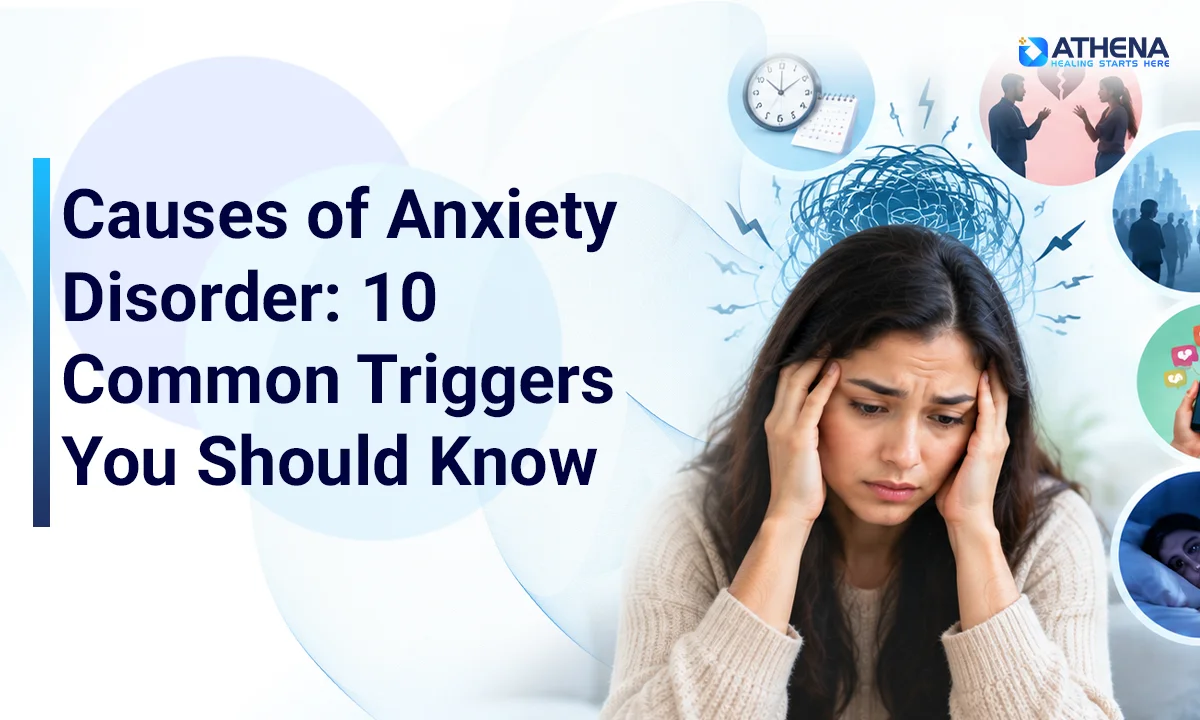
10 Common Causes and Triggers of Anxiety Disorder
Anxiety rarely starts for one reason. Most of the time, a few of the causes below work together, and spotting which ones apply to you makes them easier to manage. Read through the list and note the ones that sound familiar.
1. Is Anxiety Genetic? Family History Matters
It has been established that anxiety is genetically determined and is hereditary; genetic factors contribute up to 30-40% to the probability of developing the disease. Inheriting anxiety means having a predisposition to stress. There are numerous environmental factors affecting the manifestation of the disorder, so whether a person will develop a disorder will largely depend on their circumstances.
2. Imbalance of Brain Chemistry and Physical Reactions of the Body
Chemicals such as serotonin, GABA, dopamine, and noradrenaline affect mood and reaction to fear. Amygdala serves as an alarm center in one's brain, and any disturbance in this area or imbalances in brain chemicals lead to excessive reactions to various triggers as a sign of danger – being in a crowded space, getting an email from someone, etc.
3. Chronic Stress Caused by Employment, Money, and Family Issues
A bad week passes, while months of stress continue. Insecurity at work, money problems, family issues and other factors cause prolonged activation of stress hormones and nervous system. According to the studies conducted in the first year of the COVID-19 pandemic, anxiety and depression increased by about 25% all over the world.
4. Difficult Childhood Experiences
Early life teaches the brain whether the world is safe. Neglect, bullying, abuse, constant fights at home or losing a parent can keep a person on high alert for years. Anxiety often starts young, with the typical age of onset around 11 years.
5. Personality and Thinking Style
Some temperaments are more prone to anxiety:
Perfectionists who fear every mistake
People with low self-confidence
Naturally shy or very sensitive individuals
Overthinkers who want certainty before they act
6. Physical Health Conditions That Mimic or Feed Anxiety
Sometimes the body itself is the trigger. Conditions often linked with anxiety include:
An overactive thyroid
Irregular heart rhythm
Diabetes and blood sugar swings
Asthma and breathing problems
Chronic pain, PCOS and hormonal changes
Many of these cause symptoms that look like anxiety, so the real cause is not always obvious. A proper psychiatric assessment and diagnosis can show whether you are dealing with anxiety, a physical illness or both.
7. Caffeine, Alcohol, Nicotine and Medication Changes
What you consume can quietly raise anxiety:
Caffeine: More than about 400 mg a day (roughly four cups of coffee) can cause jitters and a pounding heart.
Alcohol: It relaxes you at first, then the rebound brings restlessness, often called "hangxiety."
Nicotine and cannabis: Both can increase worry in many people.
Stopping medicines suddenly: This can make symptoms worse, so any dose change should go through your doctor.
8. Big Life Changes and Loss
Change brings uncertainty, and an anxious mind struggles with uncertainty. Common triggers are:
The death of someone close
Separation or divorce
A new job, city or school
Becoming a parent
Exam results and career decisions
Even happy milestones can set anxiety off.
9. Poor Sleep, Irregular Eating and Too Much Screen Time
Daily habits set your baseline level of calm. Short sleep makes the brain's fear centre more reactive. Skipped meals and sugar spikes can feel a lot like panic, and hours on social media add comparison and worry. These are the triggers you can change most easily. Slow breathing, regular movement and mindfulness and yoga can help a tired nervous system settle.
10. Loneliness, Pressure and Stigma
Isolation, academic competition, heavy workloads, crowded cities and lack of emotional support all raise vulnerability. Stigma adds to it. Many people hide how they feel and wait years before asking for help.
Anxiety Triggers
Here is a quick summary of the triggers covered above, grouped by type. The last column shows which ones you can work on yourself and which need professional support.
Trigger types | Common examples | Can it be changed? |
Biological | Genes, brain chemistry, hormones | Not the cause, but it can be managed |
Psychological | Perfectionism, past trauma, overthinking | Yes, through therapy |
Medical | Thyroid, heart, diabetes, asthma | Yes, with treatment |
Substance-related | Caffeine, alcohol, nicotine | Yes |
Lifestyle | Poor sleep, diet, screen time | Yes |
Social | Work stress, loneliness, major life events | Partly |
Who Is Most at Risk of Anxiety Disorder?
Anyone can get an anxiety disorder, although there are certain people who are more prone than others. Anxiety disorders occur two times more commonly among women than men due to hormonal and social issues. The anxiety disorder risk factors include:
Risk factors | Why it raises risk |
Family history | Inherited sensitivity to stress |
Childhood adversity | The brain learns to expect danger |
Chronic illness | Ongoing physical strain and worry |
Ongoing stress | Keeps the body in alert mode |
Substance use | Disrupts mood control |
Depression | The two often occur together |
What Are the Symptoms of Anxiety Disorder?
Anxiety shows up in both mind and body.
Emotional and mental | Physical |
Constant worry that is hard to stop | Fast heartbeat |
Feeling restless or on edge | Sweating and trembling |
Trouble concentrating | Muscle tightness |
Irritability | Headaches and stomach upset |
A sense of dread | Tiredness and broken sleep |
If these last for six months or more, or begin to get in the way of daily life, get checked. Sudden waves of fear with chest tightness and breathlessness may be panic. Learning the signs of an anxiety attack helps you tell it apart from a heart problem and respond calmly.
What Can You Do When Anxiety Hits Right Now?
When your heart is racing, slow your breathing first. Breathe in for four counts, hold for four, and breathe out for six. Name five things you can see around you to bring your attention back to the room. Put down your phone and sip some water. Small steps like these work better than telling yourself to calm down. If you want more options, here are some ways to reduce anxiety immediately.
How Is Anxiety Disorder Treated?
Anxiety responds well to treatment, yet only about 1 in 4 people who need care receive it. The main approaches are:
Cognitive Behavioural Therapy (CBT): Teaches you to spot and change anxious thought patterns. It is a first-line treatment.
Medication: SSRIs, SNRIs and related medicines, prescribed by a psychiatrist, ease moderate to severe symptoms. Knowing the possible side effects of anti-anxiety drugs before you start makes it easier to stay on track.
Lifestyle changes: Regular sleep, exercise, less caffeine and relaxation practice.
Combined care: Therapy along with medication often gives the best results.
Anxiety Disorder Treatment in India: What Should You Look For?
In India, mental health care has become more accessible as more specialists and internet consultations have been established. In considering what type of treatment is best for anxiety disorder in India, one must consider:
A qualified psychiatrist or clinical psychologist.
Proper assessment prior to development of the treatment plan.
A customized treatment plan rather than a generic prescription.
Confidentiality and a respectful environment.
How Athena Behavioral Health Helps People With Anxiety
Athena Behavioral Health is a mental health care company that caters to those who have difficulties with anxiety, panic attacks, constant worries, and stress disorders. We believe in listening first. We learn about your feelings, how it started, and what triggers it before making any recommendations.
From there, your care plan may include:
A detailed psychiatric evaluation
Talk therapy to change anxious thinking
Medication management when it is needed
Mindfulness and relaxation support
Regular follow-ups to track progress
Every plan is different, because two people with anxiety rarely have the same story. You can see how our anxiety disorder treatment works and what the first steps look like.
When Should You See a Doctor for Anxiety?
Consider seeing a professional if:
Worry feels constant and out of your control
You avoid people, places or responsibilities
You have panic attacks
Sleep, work or relationships are suffering
You use alcohol or other substances to cope
If you ever have thoughts of harming yourself, contact a doctor, a trusted person or an emergency helpline right away.