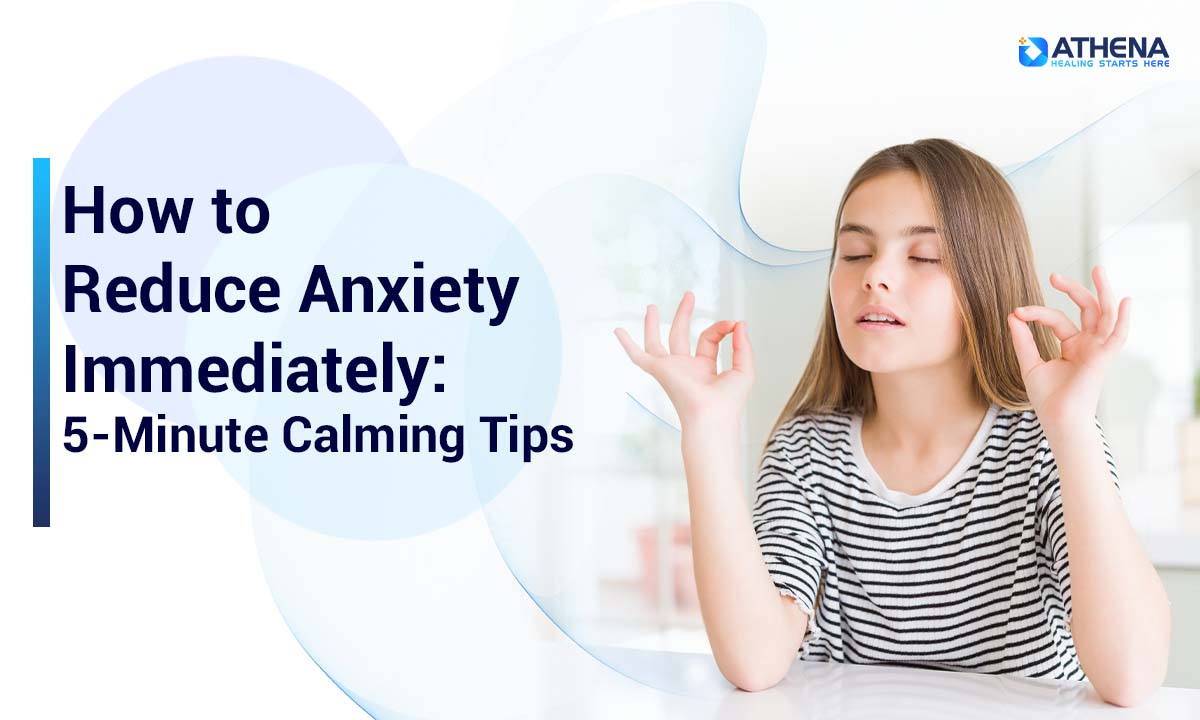

Your heart is racing. Your chest feels tight. Your thoughts are spinning faster than you can catch them. If you are searching for how to reduce anxiety immediately, you do not need a long lecture on mindfulness philosophy. You need something that works right now, in the next five minutes.
The good news is that you do not need a quiet room, a therapist, or an hour of meditation to feel calmer. A handful of quick, clinically informed techniques can calm your nervous system in minutes, whether you are in a waiting room, stuck in traffic, or lying awake at night. This guide breaks down exactly what to do when anxiety hits, and when it is time to look into proper, ongoing support.
Fastest Ways to Calm Anxiety in Minutes
The fastest way to ease anxiety in the moment is to slow your breathing, ground yourself in your physical surroundings, and release tension from your body. These three actions work together to signal your nervous system that you are safe, which interrupts the anxiety response within minutes.
Here is a quick reference table you can come back to whenever anxiety strikes and you need a fast, effective option.
Technique | Time Needed | Best For |
Diaphragmatic (belly) breathing | 1 to 2 minutes | Racing heart, panic symptoms |
5-4-3-2-1 grounding method | 3 to 5 minutes | Spiraling thoughts, feeling disconnected |
Progressive muscle release | 2 to 3 minutes | Physical tension in jaw, shoulders, neck |
Naming your emotion out loud | 1 minute | Sudden fear or overwhelm |
Cold water or temperature shift | 30 seconds to 1 minute | Panic attacks, acute stress spikes |
Why Anxiety Needs a Quick Response?
Anxiety is not just "in your head." When your brain senses a threat, real or perceived, it releases stress hormones such as adrenaline and cortisol. This triggers physical symptoms like a faster heartbeat, dizziness, chest tightness, sweating, and shaking. This is your body's fight or flight response, and it reacts the same way whether the threat is genuine danger or an overdue deadline.
Recognizing what anxiety actually looks like makes it easier to respond quickly instead of feeling confused by the symptoms. Common signs include the following.
Physical symptoms: racing heartbeat, breathlessness, nausea, shaking, sweating
Mental symptoms: racing thoughts, fear of losing control, difficulty concentrating
Behavioral symptoms: urge to avoid, freeze, or escape the situation
Understanding this matters because anxiety is a biological event, not a character flaw. Since it is biological, it responds well to physical interventions, which is exactly why the techniques below work so quickly. If your symptoms lean more physical than mental, especially trembling or shaking, our detailed guide on how to stop shaking from anxiety immediately walks through that specific symptom in more depth.
How to Reduce Anxiety Immediately: Step by Step Techniques
Each of the techniques below can be done almost anywhere, without any equipment, and most take less than five minutes to bring noticeable relief.
1. Diaphragmatic Breathing (Belly Breathing)
This is one of the fastest ways to interrupt a panic response. Follow these steps to try it right now.
- Sit or stand comfortably and close your eyes if possible.
- Inhale deeply through your nose, letting your belly expand rather than your chest.
- Hold the breath for two to three seconds.
- Exhale slowly through your mouth, taking longer to breathe out than you did to breathe in.
- Repeat for five to eight breaths.
A slow, extended exhale activates your parasympathetic nervous system, which is your body's built in calm down switch. You physically cannot stay in a panicked state while deliberately slowing your exhale.
2. The 5-4-3-2-1 Grounding Technique
When anxious thoughts start spiraling, grounding pulls your brain back into the present moment by engaging your senses one at a time.
- 5 things you can see
- 4 things you can touch
- 3 things you can hear
- 2 things you can smell
- 1 thing you can taste
This exercise shifts your brain from emotional processing to sensory processing, which quiets the anxious loop in your mind.
3. Progressive Muscle Release
Most people carry anxiety physically without even realizing it, often in the jaw, shoulders, and neck. Releasing this tension sends a signal to your brain that it is safe to relax, and the mind often follows the body's lead.
- Press your tongue gently to the roof of your mouth to release jaw tension.
- Slowly roll your head clockwise, then counterclockwise.
- Shrug your shoulders up toward your ears, hold for three seconds, then release.
4. Name the Emotion
Simply asking yourself what you are feeling right now, whether it is fear, panic, or overwhelm, and why, activates the prefrontal cortex, the rational part of your brain. This helps quiet the brain's alarm response and can be the difference between a passing wave of anxiety and a full spiral.
5. Temperature Shift
Splashing cold water on your face, holding a cold object, or stepping into fresh air can rapidly calm an anxiety or panic response. This works by triggering the body's natural dive reflex, which slows the heart rate.
What to Do and What to Avoid During an Anxiety Spike
Certain reactions can make an anxiety spike worse instead of better, even when they feel like they will help in the moment. Knowing what to lean into and what to avoid can shorten how long the spike lasts.
Do | Avoid |
Focus on slow, controlled breathing | Holding your breath or breathing shallow and fast |
Ground yourself in the present moment | Trying to think your way out of every worry |
Move your body through stretching or walking | Sitting frozen in the same tense position |
Remind yourself the feeling will pass | Telling yourself something is wrong with you |
Reach out to someone if you can | Reaching for alcohol, nicotine, or other quick fixes |
A panic attack typically peaks and eases within 5 to 20 minutes. It is uncomfortable, but not dangerous, and riding it out with the right technique helps it pass faster. Anxiety also does not always come from an obvious source. Some people only realize later that a daily habit was quietly feeding their anxiety, which is why it is worth exploring topics like does porn cause anxiety if you suspect a specific behavior might be part of the pattern.
Quick Relief vs Long Term Anxiety Relief: What Is the Difference?
It is important to understand that these techniques work as first aid, not as a cure. They are excellent for managing anxiety in the moment, but if anxiety is a regular, disruptive part of your life, it is worth addressing the root cause rather than only managing symptoms as they appear.
Building a lower baseline of anxiety usually comes down to consistent, everyday habits rather than any single technique. If you want to explore what that looks like, our guide on how to reduce anxiety naturally covers daily habits such as sleep, diet, and exercise that reduce anxiety over the long run, not just in a single moment.
Many people also want to know whether anxiety is something they will manage forever or something they can genuinely move past. Our article on whether anxiety can be cured permanently breaks down what real, sustainable recovery actually looks like, and what role professional treatment plays in getting there.
How Athena Behavioral Health Helps You Overcome Anxiety
Quick calming techniques are useful, but they are designed for the moment, not for solving anxiety at its root. If anxiety keeps returning no matter how many breathing exercises or grounding tricks you try, that is usually a sign your body and mind need more structured support.
Athena Behavioral Health helps you overcome your anxiety with proper, personalized care rather than short-term fixes. The approach focuses on understanding why anxiety is happening in the first place, not just managing symptoms as they show up. Through evidence-based treatment plans, licensed clinical support, and continuous care, Athena Behavioral Health helps you build real, lasting calm instead of relying on crisis-mode coping every single day.
When to Seek Professional Help for Anxiety
Quick techniques help in the moment, but they are not a substitute for professional care when anxiety becomes a persistent pattern. Consider reaching out for support if you notice any of the following.
- Anxiety is affecting your work, relationships, or daily functioning.
- Self-help strategies are not providing lasting relief.
- You are avoiding places, people, or situations because of anxiety.
- Physical symptoms such as chest pain or breathlessness are frequent or severe.
- You are using alcohol, substances, or other unhealthy habits to cope with anxiety.
If any of this sounds familiar, it is a sign that structured support, rather than another quick fix, is the right next step.
Key Takeaway
Anxiety can feel overwhelming, but you have more control over it than it seems in the moment. Simple, science-backed techniques such as slow breathing, grounding, and muscle release can calm your nervous system in five minutes or less. For anxiety that keeps coming back, pairing these quick tools with proper long-term care makes all the difference.
Athena Behavioral Health helps you overcome anxiety with proper, personalized care that combines immediate coping strategies with treatment plans built for lasting relief. Reach out to Athena Behavioral Health for anxiety disorder treatment to take the next step toward calm.