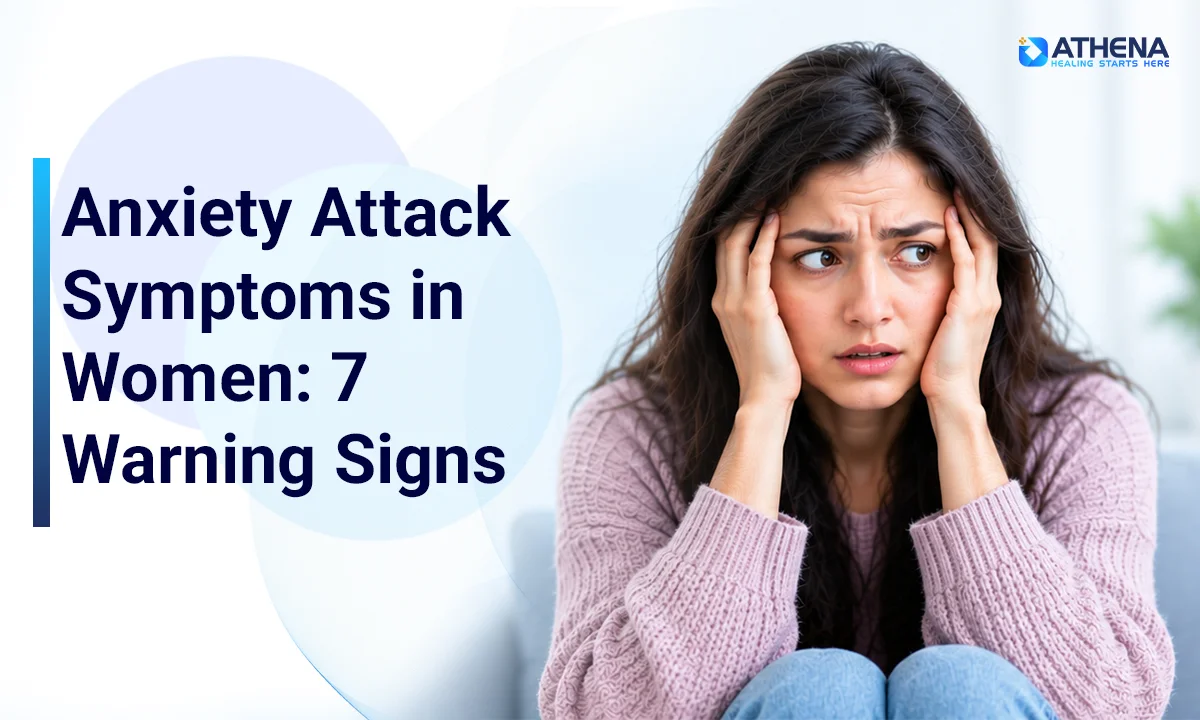

It is an ordinary afternoon, and then your pulse jumps, your chest goes tight, and a feeling of dread settles in with no clear reason. Plenty of women put this down to stress, too much chai or a bad night's sleep. In fact, anxiety attack symptoms in women are common, very physical and easy to misread. A large Cambridge-led review of 48 studies found that women are almost twice as likely as men to have an anxiety disorder.
Below you'll find the 7 warning signs, why women are affected more, what to do while an episode is happening, and when to see a doctor. If this sounds like you, you are not overreacting.
7 Signs of Anxiety Attacks in Women
Anxiety attacks don’t look the same in every woman, but most episodes share a core set of body and mind symptoms. Here are the 7 signs women report most often, so you can spot them early and know when to get help.
1. Racing or Pounding Heartbeat
Your heart speeds up or thumps hard enough to feel in your throat. It can look just like a heart problem, so get a first episode checked by a doctor.
2. Constricted Chest and Difficulty Breathing
Many women describe this as tightness around the chest or rib cage or a sensation of having inadequate air. During the panic attack, 65% of women have described themselves as short of breath while in men, 50% suffer from the same condition.
3. Lightheadedness, Trembling, and Sweating
These are the main physical symptoms of anxiety in women which are likely to make the patient seek medical attention.
4. Abdominal Pain and Nausea
In an instant when fear takes over, the stomach responds almost immediately. Some common reactions include abdominal cramps, nausea and frequent urge to urinate or defecate. Irritable bowel syndrome occurs in women thrice as much as in men.
5. Sudden Sense of Dread or Fear of Losing Control
You feel sure something awful is going to occur although nothing is wrong. The body's warning system has malfunctioned and this doesn't mean you are losing your sanity.
6. Overactive Mind and Easily Irateable
Some anxiety symptoms in women can be seen between attacks as obsessive thoughts, pessimistic planning, quick tempered and inability to concentrate.
7. Heavy Tiredness and Broken Sleep Afterwards
Once the adrenaline drops, you feel wiped out. Muscle aches, headaches and a restless night often follow.
Why Do Women Get Anxiety Attacks More Often?
Hormones are a big part of the answer. Oestrogen and progesterone rise and fall across the menstrual cycle, pregnancy, the months after birth and perimenopause. Researchers think premenstrual swings may explain part of the higher panic rate in women, and after recovery, panic symptoms come back about twice as often.
Health conditions linked to hormones play a role too. Women with irregular periods and constant worry may find that PCOS can cause depression and anxiety alongside its physical symptoms. Pregnancy raises the risk as well, since OCD, an anxiety-related condition, is about twice as common in pregnant women.
Everyday life adds weight. Work, home and caregiving keep stress running all day, and stigma holds many women back from asking for help.
How Common Is Anxiety in Women in India?
The figures point out a major problem and a minor reaction to that problem.
Approximately 10%: number of Indians with any common mental ailment like anxiety and depression, from the National Mental Health Survey conducted in 2016. There were about twice as many cases among women than men.
123.5%: increase in the prevalence of anxiety disorders in India from 1990 to 2023 (Global Burden of Disease study).
Approximately 84%: treatment gap in the case of anxiety disorders.
Symptoms of Depression and Anxiety in Women: How to Tell Them Apart
The two often show up together, so they can be hard to separate on your own.
Anxiety tends to feel like | Depression tends to feel like |
Restless and on edge | Heavy and slowed down |
Racing "what if" thoughts | Lasting sadness or emptiness |
Pounding heart, sweating, shaking | Losing interest in things you enjoyed |
Trouble falling asleep | Sleeping too much or waking very early |
Fear of what might happen | Hopelessness about the future |
If you see yourself in both columns, a professional assessment is the fastest way to know what you are dealing with.
What to Do During an Anxiety Attack
Try these four steps as soon as symptoms start:
Breathe in through your nose for 4 counts, then out slowly for 6.
Name 5 things you can see, 4 you can touch, 3 you can hear, 2 you can smell and 1 you can taste.
Say to yourself, "This is anxiety. It will peak and pass."
Stay where you are if it is safe, instead of rushing away.
With daily practice these steps get easier. Regular yoga and meditation also help, and mindfulness and yoga wellness therapies teach the body to settle faster when stress rises.
When Should You See a Doctor About Anxiety?
Book an appointment if any of these apply:
Attacks keep coming back or arrive without a clear trigger.
You avoid places, people or activities because you fear another episode.
Worry is hurting your sleep, work or relationships.
Physical symptoms keep sending you to doctors with no clear cause.
You have felt low, hopeless or numb for weeks.
A psychiatric assessment and diagnosis uses screening tools like the GAD-7 and checks for medical causes such as thyroid problems, so the plan fits your situation. Go straight to an emergency room for chest pain that spreads to the arm or jaw, fainting or severe breathlessness, especially if it is your first episode.
Anxiety Care for Women at Athena OKAS, Gurgaon
Athena Behavioral Health runs treatment centres across Delhi NCR and Northeast India. Its Gurgaon centre for women is Athena OKAS, located in Sector 39 near Medanta. It is India's first women-only residential mental health centre, and every member of the clinical team is a woman.
For ladies suffering from regular bouts of anxiety or panic attacks, OKAS provides a combination of psychiatric evaluation, therapy, medicines where necessary, and yoga and meditation as a part of their daily regimen. They provide a tranquil environment wherein you can discuss issues that you would not like to discuss anywhere else, such as issues of family pressures, previous traumas, or postpartum concerns. Your confidentiality is assured.