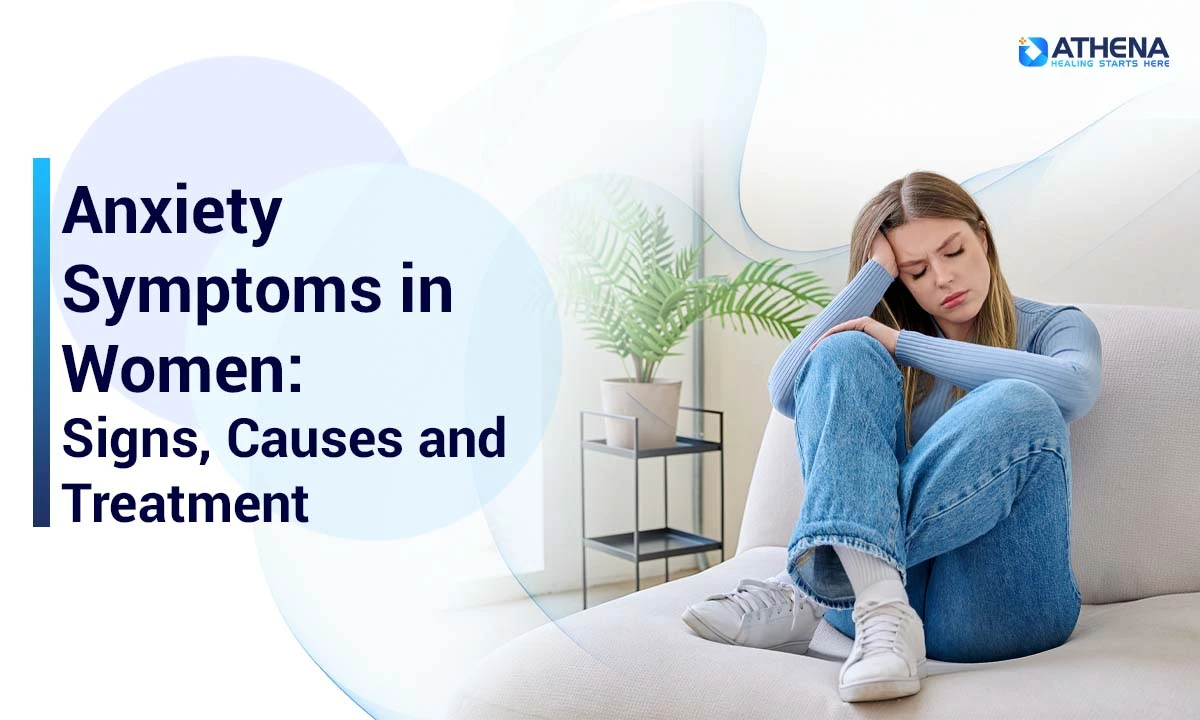
You nod through the meeting, but your chest is tight and your mind is running ten tabs at once. Is it stress, or something more? Anxiety in women often hides behind "being busy" or "overthinking," so it can go unnoticed for years.
The numbers explain why. A University of Cambridge review found that women are almost twice as likely as men to experience anxiety. In one widely cited survey, 23.4% of women had an anxiety disorder in a year, compared with 14.3% of men. This guide covers the symptoms, causes and treatment, so you can tell everyday worry from a condition that needs care. If you prefer Hindi? Read anxiety meaning in Hindi.
What Are the First Signs of Anxiety in Women?
The symptoms often start with subtle feelings of unease. You may find that you are:
Anxious and feel you have too much to worry about.
Easily irritated with those close to you.
Unable to concentrate.
Unable to fall asleep or wake up in the early hours (3 am) with racing thoughts.
Feeling unable to make phone calls, attend events or make decisions.
Feeling the need for constant reassurance.
Most often, doctors will diagnose generalised anxiety as they will look for excessive worrying most days for 6 months or longer. However, many women will still be able to function well at home and work whilst feeling constantly on edge - meaning symptoms of anxiety in women are often missed.
What Are the Physical Symptoms of Anxiety?
But there are also physical symptoms: you may feel:
Heart racing or pounding
Feeling breathless, with chest tightness
Feeling dizzy, shaking, and having sweaty hands
Feeling nauseous or gut issues, or IBS-type symptoms
Tight muscles, tension headaches and jaw clenching
Feeling tired even after a long night's sleep.
These can often overlap with heart, thyroid and hormonal issues, so it is a good idea to get a baseline check-up. Many women will be seen by a cardiologist or gynaecologist long before they think about anxiety.
Anxiety Attack Symptoms in Women Look Like This
An anxiety or panic attack builds fast, often peaks within about 10 minutes, and can feel like a heart attack. Common anxiety attack symptoms in women include sudden intense fear, a pounding heart, breathlessness, chest pain, tingling hands, hot flushes or chills, nausea and a sense of losing control. Some women also feel detached from their surroundings. Women are about twice as likely as men to develop panic disorder.
Want a deeper breakdown? Read our guide on anxiety attack symptoms, causes and what to do. If chest pain is new, severe or unexplained, seek emergency care first.
How Do Symptoms of Depression and Anxiety in Women Overlap?
The two often travel together, and women are also about twice as likely as men to experience depression. Both can cause poor sleep, fatigue, poor concentration and irritability. The difference is in the core feeling: anxiety is fear, restlessness and "what if," while depression is low mood, loss of interest, guilt and hopelessness.
If worry comes with sadness or emptiness lasting two weeks or more, tell your doctor about both. Treating only one often leaves symptoms behind, and psychotherapy and counselling can address both together.
What Causes Anxiety in Females?
There is rarely one cause. Five common ones are:
Hormonal shifts: puberty, periods, pregnancy, postpartum and perimenopause can all trigger or worsen anxiety. OCD, for example, affects roughly 1 in 100 people but is about double that in pregnant women.
Genetics and brain chemistry: a family history raises your risk.
Trauma and abuse: women are far more likely than men to develop PTSD after trauma.
Chronic stress and role overload: juggling work, caregiving and the "mental load" of running a home wears the nervous system down.
Health and lifestyle factors: thyroid problems, poor sleep, too much caffeine and alcohol.
In Delhi NCR, you can also speak to a therapist in Gurgaon for in-person sessions.
How Is Anxiety Treated in Women?
Anxiety is highly treatable, yet in the US only 36.9% of people who live with it receive treatment. What works:
Therapy: Cognitive behavioural therapy (CBT) is a first-line option. It teaches you to spot and challenge anxious thoughts.
Medication: A psychiatrist may prescribe SSRIs or SNRIs, chosen carefully around pregnancy, breastfeeding and other health needs.
Lifestyle changes: Exercise, regular sleep and less caffeine lower baseline anxiety.
Specialised care: A structured plan, such as Athena's anxiety disorder treatment, combines these. Athena also runs India's first women-only treatment centre, so you can open up in a space built around women's needs.
When Should You Seek Professional Help?
Reach out if worry lasts weeks, disrupts sleep, work or relationships, brings panic attacks, or makes you avoid daily life. You do not need to wait for a crisis. To understand the support available for women, explore OKAS at Athena.