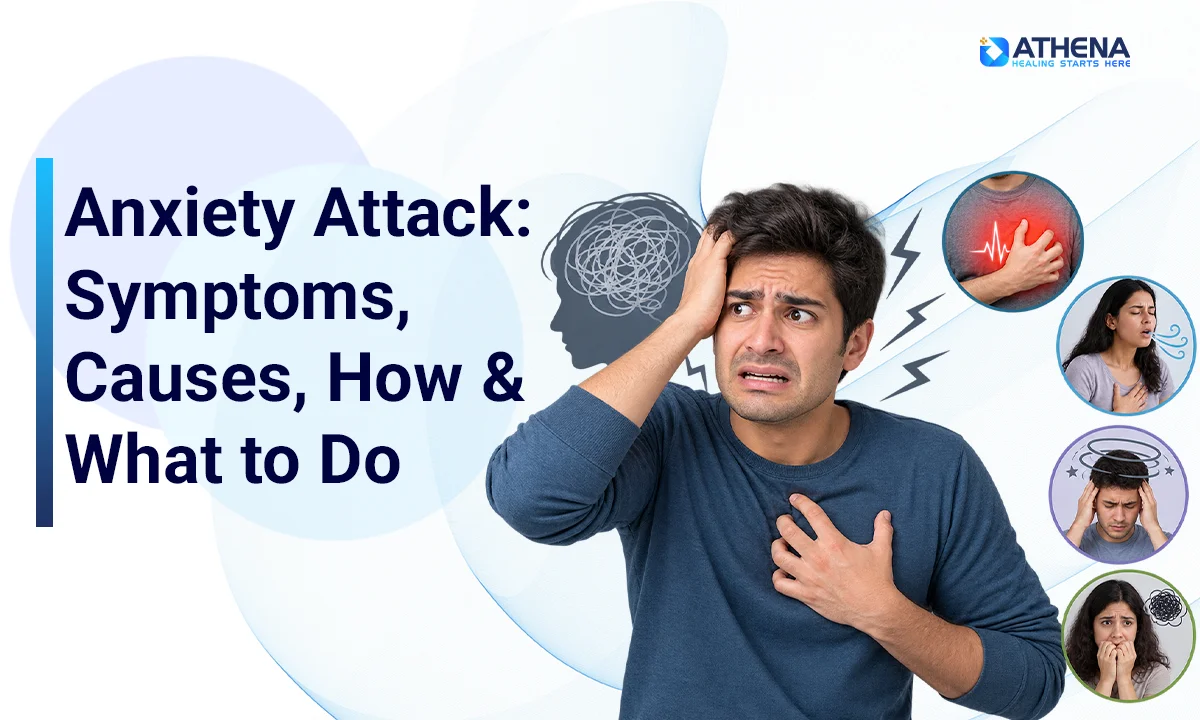

A pounding heart, a tight chest, and a mind that insists something terrible is about to happen can make any moment feel like an emergency. If you are in the middle of an anxiety attack at the moment, take a deep breath and keep on reading, because it will pass. This article will tell you all about the symptoms of an anxiety attack, what triggers them, how to calm down within minutes, and which treatment is effective over the long term. You can also learn when to visit a specialist for anxiety disorder treatment.
What Is an Anxiety Attack?
An anxiety attack is a sudden wave of intense fear or worry that builds when your brain interprets a situation as a threat. Your body releases adrenaline, causing a racing heart, sweating, and shaky hands. Most attacks peak within about 10 minutes and fade within 20 to 30 minutes.
Doctors do not list “anxiety attack” as a separate diagnosis. They use the term for a spike of anxiety linked to a condition such as generalised anxiety, social anxiety, or panic disorder, which are among the main types of anxiety disorders. The numbers show how common this is: the WHO estimates that 301 million people lived with an anxiety disorder in 2019, and roughly 1 in 10 adults has at least one panic attack in a year.
Anxiety Attack Symptoms: Top Signs to Watch For
The symptoms of an anxiety attack are manifested in the body first, and then they affect the brain. Physical signs of an attack may include:
A pounding or racing heart
Chest pain or pressure
Shortness of breath or a choking sensation
Sweating, shaking, or coldness in the extremities
Dizziness, nausea, or stomach cramping
Numbness or tingling in the extremities
The mind reacts, too. You may feel a sense of doom, fear of losing control, detachment from yourself, racing thoughts, or a strong urge to escape. Breathlessness frightens people the most, yet shortness of breath from anxiety usually eases once your breathing slows down.
The signs of an anxiety attack develop over minutes or even several hours, starting with restlessness, irritability, and stomach discomfort. General anxiety symptoms between attacks may include persistent worry, sleep difficulties, and tense muscles.
Panic Attack vs Anxiety Attack: What Is the Difference?
People use both terms for the same experience, but they differ in timing and cause. This table shows the main contrasts:
Feature | Anxiety Attack | Panic Attack |
Onset | Builds gradually after a worry or trigger | Strikes suddenly, often with no trigger |
Duration | Minutes to hours | Peaks in about 10 minutes, ends within 30 |
Intensity | Mild to severe | Severe and overwhelming |
Typical thought | “What if something goes wrong?” | “I am dying or losing control” |
Medical term | Not a formal diagnosis | Recognised in DSM-5, linked to panic disorder |
Anxiety Attack Causes: Why Does It Happen?
Anxiety attack causes are rarely singular. Typically, several factors from the list below contribute to the occurrence of panic episodes:
chronic stress due to work, finances, exams, or family problems
genetic predisposition, as having a family member with anxiety increases one’s risk
exposure to a distressing event or loss
hormonal fluctuations and other medical problems, for example, thyroid disorders
more than 400 mg of caffeine per day (roughly four cups of coffee), and insomnia
alcohol abuse, tobacco, and substance addictions or withdrawal
Substances deserve a closer look. Stimulants push the nervous system into overdrive, and even high-functioning drug addiction often hides anxiety and panic behind a busy, successful routine. Triggers differ from person to person, so jot down what happened in the hour before each episode.
How to Calm Down From an Anxiety Attack: 7 Steps That Work
Knowing how to respond to anxiety attacks helps one get rid of them. The following method should be used in the given order:
Name the attack: Tell yourself that this is an anxiety attack that will pass.
Control the breath: Inhale for four counts, hold for another four counts. Then, exhale for six counts. Repeat for two to five minutes.
Ground yourself: Say out loud or to yourself five things you see, four things you feel, three things you hear, two things you smell, and one thing you taste.
Take away the tension: Lower your shoulders, unclench your jaw, make a fist for five seconds, and then release.
Cool off: Splash some cold water on your face. If that is impossible, hold a cold glass of water.
Get some exercise: If possible, take a 5-minute walk to lower your adrenaline.
Ask for help: Contact a person you trust.
These steps also help you reduce anxiety immediately on ordinary stressful days. To manage anxiety attacks over the long run, sleep 7 to 9 hours, exercise for 30 minutes on most days, and keep caffeine low.
When to See a Doctor: Benefits of Getting Help Early
Speak to a specialist if attacks keep returning, if you dread the next one, if you avoid places or people, or if you use alcohol or pills to cope. Seek urgent help at once if you have thoughts of harming yourself.
Early treatment leads to fewer attacks, faster recovery, and less avoidance. Athena Behavioral Health has centres in Gurgaon, Delhi, Greater Noida, and Guwahati, and the care team starts with a confidential assessment before suggesting a plan. Specialist panic disorder treatment can stop the cycle of fear before it takes over your routine.