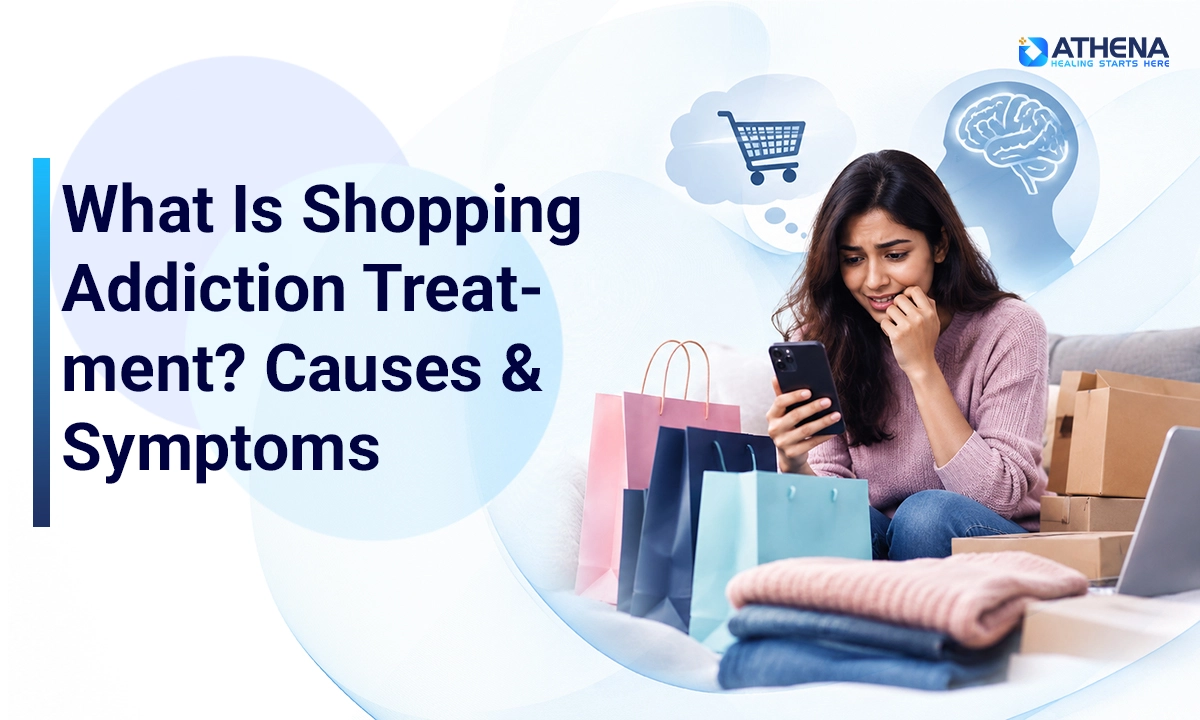

Do you access shopping apps when you are feeling down, hide parcels from your family, or tell yourself that this is the final order? If it sounds familiar, you may be wondering about shopping addiction treatment and if it can be effective. It can. Shopping addiction therapy is a program that includes therapy, mental health care, and budgeting practices for the purpose of stopping the buying behaviors and controlling feelings. This guide explains the symptoms, the causes, and what recovery entails.
What Is Shopping Addiction?
Shopping addiction, also called compulsive buying, is a pattern of repeated, difficult-to-control shopping that continues despite financial problems, emotional distress, or conflict with loved ones. A person may buy things they do not need, feel a temporary sense of excitement after placing an order, and then experience guilt or regret once the purchase arrives.
Shopping addiction is not simply poor money management or a lack of willpower. It may be linked to underlying emotional difficulties or other mental health concerns, which a qualified professional can assess.
Shopping Addiction Causes: Why Do People Shop Compulsively?
When one buys a thing, the brain releases the dopamine chemical that is associated with pleasure. Your brain begins to crave that quick rush more and more.
Many people fall into the trap of a "treat yourself" addiction when they are triggered by emotions such as stress, rejection, grief, or boredom.
Compulsive buying is commonly accompanied by coexisting conditions, such as depression, anxiety, OCD, and other addictions.
Individuals who act quickly on urges have difficulties stopping before making a payment.
With influencers, flash sales, and countdown timers making desire a constant, it is on all day.
Healthy Shopping vs Shopping Addiction
If shopping has become your main way of managing difficult emotions, understanding mental health therapy can help you explore how professional support may address the patterns behind compulsive buying.
Area | Healthy Shopping | Shopping Addiction |
Planning | You buy what you need or planned | You buy on impulse, often daily |
Feeling after | Satisfied | Guilty, anxious or empty |
Control | You can walk away | You feel unable to stop |
Money impact | Fits your budget | Leads to debt or hidden loans |
Secrecy | Open about purchases | Hides items and receipts |
Emotional link | Not tied to mood | Used to escape bad feelings |
Top Symptoms of Shopping Addiction to Watch For
It is estimated that about 1 in every 20 adults suffers from compulsive buying behaviour, and that this usually begins in the late teens or early twenties. One-click payments, EMI offers, buy-now-pay-later apps, and same-day delivery have made spending even more convenient than ever before.
The following are some of the most common signs and symptoms of shopping addiction:
We've all had that time in our lives when we've made an impulsive purchase. Compulsory buying is different. Look for signs of:
There's excitement when they are purchased and shame or guilt later on.
You avoid showing bags, bills/card statements to those close to you.
Many parcels do not open, and clothes are not used at home.
You overspend and pay for it using credit cards or EMIs
You make an effort to reduce, but you fall short in days. You would like to reduce, but you can't in days.
You shop for a sense of security, to avoid feeling alone or depressed.
The regular cause of household bickering is money.
Top Benefits of Shopping Addiction Treatment
Fewer urges and shorter episodes of impulsive buying
Less debt stress and a clearer view of their finances
Better sleep and mood once the guilt cycle stops
Repaired trust with partners, parents, and children
Healthier ways to handle stress, such as exercise, hobbies, and talking it out
Shopping Addiction Treatment in India
In India, many families brush off heavy spending as a "shauk" or a phase, so people wait years before they seek help. That delay costs money and mental peace. Clinicians now treat compulsive shopping addiction like any other behavioural addiction, with a proper diagnosis and a clear plan. At Athena Behavioural Health, specialists treat behavioural addictions alongside drug, alcohol, and mental health conditions, so you do not have to explain yourself twice or split your care across different clinics. If you want to know how structured recovery works in practice, you can read about de-addiction treatment and how a team approach supports long-term change.
Conclusion
Shopping addiction is a real issue that requires professional help to be solved. The key point is that the person will not have to tackle the problem alone but can rely on the support of family members and specialists. Also, a consultation with a lawyer and a better financial planner can be of great importance in such cases. Remember that the earlier the disorder is diagnosed, the less harmful it will be to one's finances and life in general. If you suspect that you have a shopping addiction, it is important to contact experienced professionals at Athena Behavioral Health as soon as possible.