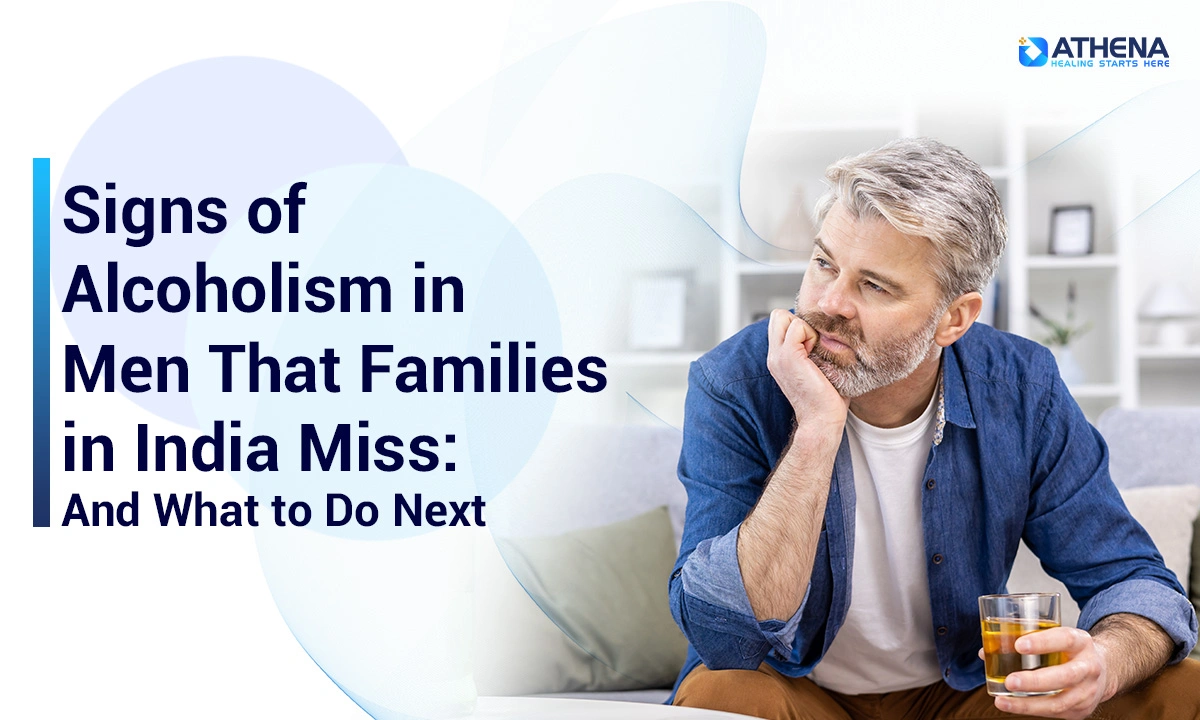

Recognising the signs of alcoholism in men India can be difficult because the early symptoms often resemble stress, long working hours, or social drinking. Changes in behaviour, increasing alcohol consumption, withdrawal symptoms, and neglect of responsibilities are common warning signs. Early professional support can improve recovery outcomes and help families rebuild healthier relationships.
Alcohol addiction often develops gradually, making it easy for families to overlook the warning signs. Understanding the signs of alcoholism in men India can help loved ones recognise when casual drinking has progressed into Alcohol Use Disorder (AUD). If you are concerned about someone close to you, seeking guidance from Athena Behavioral Health, which offers evidence-based alcohol addiction treatment, can be an important first step towards recovery.
What Is Alcohol Use Disorder (AUD)?
Alcohol Use Disorder (AUD) is a medical condition in which a person finds it difficult to control or stop drinking despite experiencing health, relationship, or work-related problems. It exists on a spectrum, ranging from mild to severe, and can affect people from all walks of life.
Unlike occasional or social drinking, AUD changes how the brain responds to alcohol over time. A person may continue drinking even when they understand its harmful effects because physical dependence and psychological cravings make quitting difficult.
Recognising AUD as a health condition rather than a personal weakness helps reduce stigma and encourages people to seek appropriate treatment.
Alcoholism vs. Alcohol Use Disorder
The term alcoholism is still commonly used in everyday conversations. However, healthcare professionals now prefer the term Alcohol Use Disorder (AUD) because it better reflects the range of symptoms and severity experienced by different individuals. Exploring alcohol vs. drug addiction and how treatments differ helps clarify how clinical care is customized across various substances.
Someone with AUD may:
Drink more than intended.
Experience strong cravings for alcohol.
Find it difficult to reduce or stop drinking.
Continue drinking despite health, family, or financial consequences.
Develop withdrawal symptoms when alcohol is unavailable.
The earlier AUD is recognised, the better the chances of successful treatment and long-term recovery.
Why Men in India Are More Likely to Go Undiagnosed
Several social and cultural factors make it harder to identify alcohol addiction among men in India.
Drinking Is Often Socially Accepted: Alcohol is commonly associated with celebrations, business meetings, social gatherings, and weekend relaxation. Because drinking is normalised in many situations, unhealthy patterns may develop gradually without attracting concern.
Work Stress Masks the Problem: Many men attribute increased drinking to demanding jobs, financial pressures, or long working hours. Families may also assume alcohol is simply a way to unwind after work rather than recognising it as a developing dependency.
Stigma Delays Treatment: In many households, addiction is still misunderstood. Concerns about social reputation, fear of judgment, or feelings of shame may prevent families from discussing the issue openly or seeking professional support.
Families Adapt Instead of Recognising the Problem: Loved ones often begin adjusting their routines around the person's drinking habits. They may make excuses, cover responsibilities, or avoid difficult conversations, unintentionally delaying intervention.
Why Families Often Miss the Early Signs of Alcoholism in Men
Alcohol addiction rarely develops overnight. Instead, it progresses gradually, making early warning signs easy to dismiss. Understanding what happens when you drink alcohol everyday helps shed light on how habitual use shifts from a coping mechanism into dependence.
Understanding the signs of alcoholism in men India requires looking beyond how often someone drinks. Behavioural, emotional, and physical changes often appear long before severe dependence develops.
"He's Just Under Stress"
Mood swings, irritability, and fatigue are commonly blamed on workplace stress or financial responsibilities. While stress can influence behaviour, persistent changes accompanied by increasing alcohol use should not be ignored.
"Everyone Drinks"
Because social drinking is common, families may believe frequent alcohol consumption is normal. However, regular drinking that begins interfering with daily life may indicate something more serious.
Mood Changes Become Normal
A person who becomes unusually impatient, withdrawn, or emotionally unpredictable may be experiencing alcohol-related changes rather than simply having a difficult day. Identifying these subtle alcohol not under control warning signs early on can lead to crucial early intervention.
Financial Problems Are Explained Away
Unexpected spending, borrowing money frequently, or neglecting financial responsibilities may sometimes be linked to increasing alcohol use.
The Family Begins Covering Up
Many families unknowingly protect the individual by making excuses for missed commitments or avoiding conversations about drinking. Although done with good intentions, this can delay the person from receiving help.
15 Signs of Alcoholism in Men That Families Commonly Miss
Recognising the signs of alcoholism in men India involves observing patterns rather than isolated incidents. The following warning signs may indicate that professional assessment is needed.
1. Drinking More Frequently Than Before
A person who once drank occasionally may begin consuming alcohol several times a week or even daily. The gradual increase often goes unnoticed because it happens over months or years.
2. Needing More Alcohol to Feel the Same Effect
One of the earliest signs of alcohol dependence is increased tolerance. Larger amounts of alcohol are needed to experience the same effects that smaller quantities once produced.
3. Drinking Alone or in Secret
Someone may begin hiding alcohol, drinking before social events, or consuming alcohol privately rather than only in social situations.
Secretive drinking often indicates growing dependence.
4. Becoming Irritable Without Alcohol
When alcohol becomes unavailable, a person may appear restless, anxious, short-tempered, or unusually frustrated.
These behavioural changes may be early withdrawal symptoms rather than personality changes.
5. Hiding Bottles or Lying About Drinking
Families may notice:
Empty bottles hidden around the house
Attempts to minimise alcohol consumption
Denying recent drinking despite obvious signs
Making excuses for frequent alcohol purchases
Dishonesty around drinking often reflects fear of confrontation rather than intentional deception.
6. Missing Work or Family Responsibilities
Alcohol use may begin affecting everyday responsibilities.
Examples include:
Frequently arriving late at work
Missing important family events
Declining work performance
Neglecting household responsibilities
When alcohol consistently interferes with daily functioning, professional evaluation becomes important.
7. Memory Blackouts
Blackouts occur when a person cannot remember conversations or events that happened while drinking.
Although they may appear physically awake during the episode, the brain is unable to form new memories.
Repeated blackouts should never be considered normal.
8. Noticeable Personality Changes
Family members often describe feeling as though the person has "changed."
Common changes include:
Increased anger
Emotional withdrawal
Reduced patience
Aggressive behaviour
Loss of interest in hobbies
These changes may develop slowly, making them difficult to recognise at first.
9. Sleep Problems
Alcohol can disrupt healthy sleep patterns even if it initially causes drowsiness.
Over time, a person may experience:
Difficulty staying asleep
Poor-quality sleep
Daytime fatigue
Early morning waking
Persistent sleep disturbances may contribute to worsening mood and overall health.
10. Losing Interest in Family Activities
Someone who previously enjoyed spending time with family may begin avoiding gatherings, celebrations, or everyday activities.
Instead, alcohol gradually becomes the centre of their routine.
11. Neglecting Personal Hygiene and Health
As dependence progresses, self-care may decline.
Family members may notice:
Poor grooming
Skipping meals
Weight changes
Ignoring medical appointments
Reduced concern about appearance
These changes often occur alongside increasing alcohol use.
12. Taking Risks After Drinking
Alcohol impairs judgment and decision-making.
Risk-taking behaviours may include:
Driving after drinking
Unsafe decisions
Arguments or physical confrontations
Workplace accidents
Financial impulsivity
These behaviours increase the likelihood of serious consequences for both the individual and their family.
13. Experiencing Withdrawal Symptoms
When alcohol is unavailable, some people develop withdrawal symptoms such as:
Trembling hands
Sweating
Anxiety
Nausea
Headaches
Difficulty sleeping
Withdrawal symptoms suggest physical dependence and should always be assessed by a healthcare professional.
14. Continuing to Drink Despite Health Problems
A person may continue drinking even after developing:
High blood pressure
Liver-related concerns
Digestive problems
Mental health difficulties
Relationship conflicts
Continuing alcohol use despite negative consequences is one of the defining characteristics of Alcohol Use Disorder.
15. Repeatedly Trying—and Failing—to Quit
Many people with alcohol dependence genuinely want to stop drinking.
They may:
Promise to quit after a difficult incident.
Stay sober for a few days or weeks.
Return to drinking despite strong intentions.
Repeated unsuccessful attempts to stop are often a sign that professional treatment, rather than willpower alone, is needed.
Physical Signs of Alcohol Addiction in Men
The signs of alcoholism in men India are not limited to behaviour. Alcohol dependence can also affect the body in noticeable ways. While these symptoms may have other causes, they should not be ignored when they occur alongside regular alcohol use.
Changes in Appearance
Family members may notice gradual changes such as:
Red or puffy face
Bloodshot eyes
Unexplained weight loss or gain
Dry skin
Poor grooming habits
These changes often develop slowly and may become more noticeable over time.
Digestive Problems
Frequent alcohol use can affect the digestive system.
Common symptoms include:
Loss of appetite
Nausea
Vomiting
Acid reflux
Stomach pain
Some people also experience ongoing digestive discomfort after drinking.
Tremors and Sweating
Physical dependence may cause withdrawal symptoms when alcohol levels drop.
These can include:
Shaking hands
Excessive sweating
Restlessness
Headaches
Increased heart rate
Withdrawal symptoms should always be assessed by a medical professional.
Frequent Illness
Heavy alcohol use can weaken the immune system.
As a result, a person may:
Catch infections more often
Take longer to recover from illness
Feel constantly tired
Have reduced energy throughout the day
Emotional and Behavioural Warning Signs
Alcohol addiction also affects emotional health and relationships.
Many families notice these changes before recognising the drinking problem itself.
Increased Irritability
A person may become:
Easily frustrated
Short-tempered
Defensive when questioned
Angry over minor issues
These mood changes often become more frequent as dependence increases.
Anxiety
Alcohol may temporarily create a sense of relaxation, but regular drinking can worsen anxiety over time.
Signs include:
Constant worrying
Feeling restless
Difficulty concentrating
Feeling uneasy without alcohol
Depression
Some men begin withdrawing emotionally from family and friends.
They may appear:
Sad
Unmotivated
Hopeless
Less interested in activities they once enjoyed
Depression and alcohol addiction often occur together and both require professional attention.
Mood Swings
Rapid emotional changes are another warning sign.
Someone may seem cheerful one moment and angry or withdrawn the next.
These unpredictable shifts can affect family relationships and workplace interactions.
Social Withdrawal
Many people with alcohol dependence gradually distance themselves from others.
They may:
Avoid family gatherings
Decline invitations
Spend more time alone
Prefer drinking over social activities
Loss of Motivation
Tasks that once felt important may begin to lose priority.
This can include:
Career goals
Household responsibilities
Fitness
Personal interests
Family commitments
How Alcohol Addiction Affects Families
Alcohol addiction rarely affects only one person.
It often changes the emotional, financial, and social wellbeing of the entire family.
Relationship Conflicts
Arguments may become more frequent.
Trust may be affected because of:
Broken promises
Dishonesty
Missed responsibilities
Emotional distance
Over time, communication often becomes increasingly difficult.
Financial Stress
Regular spending on alcohol can create financial pressure.
Families may struggle with:
Increased household expenses
Debt
Missed bill payments
Reduced savings
Financial stress can further increase conflict within the home.
Impact on Children
Children are especially sensitive to changes at home.
They may experience:
Anxiety
Confusion
Fear
Poor academic performance
Emotional withdrawal
Early support for the entire family is important.
Emotional Burnout for Caregivers
Partners and parents often carry significant emotional responsibility.
Many experience:
Chronic stress
Sleep problems
Feelings of guilt
Constant worry
Emotional exhaustion
Supporting a loved one should not come at the expense of one's own wellbeing.
Enabling Behaviours
Families sometimes try to protect the person from consequences.
Examples include:
Making excuses for missed work
Covering up drinking
Paying debts caused by alcohol
Avoiding difficult conversations
Although well-intentioned, these actions may unintentionally delay treatment.
When Should You Seek Professional Help?
Waiting for alcohol addiction to become severe can make recovery more challenging.
Seeking help early often leads to better outcomes.
Consider professional support if your loved one:
Drinks every day or almost every day.
Cannot reduce alcohol consumption.
Experiences withdrawal symptoms.
Misses work or family responsibilities.
Continues drinking despite health concerns.
Becomes aggressive or emotionally withdrawn.
Hides alcohol or lies about drinking.
These are important signs of alcoholism in men India that should not be ignored.
Warning Signs That Need Immediate Medical Attention
Some situations require urgent medical care.
Seek immediate help if the person experiences:
Seizures
Hallucinations
Severe confusion
Loss of consciousness
Difficulty breathing
Severe withdrawal symptoms
These symptoms may indicate a medical emergency.
Why You Shouldn't Stop Heavy Drinking Suddenly
Many people believe quitting alcohol immediately is always safe.
However, this is not true for everyone.
For people with alcohol dependence, sudden withdrawal can lead to serious complications.
Medical supervision may be needed to manage withdrawal safely and reduce health risks.
What Happens During Alcohol Addiction Treatment?
Treatment is not the same for everyone.
The right plan depends on the person's health, level of dependence, and individual needs.
At Athena Behavioral Health, alcohol addiction treatment follows an evidence-based and personalised approach designed to support long-term recovery.
Comprehensive Assessment
Treatment begins with a detailed evaluation.
The clinical team assesses:
Drinking history
Physical health
Mental health
Family circumstances
Recovery goals
This helps create an individualised treatment plan.
Medically Supervised Detoxification
For people with physical dependence, detox may be the first step.
Medical professionals monitor withdrawal symptoms and provide appropriate care to improve safety and comfort during the detox process.
Psychological Assessment
Alcohol addiction often exists alongside conditions such as:
Anxiety
Depression
Trauma
Stress-related disorders
Identifying these concerns helps ensure comprehensive care.
Behavioural Therapies
Therapy focuses on understanding the thoughts and behaviours linked to alcohol use.
Treatment may include:
Cognitive Behavioural Therapy (CBT)
Motivational Interviewing (MI)
Individual counselling
Group therapy
These approaches help people develop healthier coping strategies and reduce the risk of relapse.
Can Alcoholism Be Treated Successfully?
Yes. Alcohol addiction is treatable, and many people achieve lasting recovery with the right support and commitment.
Recovery is not simply about stopping alcohol use. It also involves improving physical health, emotional wellbeing, relationships, and daily routines.
The earlier drug addiction treatment begins, the better the chances of preventing long-term complications.
Recovery Takes Time
Every recovery journey is different.
Some people improve steadily, while others experience setbacks before making lasting progress.
Consistent professional support can help people stay focused on their recovery goals.
Personalised Treatment Matters
There is no single treatment plan that works for everyone.
Factors that influence treatment include:
Severity of alcohol dependence
Physical health
Mental health
Family support
Personal recovery goals
A personalised approach addresses both alcohol use and the underlying factors contributing to it.
At Athena Behavioral Health, treatment plans are tailored to each individual's needs. Following a comprehensive clinical assessment, the multidisciplinary team may recommend medically supervised detoxification, psychiatric evaluation, Cognitive Behavioural Therapy (CBT), Motivational Interviewing (MI), individual and group counselling, family therapy, and structured relapse prevention planning. This integrated approach supports both recovery and long-term wellbeing.
Ongoing Support Reduces Relapse Risk
Recovery continues even after formal treatment ends.
Long-term support may include:
Individual counselling
Support groups
Family therapy
Lifestyle changes
Regular follow-up sessions
These steps can help people maintain healthy habits, manage triggers more effectively, and build confidence in their recovery journey.
If you or someone you care about is struggling with alcohol dependence, seeking professional help early can make a meaningful difference. Athena Behavioral Health provides confidential, evidence-based alcohol addiction treatment with personalised care designed to support individuals and their families through every stage of recovery.
How Families Can Support Recovery
Family members often play an important role throughout recovery.
Support should focus on encouragement rather than criticism.
Start an Honest Conversation
Choose a calm and private setting.
Share your concerns using supportive language instead of blame.
For example:
"We've noticed you're not yourself lately."
"We're worried about your health."
"We want to help."
A respectful conversation is more likely to encourage openness.
Avoid Blaming or Shaming
Criticism can make someone feel defensive.
Instead:
Listen without interrupting.
Acknowledge their feelings.
Focus on concern rather than judgment.
Compassion often leads to more productive conversations.
Encourage Professional Help
You don't need to have all the answers.
Encourage your loved one to speak with an addiction specialist who can assess their situation and recommend appropriate treatment.
Professional guidance is especially important when the signs of alcoholism in men India include withdrawal symptoms or repeated unsuccessful attempts to quit.
Participate in Family Therapy
Addiction affects the entire household.
Family counselling can help:
Improve communication
Rebuild trust
Resolve conflicts
Learn healthy coping strategies
Support long-term recovery
It also helps family members better understand Alcohol Use Disorder.
Create a Supportive Environment
Small changes at home can make recovery easier.
These include:
Encouraging healthy routines
Celebrating progress
Avoiding alcohol-related triggers where possible
Supporting regular medical appointments
Being patient during setbacks
Recovery is often more successful when families work together.
Conclusion
Recognising the signs of alcoholism in men India is the first step towards helping someone receive the support they need. What may appear as work stress, mood changes, or social drinking can sometimes indicate Alcohol Use Disorder.
Ignoring these warning signs can allow the condition to progress, affecting physical health, emotional wellbeing, relationships, and family life.
Early intervention makes a meaningful difference. If you notice persistent changes in behaviour, increasing alcohol consumption, withdrawal symptoms, or difficulty managing daily responsibilities, consider seeking professional guidance rather than waiting for the situation to worsen.
Take the First Step Towards Recovery with Athena Behavioral Health
If someone you care about is showing the signs of alcoholism in men India, you don't have to face the situation alone.
At Athena Behavioral Health, experienced addiction and mental health professionals provide compassionate, confidential, and evidence-based care for individuals living with Alcohol Use Disorder.
Treatment plans are tailored to each person's needs and may include:
Comprehensive clinical assessment
Medically supervised detoxification
Psychiatric evaluation
Cognitive Behavioural Therapy (CBT)
Motivational Interviewing (MI)
Individual and group counselling
Family therapy
Relapse prevention planning
Structured aftercare support
Whether you're looking for guidance for yourself or a loved one, early support can make recovery more achievable.
Contact Athena Behavioral Health today to learn more about personalised alcohol addiction treatment and begin the journey towards healthier living.