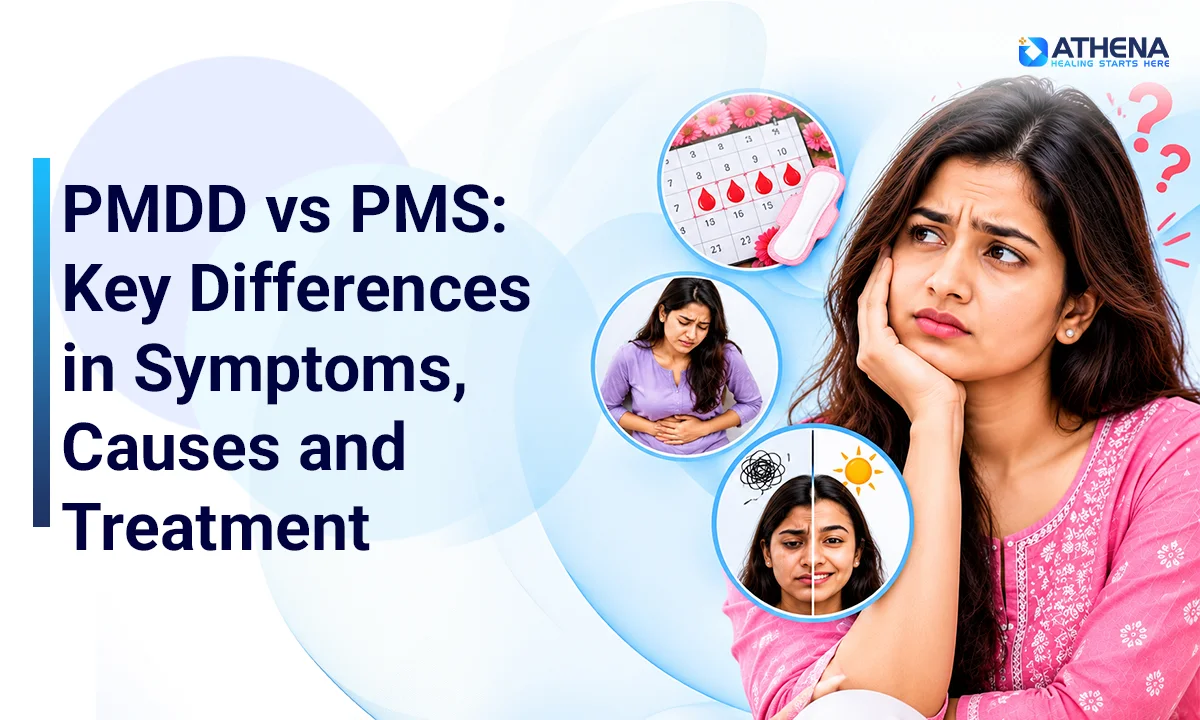

Every month you can feel completely different pre-period. You feel irritable, emotional, tired or pessimistic for a week or two but then once you get your period you feel like yourself again.
Many women are told these feelings are just PMS. However sometimes they can be caused by PMDD. Knowing the difference between PMS and PMDD will help you receive the right support. This guide will show you how to tell them apart, what causes them, a quick quiz to see which one you have and what treatments are available.
What Is PMS? A Simple Premenstrual Syndrome Definition
Pre-menstrual syndrome definition says that it is a collection of physical and psychological symptoms that occur in the one to two weeks before periods and improve when bleeding occurs.
This is very common. Up to 3 out of every 4 women who have periods will experience some pre-period symptoms. Around 20-30% will have symptoms severe enough to cause problems. Common symptoms include:
Bloating and breast tenderness
Headache and muscle pains
Tiredness and sleeping problems
Cravings for food
Mild mood swings and feeling low.
While it can be uncomfortable, most women will still be able to work, study and maintain relationships.
What Is PMDD, and How Is It Different?
PMDD (premenstrual dysphoric disorder) is a severe, hormone-related mood disorder. It is not “bad PMS.” It affects about 3 to 8% of menstruating women, and the emotional symptoms can be intense and disabling.
The key difference is impact. PMS is an inconvenience. PMDD can take over your life for up to two weeks every month. It is recognised in the DSM-5 as a depressive disorder.
PMDD can overlap with other conditions. If you live with PCOS, see how PCOS can cause depression and anxiety.
PMDD Symptoms vs PMS: What Is the Difference?
Here is a side-by-side view of PMDD symptoms vs PMS:
Aspects | PMS | PMDD |
How common | Up to 75% of women | About 3-8% of women |
Mood symptoms | Mild to moderate irritability, sadness | Severe mood swings, rage, deep depression, anxiety, hopelessness |
Physical symptoms | Bloating, cramps, tender breasts | Same, plus fatigue, joint pain, sleep problems |
Effect on daily life | Manageable | Disrupts work, relationships, and self-worth |
Thoughts of self-harm | Rare | Can occur, needs urgent attention |
Medical need | Often settles with self-care | Usually needs professional treatment |
For a PMDD diagnosis, doctors look for five or more symptoms, with at least one being a core mood symptom such as marked mood swings, irritability, depressed mood, or anxiety. The symptoms must appear in the week before your period, improve within a few days of it starting, and fade in the week after, our PTSD treatment page explains how trauma affects the mind and body
What Causes PMS and PMDD?
Doctors do not blame abnormal hormone levels. Instead, research points to an unusual sensitivity to normal hormonal shifts. After ovulation, oestrogen and progesterone rise and fall, and these changes affect serotonin, the brain chemical that regulates mood, sleep, and appetite.
Factors that raise your risk include:
A family history of PMDD or mood disorders
Past depression or anxiety
A history of trauma. Studies link it with PMDD
High stress, poor sleep, and heavy caffeine or alcohol use
To learn more about the hormone-mood link, read how hormonal changes affect women’s mental health.
PMDD vs PMS Quiz: Which Pattern Fits You?
This PMDD vs PMS quiz is a quick self-check, not a diagnosis. Think about your last three cycles and answer yes or no:
Do you feel intense sadness, rage, or hopelessness in the week before your period?
Do these feelings vanish within a few days of your period starting?
Have you cancelled plans, missed work, or had major arguments because of them?
Do you feel “out of control” or like a different person?
Have you had thoughts of harming yourself during this phase?
How Are PMS and PMDD Diagnosed?
There is no blood test. Diagnosis rests on tracking. Record your mood, sleep, and physical symptoms daily for at least two cycles, using a simple app or notebook. The pattern matters more than any single bad day.
A psychiatric assessment and diagnosis also rules out look-alikes such as depression, anxiety, thyroid problems, or perimenopause. It is important because PMDD can also worsen an existing condition.
PMS vs PMDD Treatment: What Actually Works?
For PMS:
Exercise for about 150 minutes a week
Sleep 7 to 9 hours
Eat smaller, balanced meals, and cut back on caffeine, salt, and alcohol
Calcium (around 1,200 mg a day, from food or supplements) has reduced symptoms in clinical trials
For PMDD, doctors may add:
SSRI antidepressants, which work quickly in PMDD and can be taken only in the second half of the cycle or all month. Roughly 6 in 10 women respond well.
Hormonal treatment, such as certain birth control pills, to steady the hormone swings
Cognitive behavioural therapy (CBT) to manage mood spikes and negative thought loops
Mind-body practices. Our mindfulness and yoga programme can help with stress and sleep alongside medical care.
When Should You See a Doctor?
Your symptoms affect work, studies, or relationships
Self-care has not helped after two to three cycles
You feel hopeless, or you have thoughts of self-harm