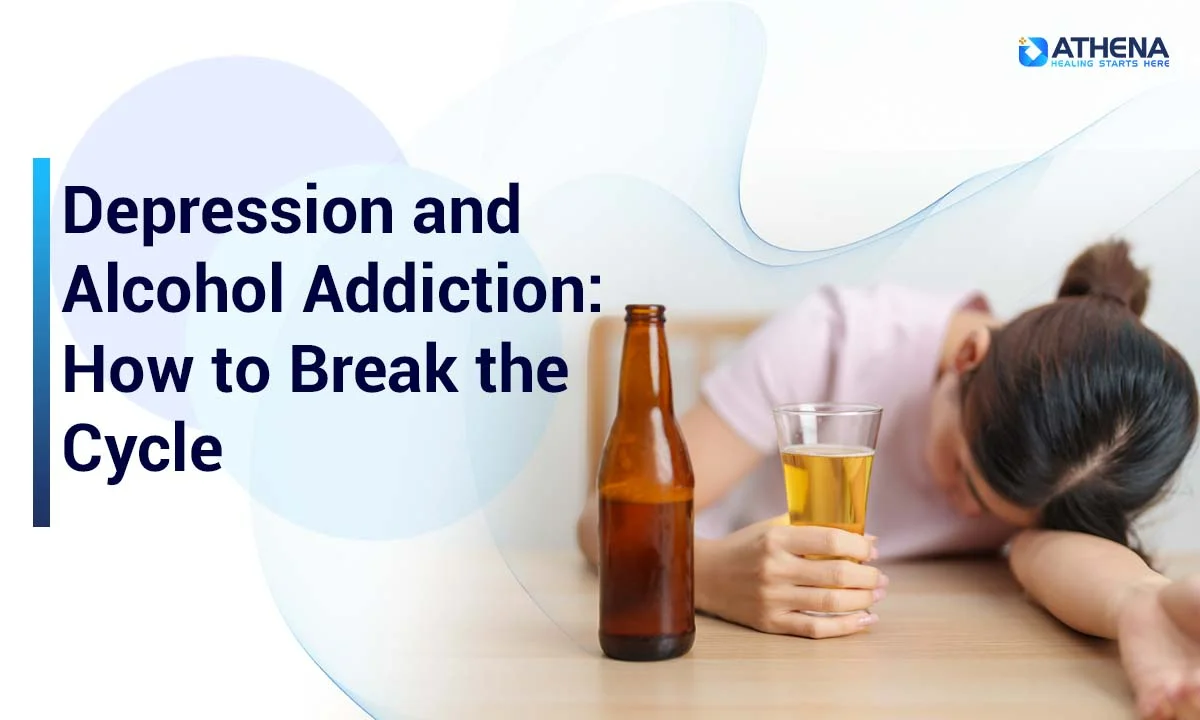

Depression and alcohol addiction rarely start with a big decision. This begins with a drink to relax, one to help you sleep, and finally another to feel okay. The effect doesn’t last long, and the depression that sets in makes you return to drinking again.
If the cycle above rings a bell, the problem is not lack of self-discipline. There are two health disorders working against you, but both can be effectively treated. This article will discuss their interaction, the effects of quitting drinking, and treatment options.
What is Depression and Alcohol Addiction?
Depression and alcohol addiction describe a situation where a mood disorder and an alcohol use disorder exist in the same person. Depression brings lasting sadness, loss of interest, poor sleep and low energy. Alcohol use disorder means you cannot control your drinking even though it harms your health, work or relationships.
Doctors call this combination a dual diagnosis. Each condition worsens the other, which is why treating only one tends to fail and why specialised depression and addiction treatment is built to address both together.
How Common is Alcohol Addiction With Depression?
The degree of overlap is actually quite a lot bigger than most people think. Scientific research into mental health disorders consistently demonstrates that one increases the risk of the other, while both together are more difficult to overcome without proper support.
What research shows | Approximate figures |
People with major depression who also misuse alcohol at some point | About 1 in 3 |
Higher chance of depression in people with an alcohol problem | 2 to 3 times |
People in severe withdrawal who develop delirium tremens | 3 to 5% |
Time for alcohol-related low mood to start lifting after quitting | 2 to 4 weeks |
If these figures feel personal, know that many people in the same position recover fully.
Can Alcohol Cause Depression?
Of course, alcohol depresses the central nervous system, and the result is that the initial relaxed, joyful state is eventually compensated for by a more depressed one. Chronic consumption of alcohol lowers serotonin and dopamine levels, reducing the person’s capacity to experience joy and motivating him or her. The quality of sleep worsens significantly, and the level of stress remains high all the time.
This problem is aggravated by real-world consequences – debt, conflicts, problems at work, which contribute to feelings of guilt along with depression, and this guilt is frequently what makes a person have one more drink.
Can Depression Cause Alcohol Addiction?
It can, and this direction is just as common. A person who feels empty, anxious or lonely may find that alcohol takes the edge off, a habit known as self-medicating. The body adapts quickly, so the same amount stops working and drinking creeps upward.
A few signs show that coping has turned into dependence:
Drinking alone or in secret to manage your mood.
Needing more alcohol than before for the same effect.
Feeling shaky or flat without a drink.
Failing to cut down even after promising yourself you would.
How Much Alcohol Raises the Risk of Depression?
No amount is guaranteed safe for mood, but heavy drinking has a clear link with depression. The National Institute on Alcohol Abuse and Alcoholism defines heavy drinking as more than 4 drinks on a single day or 14 in a week for men, and more than 3 drinks on a single day or 7 in a week for women.
The risk increases depending on the quantity consumed as well as frequency of consumption. The early sign to watch out for is binge drinking days that are followed by days where you feel anxious and low.
Alcohol Withdrawal and Depression: Symptoms and Timeline
Suddenly ending a lengthy period of heavy drinking can result in sadness, anxiety, sweating, insomnia, and intense cravings. This is your body adjusting and the emotional changes can seem to you like your depression becoming more severe. It's normal and it will pass.
The following chart displays some common experiences:
Time after the last drink | What may happen |
6 to 12 hours | Tremors, sweating, nausea, restlessness |
24 to 72 hours | Symptoms peak; seizures or hallucinations in some people |
3 to 5 days | Delirium tremens is possible and needs emergency care |
2 to 4 weeks | Sleep, energy and mood slowly settle |
Several months | Occasional low mood and cravings can linger |
Severe withdrawal can be dangerous, so heavy drinkers should not quit suddenly at home. A supervised medical detoxification programme keeps symptoms under control with constant monitoring, which makes the first few days safer and easier.
Alcohol-Induced Depression vs Depression and Alcohol Use Disorder
Depression associated with heavy drinking is not necessarily a similar disorder. It may be caused by alcohol intake; however, it may occur because depression was there before, and then drinking habits developed.
Features | Alcohol-induced depression | Independent depression |
Cause | Heavy drinking or withdrawal | Exists on its own, often before the drinking |
After quitting | Often improves within 2 to 4 weeks | Continues beyond a month of sobriety |
Main focus of care | Safe detox and recovery support | Therapy, medication or both |
Only a proper assessment by a specialist can tell you which one applies to you.
When Should You Get Professional Help?
There are some symptoms which indicate the need for someone to go and see an expert instead of dealing with the issue on their own.
Feeling depressed or hopeless all the time for two weeks or more.
Consuming alcohol as a way of relaxing or coping with the day's challenges.
A relapse after trying to stop or cut down on drinking.
Feeling suicidal or thinking life is no longer worth living.
In case of feeling suicidal, do well to visit a doctor, a confidant or the emergency room.
What is the Best Alcohol and Depression Treatment?
The best approach is integrated care, where one team treats both conditions together. Treating only the drinking leaves the sadness in place, and treating only the sadness leaves the cravings running. A solid plan usually combines medical detox when the body is dependent, counselling and relapse prevention for the drinking, therapy or medication for mood symptoms, and aftercare once the intensive phase ends.
Focused depression treatment deals with the hopelessness and emptiness behind the drinking, so staying sober does not turn into a daily fight with your own mind.
Which Therapy Works for Alcohol Use and Depression?
Cognitive behavioral therapy is the most widely used option. It helps you catch automatic thoughts such as "I can't cope without a drink" and replace them with steadier ones. The way cognitive behavioral therapy explains why these new habits get easier with practice.
Many programmes pair it with motivational interviewing, which builds your own reasons to change, along with relapse prevention planning and group or family sessions that reduce isolation.
Can Medication Help With Depression and Alcohol Dependence?
Absolutely, there are many who have benefited from taking medications as it is one of the common parts of recovery. There are antidepressants that may be used to deal with depression after the alcohol has left the body.
Never mix antidepressants with alcohol, since it weakens their effect and increases drowsiness and dizziness. Regular visits with an outpatient psychiatry team allow doses to be adjusted safely while you carry on with work and family life.
How Can You Stay Sober While Dealing With Depression?
Routine activities will guard your mental state and cravings will become easier to manage. Routines are effective when used alongside professional help rather than as a replacement for it.
Maintain regular hours for sleeping and waking up.
Exercise for 20 to 30 minutes every day.
Have three meals because cravings may be triggered by low levels of glucose in the bloodstream.
Eliminate all alcoholic beverages in your environment and avoid places where you previously consumed alcohol.
Share your resolution with at least one trusted person.
Since cravings last for 15 to 30 minutes, having a distraction handy, like taking a walk or phoning a friend, becomes necessary during that time period.
Alcohol Addiction Treatment at Athena Behavioral Health
At Athena Behavioral Health, we treat alcohol dependence together with the mental health struggles that often sit behind it. Our alcohol addiction treatment care is built around the person, not a fixed template, so depression, anxiety and stress are part of the plan from the first day.
First, there is a thorough evaluation of your alcoholism and psychological state. Then, your treatment will combine detox, psychotherapy, and psychiatry, offered by professionals who will listen to you without being judgmental. Family support and aftercare are going to play an important role after the initial weeks of treatment.
Ready to Break the Cycle? Take the First Step
You do not have to hit rock bottom or have every answer. You only have to make one call. Speak to a specialist at Athena Behavioral Health today and start building a life that no longer depends on alcohol.