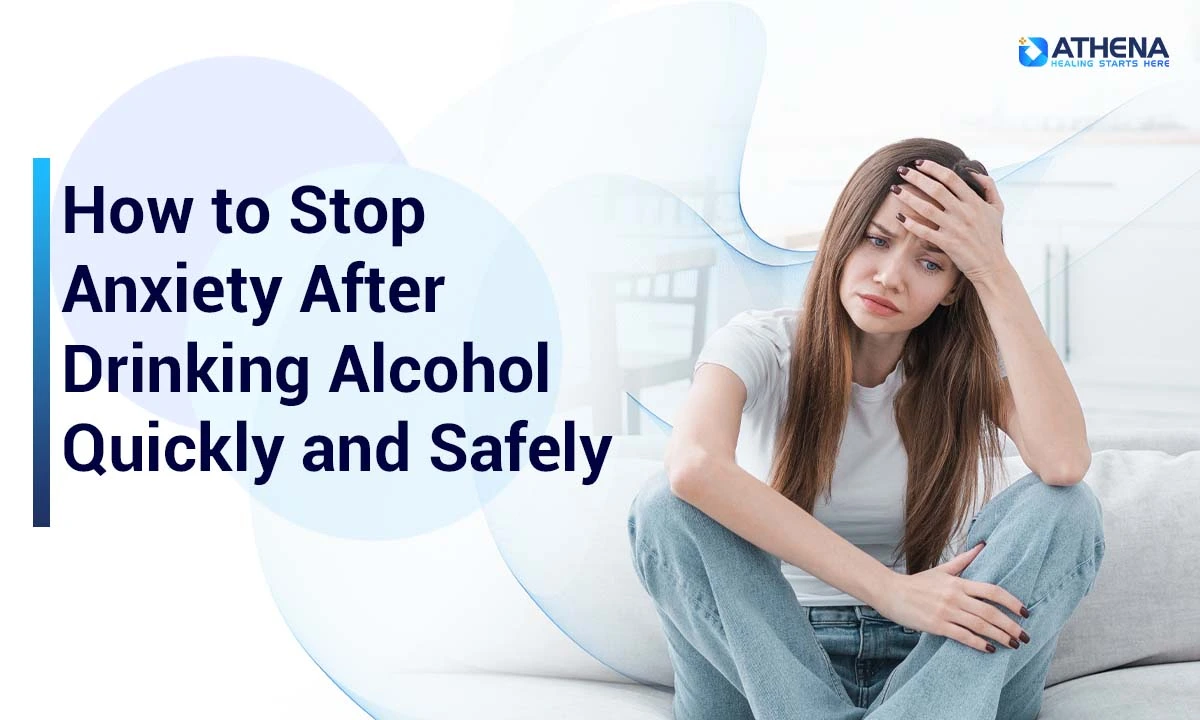

If you are searching for how to stop anxiety after drinking alcohol, you are likely dealing with a racing heart, a restless mind and a heavy sense of dread. It is a very common experience, and nearly 3 in 10 UK adults reported it in a single year. The feeling is usually temporary, and the steps below help you settle it safely and understand when it needs medical attention.
What Is Anxiety After Drinking Alcohol?
Alcohol-induced anxiety is a state of concern, fear, or restlessness that emerges following alcohol withdrawal. The condition is also referred to as “hangxiety,” since it is experienced as part of a hangover following alcohol consumption; however, it can persist beyond the experience of a headache or vomiting. A survey conducted in the US indicated that among the individuals who felt depressed after consuming alcohol, 55% of them cited anxiety as their principal symptom.
Common symptoms of the condition include:
Increased heart rate
Ongoing worry or dread
Recalling what one had said or done the previous night
Hand tremors, chest tightness, or restlessness
Insomnia
Irritability or depression
Why Does Alcohol Cause Anxiety the Next Day?
Alcohol decreases the speed of your brain’s function, hence the relaxing feeling of the initial drink. Once the effects of alcohol have been worn off, the brain will over-compensate, and there will be many other processes occurring simultaneously.
Causes | What happens | How it feels |
Brain chemical rebound | Calming signals fall while alertness signals rise | Jumpy, edgy, on high alert |
Broken sleep | Alcohol reduces deep sleep and wakes you early | Tired but wired |
Dehydration | Fluids and salts are lost | Dizzy, headachy, racing pulse |
Low blood sugar | Alcohol disrupts glucose control | Shaky, weak, irritable |
Regret and memory gaps | The mind fills blanks with worst cases | Embarrassment, overthinking |
Personality matters too. In a University of Exeter study of 97 social drinkers, shy people felt calmer while drinking but had a clear anxiety spike the following day.
How to Stop Anxiety After Drinking Alcohol: 8 Steps That Work
Begin by addressing what your body needs: fluid, nutrition, rest and relaxation. Perform these steps in order and do so gently, since your nervous system is already overloaded. Most people will experience improvement within a few hours.
Drink fluids gradually: Sip water or an oral rehydration solution every 30 to 45 minutes.
Eat properly: Eggs with toast, oatmeal with banana or dal with rice stabilize blood sugar better than any sweets.
Slow down breathing: Inhale during 4 seconds and exhale during 6 seconds for 5 minutes.
Sensory grounding: Identify 5 objects you see, 4 that you touch, 3 sounds you hear, 2 smells you smell and 1 that you taste.
Go for a walk: 15 minutes outside will help get rid of stress hormones.
Avoid caffeine: 1 cup of coffee or tea is okay, while more may produce effects similar to panic attack.
Find someone to talk to: A person who experienced this situation with you may reduce a seemingly insurmountable fear.
Avoid "hair of the dog": Having another drink simply shifts your anxiety into the future.
If you are taking any prescription medication, consult your physician or pharmacist regarding interactions with alcohol.
How Long Does Anxiety Last After Drinking Alcohol?
For most people, anxiety peaks around 12 hours after the last drink and settles within 24 hours. The emotional symptoms often outlast the physical ones, so you may feel fine in your body but still tense and low.
If the feeling lasts several days, or returns after most nights you drink, treat it as a signal. It suggests your body is struggling to recover between drinks.
What Is Alcohol Withdrawal, and How Is It Different from a Hangover?
Alcohol withdrawal refers to the body's response to the absence of alcohol after becoming accustomed to drinking heavily for a long period of time. Hangover anxiety goes away on its own while alcohol withdrawal gets worse and may become hazardous. Both symptoms have a similar appearance during the initial hours.
Features | Hangover anxiety | Alcohol withdrawal |
Starts | A few hours after drinking stops | About 6 to 12 hours after the last drink |
Signs | Worry, shakiness, poor sleep, nausea | Tremors, heavy sweating, fast pulse, hallucinations |
Course | Eases within about a day | Can worsen over 1 to 3 days |
Response | Rest, fluids, food | Same-day medical advice |
The incidence of withdrawal seizures among individuals that suddenly quit after chronic and prolonged drinking is about 5 to 10%, while the mortality rate from untreated delirium tremens is 15 to 20%. If you drink daily, do not quit suddenly on your own. A supervised medical detoxification keeps you monitored through the riskiest days.
What Are the Signs of Alcohol Poisoning?
An excessive intake of alcohol in the body leads to alcohol poisoning, which affects the respiratory system and heart muscles. This is a medical emergency and not a hangover. The following symptoms need to be checked for in one’s self or the people around them:
Vomiting repeatedly
Being confused or having trouble staying awake
Breathing slowly or abnormally
Chilly, clammy, or blue skin
Having seizures or falling unconscious
Call your local emergency number straight away (112 in India) and stay with the person instead of letting them sleep it off alone. It also helps to read up on how alcohol poisoning develops before you ever need it.
Can Drinking Alcohol Cause Panic Attacks?
Yes, A hammering heart, tight chest, breathlessness and a sudden sense of doom after drinking can be a true panic attack. Dehydration, low blood sugar and the nervous system rebound can set one off, and people who already lean anxious are more likely to get them.
If you also feel on edge on days when you have not had a drink, alcohol may be covering up a separate problem. In that case, proper anxiety disorder treatment deals with the cause, so you are not relying on a drink to cope.
How Can You Prevent Anxiety After Drinking?
Prevention beats any solution in the morning. Simple steps in the night affect how you will feel the next day.
Place your limit before the first glass.
Have a good meal before hand so that the alcohol takes a longer time to absorb.
Take water between each drink.
Do not take shots and do not drink quickly.
Never drink to cope with your stress and social anxiety.
Schedule alcohol-free days. Most people sleep better and feel more steady after 1 to 2 weeks.
Explore other options for relaxation, such as exercise, music and company of your friends.
When Does Anxiety After Drinking Point to Alcohol Dependence?
One bad morning is normal. A repeating cycle is different, because anxiety pushes you to drink and drinking brings the anxiety back. The National Institute on Alcohol Abuse and Alcoholism lists the same warning signs that doctors use.
Be honest with yourself if you notice any of these:
Anxiety after almost every session, even one or two drinks.
Drinking to ease the worry caused by the last drink.
Needing more alcohol to feel the same effect.
Shaking or sweating when you go a few hours without a drink.
Several failed attempts to cut down.
These can point to dependence, and structured alcohol addiction treatment brings medical care, therapy and relapse prevention together. If anxiety becomes severe or you feel unsafe, inpatient psychiatric care provides round-the-clock support while you stabilise.
Alcohol Addiction and Anxiety Disorder Treatment at Athena Behavioral Health
At Athena Behavioral Health, alcohol addiction treatment and anxiety disorder treatment go hand in hand due to the relationship that exists between the two. Confidential treatment is provided, and the treatment plan is individualized based on one’s drinking pattern and psychological and physiological condition rather than a standard treatment package.
The typical treatment involves:
Medically assisted detoxification and round the clock supervision.
Psychiatric evaluation to detect any underlying symptoms of anxiety, depression, etc.
CBT and motivational interviewing techniques.
Family therapy, relapse prevention and aftercare services.
There are centers in Gurgaon, Delhi, Greater Noida and Guwahati, with an additional women-only residential treatment facility in Gurugram.