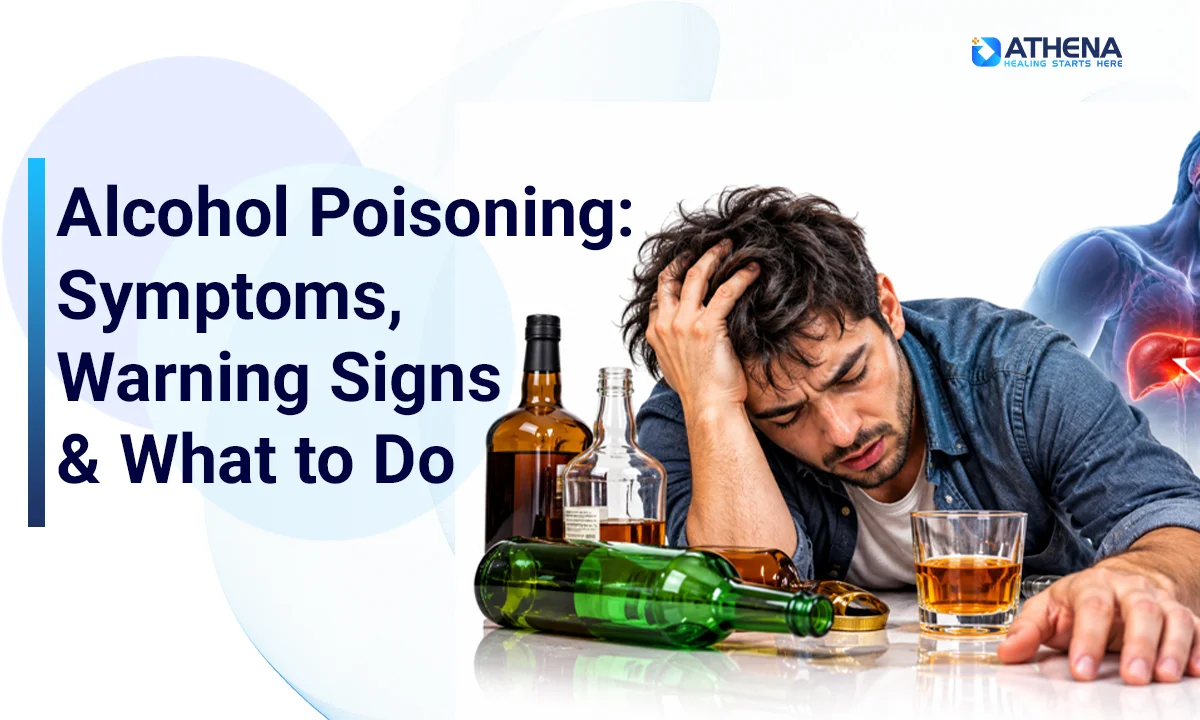

Consider a party that is gradually coming to an end. There is someone lying silent on the couch whose lips appear pale. It’s uncertain whether he or she is sleeping or not. This uncertainty is the area where the dangers of alcohol poisoning lie. In America alone, it leads to an estimated 2,200 deaths annually, nearly six daily, with most of these deaths occurring with bystanders nearby.
This guide explains the warning signs to watch for alcohol poisoning, what causes it, what to do in the first few minutes, how hospitals treat it, and how to lower the risk. If someone needs help right now, read the box below first.
What Is Alcohol Poisoning?
Alcohol poisoning is sometimes called alcohol overdose and represents a medical emergency. This situation occurs when the level of alcohol in the blood becomes so elevated that the brain begins losing its ability to regulate breathing, heartbeat and body temperature. In addition, the gag reflex gets impaired so much that a person will be able to choke while vomiting without even awakening.
Inebriation is not the same as poisoning. During regular intoxication caused by alcohol consumption, the behavior of the person becomes clumsy, loud or sleepy, but at the same time, all the physiological functions work properly. However, during poisoning, all the physiological functions begin to fail one after another. Because the liver can digest only one unit of alcohol per hour, the rest stays in the bloodstream.
What Causes Alcohol Poisoning?
Almost every case starts with a lot of alcohol in a short time. These situations raise the risk the most:
Binge drinking, which means roughly 4 or more drinks for women and 5 or more for men within about 2 hours.
Drinking on an empty stomach.
Shots, chugging and drinking games.
Low body weight or little experience with alcohol.
Mixing alcohol with sleeping pills, sedatives or opioids.
Small children swallowing mouthwash, hand sanitiser or perfume.
About 30% of alcohol poisoning deaths involve someone with alcohol dependence, so it is not limited to a wild night out. Long-term drinkers are at risk too.
How Much Alcohol Does It Take?
There is no magic number that suits everybody. Differences in body size, gender, food present in the stomach, alcohol tolerance, and medication can affect the outcome. In general, eight or more drinks in two hours in men or six or more in women is considered high risk and some people find themselves in trouble with far fewer.
A standard drink is estimated to contain 14 g of pure alcohol, which equates to 12 oz of 5% beer, 5 oz of 12% wine, or 1.5 oz of 40% spirits.
Signs and Symptoms of Alcohol Poisoning
Look for any of these:
Confusion, or not waking up when shaken or called
Vomiting while drowsy
Seizures
Slow breathing (under 8 breaths a minute) or pauses of 10 seconds or more between breaths
Pale, blue-tinged or clammy skin
A body that feels cold to the touch
A person does not need to show all of these. One is enough to call for help.
Blood Alcohol Concentration and the Stages of Intoxication
Blood alcohol concentration, or BAC, is the percentage of alcohol in the blood. The table shows how the effects build.
BAC | What you may notice |
0.08% | Slower reactions, poor judgment |
0.10–0.15% | Slurred speech, unsteady walking |
0.16–0.25% | Confusion, vomiting, memory gaps |
0.25–0.30% | Stupor, barely responds |
0.35% and above | Coma and breathing failure possible |
0.40% and above | Death is a real risk |
Treat these as rough markers. A smaller person, or someone on medication, can be in danger far below these numbers. Hormones can play a part too, and many women find that alcohol during periods hits harder than usual.
Alcohol Poisoning vs Drunk vs Hangover
The three get mixed up all the time, but they look different once you know what to check.
Features | Drunk | Alcohol poisoning | Hangover |
Timing | During drinking | Alcohol still in the body | After drinking ends |
Waking and talking | Responds when spoken to | Hard or impossible to wake | Awake and alert |
Breathing | Normal | Slow or irregular | Normal |
Main signs | Slurring, clumsiness | Vomiting, seizures, cold skin | Headache, nausea, thirst |
What to do | Watch them | Call emergency help | Rest and drink fluids |
If you cannot tell which one you are seeing, treat it as poisoning.
Can You Have Alcohol Poisoning Without Feeling Drunk?
Absolutely! When someone is used to drinking a lot, he/she will be tolerant and appear quite stable with very high BAC. Certain medications will also hide the normal symptoms of intoxication. With such patients, pay no attention to the level of intoxication and assess the condition of breathing, arousal, and skin color.
What to Do for Alcohol Poisoning Right Now
Many people search for how to treat alcohol poisoning at home. Truthfully, you can only keep the person safe until medical help arrives. Do this:
Call emergency services. Give the person's age, what and how much they drank, and any medicines they take.
Stay with them the whole time, because things can change within minutes.
Lay them on their side with the top knee bent so vomit drains out and does not block the airway.
Cover them with a blanket.
Give small sips of water only if they are awake and can swallow.
Pass on everything you know to the paramedics when they arrive.
Myths That Make Alcohol Poisoning Worse
No home remedy cures alcohol poisoning. These common moves can do harm:
Letting them sleep it off: Alcohol still sitting in the stomach keeps moving into the blood, so BAC can rise after a person passes out.
Giving strong coffee: Caffeine wakes the brain a little but does nothing to lower blood alcohol.
Using a cold shower: It can cause shock and push body temperature even lower.
Making them vomit or offering another drink: Both raise the chance of choking and further injury.
How Alcohol Poisoning Is Treated in Hospital
Because there is no cure for alcohol, the body will be stabilized as it goes through this process. When treating alcohol poisoning, patients receive either oxygen or breathing assistance, intravenous fluids to counteract dehydration, thiamine and glucose for the sake of protecting the brain and stabilizing their blood sugar levels, as well as monitoring their vital signs such as heart rate and temperature.
Alcohol Poisoning Recovery: What Happens the Day After
After hospital care, most people spend several hours to a day under observation. The next day brings nausea, headache, dehydration and deep tiredness that can last 24 hours or longer. Serious cases can leave lasting problems such as a lung infection from inhaled vomit, an irregular heartbeat or brain injury.
Someone who drinks heavily every day faces another risk once the alcohol wears off. Sweating, tremors, anxiety and even seizures are among the alcohol addiction withdrawal symptoms that can start within hours, which is why stopping suddenly without medical supervision can be dangerous.
What Heavy Drinking Does to Your Body
A single bad night is often part of a longer pattern. Over the years, regular heavy drinking wears down the liver, heart, brain and immune system, and the damage builds quietly. The effects of alcohol on the body often show up as fatty liver, high blood pressure, poor sleep and low mood long before a person admits there is a problem.
How to Prevent Alcohol Poisoning
Small habits cut the risk a lot:
Stick to one standard drink an hour at most
Eat a full meal before and while drinking
Drink a glass of water between alcoholic drinks
Skip shots and drinking games
Never mix alcohol with sedatives or opioids
Keep an eye on whoever is drinking the most in the group
Store alcohol, mouthwash and sanitiser away from children
Alcohol Addiction Treatment in India at Athena Behavioral Health
It does not mean that everybody admitted to the ER due to intoxication is an alcoholic. However, when this is a recurring issue or it is difficult to stop, it might be advisable to get some help. Alcohol addiction rehabilitation services in India are provided by Athena Behavioral Health.
Care is built around alcohol specifically, because quitting after years of regular drinking is a medical process as well as an emotional one. It usually begins with an assessment of how much and how long the person has been drinking, followed by medical detoxification under doctor supervision to manage withdrawal safely. After that comes the alcohol addiction treatment itself, which combines counselling, therapy for triggers and cravings, family involvement and a plan for staying sober once the person is back home.