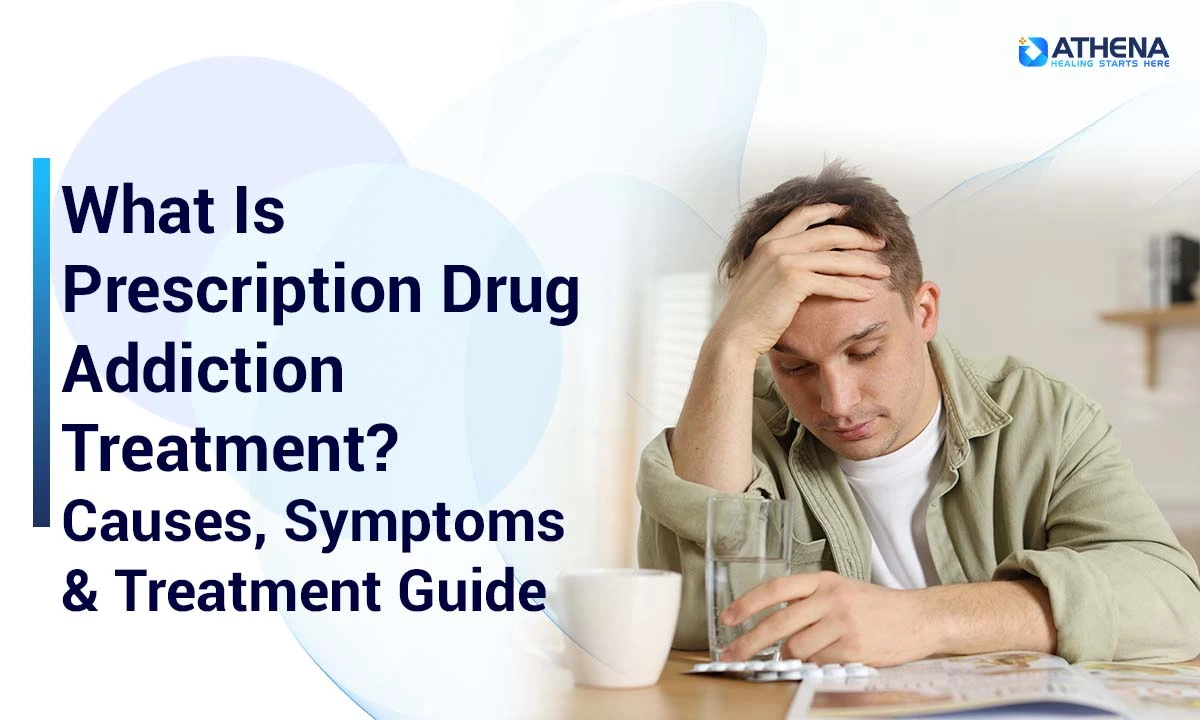
No one starts off thinking of becoming dependent on medication that they were prescribed. However, it develops gradually. One day the painkiller needs to be taken an additional number of days since the pain persists, and after a while, the sleep medicine has become the only way to sleep. And then you realize that the medication no longer is an option but rather a need. The thought of not taking it leaves you in anxiety.
If you or any family member relate to this scenario, then do not worry; you are certainly not alone, nor does it make you weak. Prescription drug addiction is a disease, and people overcome it every single day. This piece discusses the signs, symptoms and causes of prescription drug abuse, treatment methods and resources available in India. Starting with the basics.
What Is Prescription Drug Addiction Treatment?
Prescription drug addiction treatment is a medical programme that helps a person stop misusing a prescribed medicine safely, understand why the dependence started, and stay off it afterwards. Doctors treat the body and the mind together, because stopping the tablets alone rarely holds. You can see how this is structured in our prescription drug addiction treatment programme.
- Most programmes include these parts:
- A medical and psychological assessment
- Supervised withdrawal (detox)
- Individual, group and family therapy
- Medicines for cravings, pain, anxiety or low mood when needed
- A follow-up plan to prevent relapse
The plan changes from person to person. Someone who has taken a sedative every night for five years needs different care from someone who overused a painkiller for a month.
What Does Prescription Drug Addiction Mean?
If you continue to take a prescribed medication despite the fact that it is causing harm to your health, interpersonal relations, or occupational functioning and if you find yourself unable to stop, then you are said to be addicted to prescription drugs.
It usually builds in three stages:
- Misuse: the medicine is taken in a way the doctor did not intend.
- Dependence: the body gets used to the drug and reacts badly when a dose is missed.
- Addiction: the person loses control over use and keeps going despite the damage.
Common examples of misuse:
- Taking a bigger dose than prescribed
- Taking doses closer together
- Using a relative's or friend's tablets
- Continuing a medicine long after the original problem has gone
- Taking it to relax, sleep or switch off stress
- Mixing it with alcohol
How Common Is Prescription Drug Addiction?
More prevalent than is commonly understood, considering the fact that the drugs are issued by a medical practitioner and thus seem harmless. Research done on opioids shows that out of those taking opioid painkillers for a prolonged period, about 21% to 29% misused the drugs while 8% to 12% developed opioid use disorder.
According to surveys carried out nationally in India, opioid use is estimated to be about 2.1% while sedatives use without any medical need is about 1.08%.
Which Prescription Drugs Are Misused Most Often?
Three groups of medicines cause most of the problems. They act on the brain in different ways, so the symptoms and the withdrawal differ too.
Medicine group | Common examples | What it does | Why people misuse it |
Opioid painkillers | Tramadol, codeine, morphine, oxycodone | Blocks pain and creates a calm, warm feeling | To dull physical or emotional pain |
Sedatives and sleep medicines | Alprazolam, clonazepam, diazepam, zolpidem | Slows the brain to reduce anxiety and bring sleep | To escape anxiety or fall asleep |
Stimulants | Methylphenidate, amphetamine-based medicines | Raises energy, focus and alertness | To stay awake or work longer |
Codeine cough syrups and tramadol are also common in India, and they are sometimes sold without proper checks.
What Are the Signs of Prescription Drug Addiction?
Early signs of prescription drug addiction show up in behaviour before they show up in health. Family members often spot them first.
- Finishing a month's supply in two weeks.
- Asking several doctors or chemists for the same medicine.
- Hiding strips or bottles around the house.
- Getting defensive when someone asks about the medicine.
- Pulling away from friends, work or hobbies.
- Borrowing money or spending more than usual on medicines.
- Panicking when the stock is running low.
- Saying "I can't manage without it".
One sign on its own can have a simple explanation. Several together, especially with a rising dose, mean it is time to see a doctor. The same patterns appear with other substances too, so the symptoms of drug addiction are worth knowing as well.
What Are the Symptoms of Prescription Drug Addiction?
Prescription drug addiction symptoms depend on the type of medicine. The table shows what usually appears with each group.
Medicine group | Body symptoms | Mood and behaviour symptoms |
Opioids | Drowsiness, constipation, nausea, slow breathing, very small pupils | Mood swings, strong cravings, low motivation |
Sedatives | Slurred speech, unsteady walking, memory gaps | Confusion, irritability, anxiety that comes back stronger |
Stimulants | Fast heartbeat, weight loss, poor sleep | Restlessness, suspicion, sudden low mood |
Very slow breathing, a person who cannot be woken, or a seizure is an emergency. Call 112 at once.
What Withdrawal Symptoms Can You Expect?
Withdrawal occurs due to the adaptation of the body to a drug and abrupt cessation thereof. It is the main factor that keeps pushing patients to take the drugs; withdrawal is life-threatening if there is no professional medical assistance.
Common symptoms are:
- Sweating, tremors, and rapid heartbeat
- Muscle pains, abdominal pains, and vomiting
- Anxiety, nervousness, and insomnia
- Drug craving and quick mood swings
- Seizures, especially after withdrawal of sedatives abruptly
Every drug presents different risk factors; therefore, one should never abruptly stop taking drugs for a long period of time without consulting with his doctor.
What Causes Prescription Drug Addiction?
There is rarely one reason. Prescription drug addiction causes usually come from a mix of medical, biological and emotional factors.
A real medical need at the start: Surgery, injury, long-term pain, anxiety, insomnia or ADHD can all lead to months of prescriptions.
Tolerance: The body adjusts, the same dose stops working, and the person takes more.
- Brain chemistry: These drugs release dopamine, which teaches the brain to want them again.
- Existing mental health problems: Anxiety, depression and past trauma make self-medicating more likely.
- Family history: Genes can raise a person's risk.
- Stress and loneliness: Work pressure, grief or isolation push some people toward tablets.
- Easy access: Medicines sold without proper checks are easier to misuse.
- Low awareness: Many people simply do not know a prescribed medicine can be addictive.
What Happens If Prescription Drug Addiction Is Left Untreated?
It is never the same; most of the time, things only get worse. And this will affect every aspect of your life.
- Health: overdose, breathing issues, liver/heart damage, deadly withdrawals.
- Mental state: increased anxiety, depression, and memory impairment.
- Safety: accidents, injuries, and drowsy driving.
- Relationships: lack of trust and constant arguments.
- Career and money: decreased productivity, unemployment, and financial strain.
Combining this medication with alcohol becomes particularly dangerous due to its effect on breathing capacity.
How to Treat Prescription Drug Addiction Step by Step
Here is how treatment usually runs, from the first appointment to long-term recovery.
- Assessment: A doctor checks your health history, which medicine you take, the dose, how long you have used it, and whether anxiety, depression or pain are also present.
- Detox: The drug is cleared from your body in a controlled way while symptoms are treated. Because withdrawal can be risky, medical detoxification under a doctor's care is the safest route.
- Therapy: Sessions help you understand why the dependence formed, handle cravings and learn other ways to cope. Psychotherapy and counselling also gives families a space to talk openly again after months of secrecy.
- Treatment of the underlying cause: If the problem began due to pain, anxiety, depressed mood, or insomnia, these must be treated, otherwise the process repeats itself.
- Aftercare: Follow-up consultations, peer support, and consistent daily habits help maintain recovery after the primary program is completed.
Can You Detox From Prescription Drugs at Home?
Not usually. Stopping the medication alone will result in very harsh withdrawal symptoms that are difficult to handle, and some may even have medical significance. In the case of benzodiazepines, stopping cold turkey will result in seizures. While symptoms may appear mild initially, the pain will force individuals to revert to their medication again after a few days.
Under the care of a physician, doses are reduced slowly, and any resulting symptoms are dealt with effectively.
Inpatient or Day Care: Which Option Suits You?
The right setting depends on how severe the addiction is, which medicine is involved and what your home is like.
Factors | Inpatient (residential) care | Day care (outpatient) care |
Best for | Severe addiction, risky withdrawal, unsafe or unsupportive home | Mild to moderate addiction with a stable, supportive home |
Medical supervision | Round the clock | During scheduled sessions |
Daily life | You stay at the centre | You live at home |
Structure | Very high | Moderate to high |
People who cannot leave work or family for long often do well in a day care programme, with daily therapy and medical review while they sleep at home. A doctor can tell you which level fits after an assessment.
How Long Does Recovery Take?
There is no set schedule. The process depends on the drug being taken, its duration of use, as well as your general health and social network. Generally, however, detoxification takes from several days to several weeks. Follow-up treatment and therapy often go on for several months, and some patients stay in contact with the physician for over a year.
Rehabilitation is a slow process. Falling off the wagon does not indicate failure of the process but rather indicates that the treatment program should be adjusted.
How to Choose a Prescription Drug Rehab
Centres differ a lot in quality, so ask questions before you decide.
- Do qualified psychiatrists and doctors lead the treatment?
- Is detox supervised by a medical team, with monitoring day and night?
- Is the plan built for each patient, or the same for everyone?
- Are anxiety, depression and trauma treated alongside the addiction?
- Are family members included in counselling?
- What support continues after discharge?
- Is your privacy protected?
Knowing what a good drug de-addiction centre offers makes these questions easier to ask.
Where Can You Get Prescription Drug Addiction Treatment in India?
Treatment in India is available through hospitals, specialist centres and day programmes, with both inpatient and outpatient options. Many families wait because of stigma, or because they think a prescribed medicine cannot really be a problem. Waiting usually makes withdrawal harder and recovery longer. If your concern goes beyond one medicine, broader drug addiction treatment can cover every substance involved.
About Athena Behavioral Health
Athena Behavioral Health is a behavioural health care organization based in India, which deals with individuals and families experiencing problems in their mental well-being and addictions. The organization’s team holds the belief that an individual coming for help needs to be listened to and not judged first, and care is most effective when it is person-centered.
Our approach rests on a few simple ideas:
- Personal care: every plan starts with listening to your history, your worries and your goals.
- Respect and privacy: your details and your story stay confidential.
- Family involvement: recovery is easier when the people at home understand what is happening and know how to help.
- Support that continues: care does not end at discharge, and we stay available as life gets back to normal.
Whether you are looking for yourself or for someone you love, the first step is a simple conversation with our team.
How Can You Help a Family Member With Prescription Drug Addiction?
Talking to someone you love about this is hard. A few things make it easier:
- Pick a quiet, private moment, not the middle of an argument
- Say what you have noticed instead of calling the person an addict
- Speak from concern, not blame
- Skip the ultimatums and threats
- Offer to book an appointment and go along if they want company
- Expect to have more than one conversation
- Look after your own health and ask for support for yourself
When Should You See a Doctor?
Seek professional help as soon as possible should any of the following apply to you or those around you:
- Several unsuccessful efforts to reduce intake have occurred.
- Increasing dosages are required for the same effect.
- Discontinuing the drug causes ill health, shaking or panic.
- It is concealed or denied.
- An overdose, accident or near overdose has occurred.
In case of an emergency, including slow breathing, lack of responsiveness, convulsions or suspected overdose, dial 112 immediately.