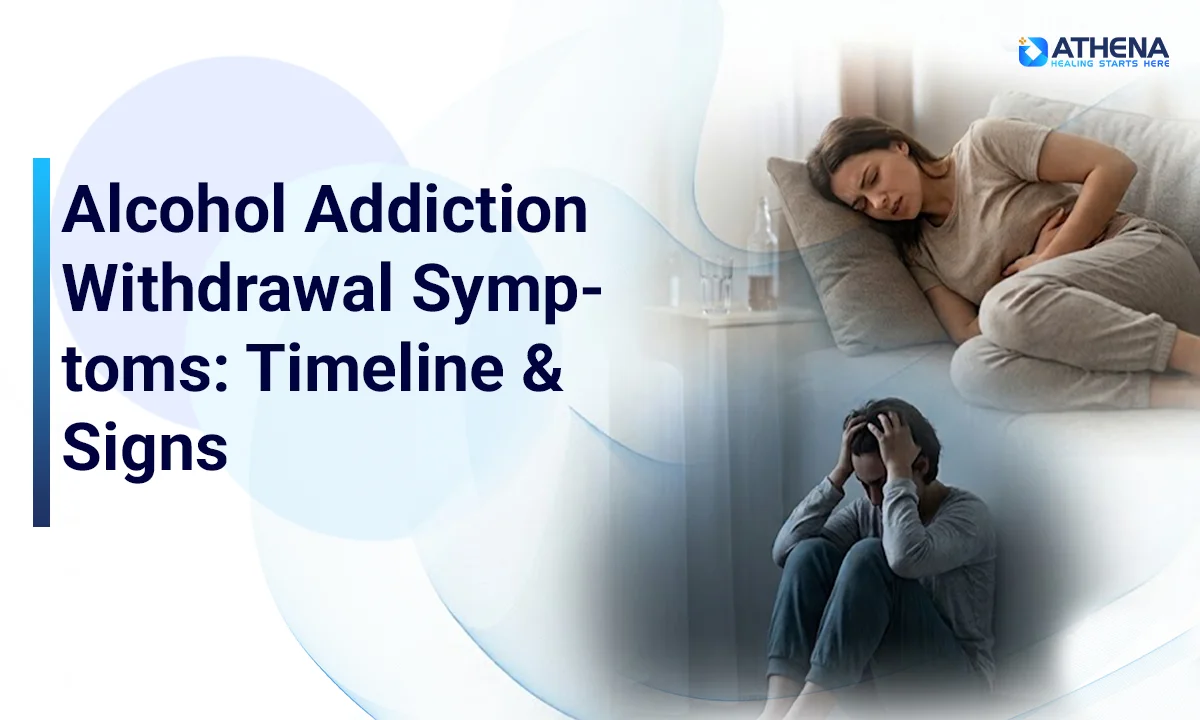

Someone who has been drinking every day for years skips a night. By 3 a.m. their hands are shaking, their heart is racing, and they are staring at the ceiling, sure that something is wrong. They usually put it down to stress or a bad hangover. Often it is neither. It is withdrawal.
Alcohol addiction withdrawal symptoms affect about half of the people who are dependent on alcohol when they stop or cut down hard. For most, it is miserable but manageable. For roughly 3–5%, it turns severe, and that is the group that ends up in intensive care. You can't tell in advance which group you belong to, so it helps to know what is coming and when.
Below you'll find the symptoms stage by stage, how long each one lasts, how to tell withdrawal from plain anxiety, and what treatment looks like when it is done safely.
The short version
- 6–12 hours after your last drink: shaky hands, sweating, anxiety, nausea
- 24–72 hours: the worst of it, for most people
- 48–96 hours: the window for delirium tremens, the dangerous one
- 5–7 days: physical symptoms mostly settle
- Weeks to months: poor sleep, low mood and cravings can hang around
Why Quitting Alcohol Makes You Feel So Sick
Alcohol acts as a depressant. It depresses the mind by increasing the production of GABA, the brain's calming chemical, and decreasing the production of the brain's excitable chemicals such as glutamate. The brain will eventually compensate for all the depressants by producing fewer calming chemicals and more excitable chemicals.
This leaves the brain working overdrive. This is where the trembling, the rapid heartbeat, the shivers, and even the panic attack arise. Seizures, which can occur in more serious cases, also develop from here.
The severity of this process is dependent on three major factors: how much you consume alcohol, how many years you have been doing this, and whether you have had alcohol withdrawal before. Each experience increases the difficulties associated with future alcohol withdrawals, a process referred to as kindling.
Years of heavy drinking also wear on the liver, heart and stomach. If you want the full picture, there is a good breakdown of the effects of alcohol on the body, and it explains why a planned stop is so much safer than a sudden one.
Alcohol Withdrawal Symptoms: From Shaky Hands to Seizures
There are three degrees of symptoms. About 80 percent of patients who have withdrawal go through either a mild or moderate phase. Let us examine what each stage involves.
Mild Symptoms: Those That Are Often Confused with a Hangover
They occur within 6-12 hours after stopping drinking:
- Tremors in hands that reach their peak intensity in the morning
- Feelings of anxiety, irritability, and being easily irritated
- Headache and profuse sweating
- Nausea and vomiting and lack of appetite
- Sleep difficulties or intense nightmares
Moderate Symptoms: The Time When the Body Responds to the Lack of Alcohol
In about one day it will become worse:
- The heartbeat of more than 100 and increased blood pressure
- Fever and profuse sweats
- Difficulty with concentration, mood swings, delusions
- Hallucinations that one understands are not real, such as visual and auditory illusions
Severe Symptoms: Seizures and DTs
It requires hospitalization:
- Seizures, most likely within 12-48 hours after the last drink
- Delirium tremens (DTs): deep disorientation, high agitation, fever and hallucinations which are completely real
- Irregularities in heart beat, blood pressure, body temperature
DTs are the main reason withdrawal can kill. Left untreated, somewhere between 5% and 15% of cases are fatal. With prompt hospital care, that drops to about 1–4%.
Alcohol Withdrawal Timeline: What to Expect
The alcohol withdrawal timeline follows a fairly steady curve from the moment of your last drink. Bodies differ, so read the table as a rough map and not a schedule.
Stages | When | What it feels like | Risk |
1. Early | 6–12 hours | Tremors, anxiety, headache, nausea, sweating | Mild |
2. Building | 12–24 hours | Stronger shakes, vomiting, possible hallucinations; seizure risk begins | Moderate |
3. Peak | 24–72 hours | Racing heart, high blood pressure, fever, confusion, agitation | Moderate to high |
4. Delirium tremens | 48–96 hours | Disorientation, intense hallucinations, fever, seizures | Emergency |
5. Settling | Day 5–7 | Physical symptoms ease; sleep and appetite begin to return | Low |
6. Lingering | Weeks to months | Anxiety, low mood, poor sleep, cravings | Low, but relapse is common |
Which Day Is the Hardest When You Quit Drinking?
Day 2 or 3 for most people. Symptoms are at their peak, cravings are loud, and a drink feels like the only thing that will make it stop. A lot of relapses happen right here. It is also the stretch when serious complications are most likely, which is the main reason doctors recommend medically supervised detoxification for anyone with moderate or heavy dependence. If something goes wrong at 2 a.m., you want trained people in the room.
Why You Can Feel Off for Months After Quitting
The post-acute withdrawal syndrome occurs from day 7, whereby one feels good physically; however, there is something wrong. There is insomnia, mood swings, anxiety, and cravings emerge out of the blue. This occurs due to the brain rebalancing itself. It occurs to most people and disappears on its own.
Withdrawal or Anxiety? How to Tell the Difference
A racing heart, sweaty palms, restlessness and bad sleep show up in both, so it is easy to mix them up. The biggest clue is timing. Withdrawal begins when alcohol drops. Anxiety follows its own rhythm.
Features | Alcohol withdrawal | Anxiety disorder |
Trigger | Starts hours after stopping or cutting down | Not tied to drinking |
Tremors and heavy sweating | Common | Less common |
Hallucinations or confusion | Possible when moderate to severe | Rare |
Does a drink help? | Yes, which is a sign of dependence | No |
How long | Peaks in 1–3 days, mostly gone within a week | Keeps going with no clear end |
There are other conditions that could present themselves like withdrawal, including hypothyroidism, low blood sugar, infection, and cessation of sleeping medications. Excessive alcohol consumption causes anxiety, and people who have anxiety consume excessive amounts of alcohol to cope with their anxiety.
7 Signs of Alcohol Withdrawal People Often Miss
A person who drinks daily but manages to have a job could conceal this well. Be aware of:
- Shaky hands during the mornings
- A need for a drink to calm oneself down
- Sweating, flushing, or rapid heartbeat for no apparent reason
- Suddenly experiencing attacks of anxiety or panic
- Feeling nauseated or vomiting due to delay in having a drink
- Having terrible sleeping patterns or nightmares after not drinking on the night before
- Confusion or hallucinations
Three or more usually means the body has become dependent. If you are noticing these in someone you love, it may help to read about the signs your loved one may need alcohol rehab, since withdrawal is often the moment a hidden problem becomes obvious to the family.
Go to the ER If You See Any of This
Don't wait it out if you notice:
- A seizure, even a brief one
- Hallucinations or severe confusion
- Fever together with a very fast heartbeat
- Vomiting so persistent that you can't keep water down
- Chest pain or fainting
Who Is Most Likely to Have Severe Withdrawal?
Some people carry a higher risk and should never try to stop on their own:
- People who drink heavily every day, or have for years.
- Anyone who has had withdrawal seizures or DTs before.
- Older adults and people with liver disease or other health conditions.
- People who also take sedatives or sleeping pills.
- Women, who reach higher blood alcohol levels than men from the same amount, and whose hormones can change how alcohol hits, a topic covered in this piece on alcohol during periods.
Severities can be scored using a checklist known as CIWA-Ar, where scoring under 8-10 is considered mild withdrawal, 8-15 moderate, and 16 or above as severe, implying admission.
Alcohol Withdrawal Treatment: What Doctors Actually Do
Effective alcohol withdrawal requires three things. To help you through the critical first few days, ensure that you remain comfortable, and pass you over to a longer term treatment that will see to it that you do not return.
First, An Appropriate Physical Examination
Your doctor will inquire about your alcohol consumption habits and whether you have ever experienced withdrawal symptoms before. They will also assess your overall physical condition and take vital measurements, including those relating to your liver function.
Then, Supervised Detox
Staff watch your pulse, blood pressure and temperature closely and treat symptoms as they come up. Care usually includes:
- Benzodiazepines such as diazepam, lorazepam or chlordiazepoxide, which calm the nervous system and sharply reduce the risk of seizures and DTs.
- Thiamine (vitamin B1), which protects the brain.
- IV fluids and electrolytes for dehydration.
- Medicines for nausea and sleep when needed.
After Detox: Dealing With the Reason You Drink
Detox removes alcohol from the body. Detox doesn’t help change the behavior or relieve stress or emotional pain that led to the drinking problem; hence the reason why 40 to 60 percent of people who stop drinking without any aftercare will relapse. The better plan pairs anti-craving medicines such as naltrexone or acamprosate with psychotherapy and counselling, where you work on triggers, coping skills and whatever sits underneath the drinking.
Home Detox or Hospital? How to Decide
Basis | Outpatient | Inpatient |
Suits | Mild symptoms, a stable home, no seizure history | Moderate to severe symptoms, past DTs or seizures, no one at home to help |
Monitoring | Regular check-ins | Medical staff around the clock |
Usual length | 5–7 days | 5–10 days, depending on severity |
Common Mistakes That Make Withdrawal Riskier
- Quitting cold turkey after years of daily drinking
- Taking sleeping pills or sedatives that nobody prescribed
- Trying to taper down alone, without a plan
- Staying by yourself during the first 72 hours
Alcohol Addiction Treatment in India at Athena Behavioral Health
At Athena Behavioral Health, our alcohol addiction treatment services in India cater to those seeking help to get rid of alcohol dependency in a safe manner and be able to remain free from alcohol dependency. Our alcohol detox program is followed by therapy sessions and continued support.
How We Help You Quit Drinking and Stay Off It
All programs are tailored to your individual drinking behavior, physical condition, and vision of your future:
- Safe alcohol detoxification: constant supervision and medication to deal with withdrawal symptoms during the highly dangerous period between 24 and 96 hours.
- Cravings and triggers management: practical methods to cope with those situations, people, and emotions which may push you to consume alcohol.
- Individual and family counseling: counseling sessions for the stresses, habits, and relationships which accompany your drinking behavior.
- Managing anxiety, depression, and insomnia: those psychological conditions which commonly develop due to excessive consumption of alcohol.
- Aftercare and relapse prevention: a well-designed program for the first 90 critical days.
You can read more about our alcohol addiction treatment program, or get in touch for a confidential conversation about which level of care fits.
How to Pick the Right Alcohol Rehab in India
There are various factors that should be considered while deciding on the most suitable program for the treatment of alcohol addiction in India. The following are some of the key elements that should be looked into while selecting an alcohol addiction treatment program:
- Proximity to doctors and availability of 24 hour emergency services.
- Personalized treatment program.
- Medicines along with therapies.
- Treatment of any other underlying conditions like depression and anxiety.
- Counseling sessions for the family members.
Getting Through Withdrawal: Practical Tips That Help
Once a doctor has assessed you and agreed on a plan, small things can make the days easier:
- Keep fluids coming: Water, oral rehydration solution and coconut water replace what sweating and vomiting take away.
- Rest in a quiet, dim room: Noise and bright light make agitation worse.
- Don't be alone: Have someone stay with you, especially for the first 72 hours.
- Skip the coffee and energy drinks: They feed the jitters and the racing heart.
- Empty the house of alcohol: Cravings peak early, and a bottle in the cupboard makes them harder to ignore.
The First 90 Days: How to Stay Sober After Detox
The first three months are the most fragile part of recovery, so go in with a plan. Keep regular sleep hours, eat proper meals, get some movement every day, tell at least one person you trust what you are doing, and decide ahead of time what you will do when a craving hits. If you want more on building habits that hold, this guide on how to prevent alcohol addiction covers triggers and sensible limits.