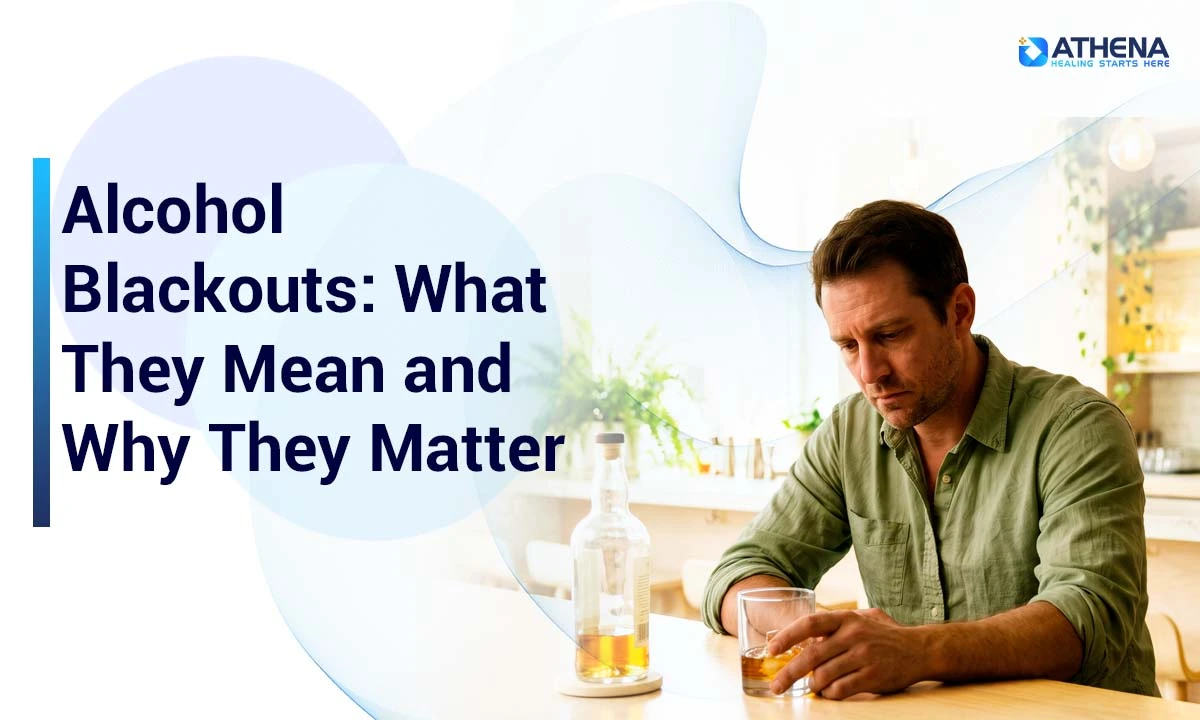

Imagine waking up after a party and finding messages on your phone, photographs in your gallery, or conversations you cannot remember having. Your friends tell you what happened, but the entire period feels missing. You were awake, talking, and moving around, yet your memory has no record of it.
These experiences are known as Alcohol Blackouts, and they are more than an embarrassing consequence of drinking too much. They occur when alcohol interferes with the brain's ability to form new memories. A person may continue functioning while being unable to remember what happened later.
Although people sometimes dismiss an alcohol induced blackout as a normal part of partying, it can indicate dangerously high alcohol consumption. Understanding what happens during these episodes, why they occur, and when to seek help can prevent more serious consequences.
What Are Alcohol Blackouts and What Happens to the Brain?
An alcohol blackout is a period of memory loss caused by excessive alcohol consumption. During this time, a person may remain conscious and interact with others, but their brain struggles to store new experiences as long-term memories.
The hippocampus, a brain region responsible for forming new memories, plays an important role in this process. Alcohol disrupts its functioning and interferes with memory consolidation, which is the process of transferring information into long-term storage.
What happens when you blackout from alcohol?
The effects can vary depending on how much alcohol a person consumes and how quickly their blood alcohol concentration (BAC) rises.
During a blackout, someone may:
Continue talking and responding to people.
Walk around or participate in activities.
Repeat questions or conversations.
Make decisions they might normally avoid.
Forget events that occurred only minutes earlier.
Why Does Alcohol Cause Blackouts?
The main reason blackouts happen is that alcohol interferes with the brain's ability to create and store new memories. However, the amount consumed is not the only factor. How quickly someone drinks and their physical condition can also influence the risk.
Common causes of blackouts in adults
Several factors can increase the likelihood of an alcohol-related blackout:
1. Drinking large amounts quickly
Consuming several drinks within a short period can cause BAC to rise rapidly, increasing the risk of memory impairment.
2. Drinking on an empty stomach
Food slows the absorption of alcohol. Drinking without eating can cause alcohol to enter the bloodstream more quickly.
3. Binge drinking
Consuming large quantities of alcohol in a short period increases the risk of blackouts, injuries, and alcohol poisoning.
4. Mixing alcohol with medication
Combining alcohol with sleeping pills, anti-anxiety medication, or other sedating substances can increase impairment and may cause dangerous interactions.
5. Individual differences
Body composition, biological sex, metabolism, drinking history, and overall health can influence how alcohol affects someone.
Can short blackouts happen without alcohol?
Yes. While alcohol is one possible explanation, short blackouts causes can include several medical conditions.
Other possibilities include:
Low blood sugar.
Seizures.
Fainting caused by a temporary drop in blood pressure.
Head injuries.
Certain medications.
Heart rhythm problems.
Neurological conditions.
Sudden or unexplained memory loss should not automatically be attributed to alcohol. Medical evaluation is important, particularly when episodes happen repeatedly or involve confusion, weakness, or loss of consciousness. For more information about how drinking affects physical and mental health, explore the effects of alcohol on the body.
Warning Signs and Risks of an Alcohol Blackout
One difficulty with identifying a blackout is that the person experiencing it may not realise what is happening. They can appear awake and responsive, making the situation easy to overlook.
However, certain behavioural changes may indicate severe intoxication.
Common warning signs
Repeating the same questions or statements.
Forgetting conversations that happened moments earlier.
Having difficulty following instructions.
Making unusually impulsive decisions.
Becoming confused about surroundings.
Struggling with balance and coordination.
Having no memory of events the following morning.
Risk | Possible consequences |
Accidents | Falls, road injuries, and physical harm |
Unsafe decisions | Risky behaviour and impaired judgment |
Vulnerability | Difficulty recognising unsafe situations |
Relationship problems | Arguments and actions that cannot be recalled |
Health complications | Alcohol poisoning and other serious effects |
When is a blackout a medical emergency?
A blackout can occur alongside alcohol poisoning, which is a potentially life-threatening condition.
Seek emergency medical help if someone who has been drinking:
Cannot be woken up.
Has slow or irregular breathing.
Vomits repeatedly.
Experiences seizures.
Has pale, bluish, or unusually cold skin.
Becomes severely confused or loses consciousness.
How Long Do Alcohol Blackouts Last?
The duration of a blackout depends on how much alcohol enters the bloodstream and how long the brain's memory-forming process remains impaired.
Some episodes involve brief gaps in memory, while others cover several hours of drinking. There is no fixed duration that applies to everyone.
Is blackout drunk brain damage?
A single alcohol-related blackout does not automatically mean permanent brain damage has occurred. It generally reflects temporary disruption of memory formation.
However, repeated heavy drinking can damage brain function over time. Long-term alcohol misuse is associated with problems involving memory, concentration, learning, and decision-making.
Chronic heavy drinking can also contribute to thiamine (vitamin B1) deficiency, which may lead to serious neurological complications, including Wernicke-Korsakoff syndrome. Repeated memory gaps should therefore never be treated as harmless.
What should you do after an alcohol blackout?
If you cannot remember parts of a drinking episode:
Avoid drinking more alcohol.
Check whether you have injuries or unexplained symptoms.
Ask someone you trust what happened.
Seek medical attention if you have persistent confusion, a possible head injury, or unexplained memory loss.
Consider whether your drinking pattern needs professional attention.
A single episode is worth discussing with a healthcare professional, particularly if it involved injury or unsafe behaviour.
When Do Alcohol Blackouts Indicate a Drinking Problem?
An occasional blackout does not automatically mean someone has alcohol use disorder (AUD). However, it is a warning sign that alcohol consumption has reached a level where the brain is significantly affected.
If blackouts happen repeatedly, it is important to look beyond the missing memories and examine the person's drinking habits. A Psychiatric hospital in india can provide psychiatric assessment when alcohol misuse affects mental health and daily functioning.
What stage of alcoholism are blackouts?
There is no specific stage of alcoholism at which blackouts begin. They can happen to people without alcohol dependence as well as those experiencing severe alcohol-related problems.
However, recurring episodes may indicate binge drinking, risky alcohol consumption, or an underlying alcohol use disorder.
Watch for other warning signs:
Drinking more than originally intended.
Struggling to reduce alcohol consumption.
Developing tolerance and needing more alcohol.
Experiencing cravings.
Continuing to drink despite health or relationship problems.
Feeling shaky, anxious, or unwell when alcohol wears off.