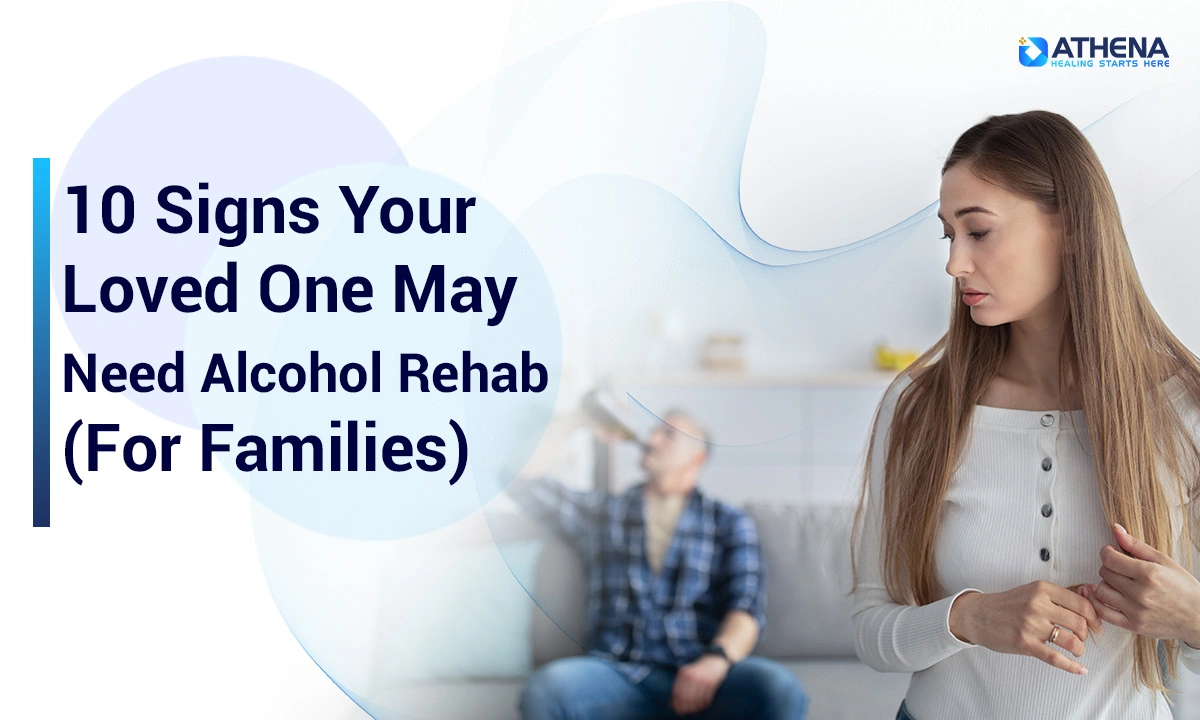

The signs someone needs alcohol rehab may include loss of control over drinking, increased tolerance, withdrawal symptoms, repeated failed attempts to stop, relationship or work problems, health changes, risky behaviour, and continued drinking despite harm. When several signs appear together, a professional assessment can help determine the safest level of treatment.
Seeing someone you love struggle with alcohol can be difficult to understand. Signs someone needs alcohol rehab often appear through changes in behaviour, health, relationships, and daily responsibilities rather than through drinking alone. If you recognise several of these patterns, understanding what they mean could be the first step towards getting the right support.
What Does It Mean When Someone May Need Alcohol Rehab?
Alcohol Use Disorder (AUD) is a medical condition involving difficulty controlling alcohol use despite its effects on health, relationships, work, or everyday life. It can develop gradually, moving from regular use to risky drinking and, in some cases, dependence.
Importantly, not everyone who drinks heavily needs residential rehab. Treatment needs vary according to the severity of alcohol use, withdrawal risk, physical and mental health, and the person's circumstances.
For families, the goal is not to diagnose a loved one. It is to recognise patterns that deserve professional attention.
10 Signs Someone Needs Alcohol Rehab
1. They Cannot Control How Much or How Often They Drink
One of the clearest signs someone needs alcohol rehab is a repeated inability to control drinking.
Your loved one may:
Drink more than they originally intended.
Promise to have only one or two drinks but continue drinking.
Frequently plan to cut down without being able to do so.
Spend increasing amounts of time drinking or recovering from drinking.
Athena identifies loss of control over the quantity and frequency of alcohol consumption as a common indicator of alcohol addiction.
The important factor is the pattern, not one isolated occasion.
2. They Need More Alcohol to Feel the Same Effects
Increasing tolerance can be another warning sign. Someone who once felt the effects of a small amount of alcohol may gradually need considerably more to experience the same effect.
Families might notice that drinking has become:
More frequent
Larger in quantity
Less visibly intoxicating despite increased consumption
Tolerance does not, by itself, establish that someone needs rehab. However, when it occurs alongside cravings, loss of control or other problems, it deserves professional assessment.
3. They Experience Withdrawal Symptoms When They Stop Drinking
Withdrawal is one of the most important warning signs because it can indicate physical dependence.
Symptoms may include:
Tremors or shaking
Sweating
Anxiety or agitation
Nausea
Insomnia
Increased heart rate
More severe withdrawal can involve hallucinations, seizures, severe confusion and delirium tremens. Athena notes that serious alcohol withdrawal requires medical supervision.
Do not encourage someone with heavy, prolonged alcohol use to suddenly stop drinking without medical guidance. Alcohol withdrawal can become medically dangerous. Learn more about
4. They Have Tried to Stop Drinking but Cannot
Has your loved one repeatedly said, “This is my last drink” or “I can stop whenever I want”, only to return to drinking?
Repeated unsuccessful attempts to reduce or stop alcohol use can be significant.
They may try:
Quitting completely
Limiting drinking to weekends
Avoiding certain friends or places
Setting personal drinking limits
If these efforts repeatedly fail, professional support may be more appropriate than relying on willpower alone. Explore key strategies on
5. Alcohol Is Affecting Their Work, Responsibilities or Daily Life
Alcohol becomes particularly concerning when it starts interfering with ordinary responsibilities.
You may notice:
Frequent absences from work
Declining professional performance
Missed appointments
Neglected household responsibilities
Financial difficulties
Poor decision-making
Loss of interest in normal activities
Athena describes neglect of work, family and daily responsibilities as a common symptom associated with alcohol addiction.
When drinking begins to dictate whether someone can fulfil everyday commitments, it is worth seeking an assessment.
6. Their Relationships Are Changing Because of Alcohol
Alcohol addiction rarely affects only the person drinking. It can gradually change the atmosphere of an entire household.
Family members may experience:
Frequent arguments
Broken promises
Loss of trust
Emotional distance
Unpredictable behaviour
Social withdrawal
Conflict between partners or relatives
A family may even begin changing its own routines to accommodate the person's drinking.
These relationship changes can be among the most visible signs someone needs alcohol rehab, particularly when they continue despite repeated conversations about the problem.
7. They Continue Drinking Despite Physical or Emotional Harm
Another important warning sign is knowing that alcohol is causing problems but continuing to drink anyway.
For example, your loved one may continue drinking despite:
A worsening health condition
Relationship breakdown
Problems at work
Financial consequences
Memory difficulties
Emotional distress
Previous alcohol-related injuries
This pattern is different from simply enjoying alcohol. It suggests that drinking may have become difficult to control even when the consequences are obvious. Review vital
8. Their Physical or Mental Health Is Getting Worse
Alcohol misuse can affect both physical and psychological wellbeing.
Families might notice changes such as:
Poor sleep
Frequent illness
Shaking
Appetite changes
Memory problems
Mood swings
Irritability
Anxiety
Depressive symptoms
Alcohol Use Disorder can also occur alongside mental-health conditions such as anxiety, depression, PTSD or bipolar disorder. Athena describes assessment for these co-occurring conditions as part of its treatment approach.
When alcohol use and mental-health concerns occur together, professional evaluation becomes particularly important.
9. They Engage in Risky Behaviour Because of Alcohol
Drinking can become especially concerning when it affects judgement and safety.
Examples include:
Drinking and driving
Operating machinery after drinking
Getting into fights
Making unsafe decisions
Repeated accidents or injuries
Putting themselves or others at risk
Risky behaviour does not necessarily tell a family which treatment setting is appropriate, but it is a strong reason to take the situation seriously.
10. Alcohol Has Become Central to Their Life
Perhaps the most telling pattern is when alcohol begins to organise the person's life around itself.
They may:
Plan activities around drinking.
Experience strong cravings.
Spend significant time obtaining or consuming alcohol.
Give up hobbies or social activities.
Prioritise drinking over family responsibilities.
Become distressed when alcohol is unavailable.
When alcohol repeatedly takes priority over health, relationships and responsibilities, the question is no longer simply how much someone drinks. The bigger question is how much control alcohol has over their life.
How Many Signs Mean Someone Needs Alcohol Rehab?
There is no fixed number of signs someone needs alcohol rehab. A person does not need to display all ten signs before seeking professional help.
Severity matters.
Someone experiencing withdrawal symptoms, seizures, hallucinations, severe confusion or other serious complications may require urgent medical attention even if their family has noticed relatively few other warning signs. Athena specifically recommends medical supervision for severe alcohol withdrawal.
A qualified professional can assess the person's alcohol use, physical health, mental health, withdrawal risk and home environment before recommending an appropriate treatment setting.
What Should a Family Do If They Recognise These Signs?
Recognising the problem is only the beginning. Families often wonder what they should actually say or do.
Start the Conversation Without Blame
Choose a calm time when your loved one is sober. Talk about specific things you have observed rather than labelling or shaming them.
Instead of:
“You are an alcoholic.”
try:
“I have noticed that your drinking has affected your health and our family, and I am worried about you.”
Encourage a Professional Assessment
You do not need to decide whether your loved one needs detox, inpatient rehab or outpatient care yourself.
A clinical assessment can help determine what level of support is appropriate.
Take Withdrawal Seriously
If someone drinks heavily and experiences withdrawal symptoms, medical guidance is important. Severe withdrawal can include seizures, hallucinations and delirium tremens and may require immediate medical care.
Remember the Family Matters Too
Supporting someone with alcohol addiction can be exhausting. Family counselling and education can help relatives understand addiction, communicate more effectively and establish healthier boundaries.
What Happens During Alcohol Rehab?
Understanding treatment can make the idea of getting help feel less overwhelming.
At Athena Behavioral Health, alcohol addiction treatment combines medical supervision, evidence-based therapy and continuing recovery support. Its current programme includes several stages.
Medical Detoxification
Where clinically appropriate, medically supervised detox helps manage withdrawal safely with clinical monitoring.
Psychiatric Assessment
A comprehensive assessment can identify the severity of alcohol use and any co-occurring mental-health concerns.
Behavioural Therapy
Athena's treatment approach includes Cognitive Behavioural Therapy (CBT) and Motivational Interviewing, alongside individual and group psychotherapy.
Medication-Assisted Treatment
Where clinically indicated, medication may be used under professional supervision to help manage cravings and support recovery.
Family Counselling
Family participation can help improve communication and create a stronger support system around recovery. Understanding options like a dedicated
Relapse Prevention and Aftercare
Recovery does not end when a person leaves a treatment programme. Continuing support and relapse-prevention planning can help individuals maintain progress over time.
Can Someone Need Rehab Without Drinking Every Day?
Yes. Daily drinking is not a requirement for alcohol addiction or for needing professional treatment. What matters is the overall pattern, including loss of control, cravings, tolerance, withdrawal, consequences and the impact alcohol has on daily life.
Similarly, someone who drinks only at particular times may still have serious alcohol-related problems if those episodes repeatedly result in dangerous behaviour or significant harm.
How Athena Behavioral Health Can Help
If several signs someone needs alcohol rehab are familiar to your family, professional guidance can help you understand what to do next.
Athena Behavioral Health provides alcohol addiction treatment with personalised care, medical detoxification where required, psychiatric assessment, evidence-based therapies, family counselling, medication-assisted treatment when clinically appropriate, and relapse prevention and aftercare. The centre describes its care as confidential, compassionate and judgment-free.
Athena also has alcohol addiction treatment facilities across locations including Gurgaon, Delhi, Noida and Guwahati.
The aim is not simply to stop drinking for a short period. Treatment should address the factors contributing to alcohol dependence and support sustainable recovery.
If You Recognise These Signs, Help Is Available
If you recognise several signs someone needs alcohol rehab in someone you love, you do not have to determine the right treatment path alone. A professional assessment can help clarify the severity of the problem and whether medical detox, residential treatment, outpatient care, or another level of support is appropriate.
At Athena Behavioral Health, families can seek confidential, compassionate and judgment-free support for alcohol addiction, with personalised treatment involving medical care, therapy, family support and continuing recovery planning.
Take the first step towards professional support with Athena Behavioral Health.