
As we understand the effects of social media on mental health, here are a few reflective questions:
1. How frequently do you use social media in your everyday life?
2. If social media is taken away from you for a week, how would your life change?
3. As per your observation, is there any association between social media and anxiety?
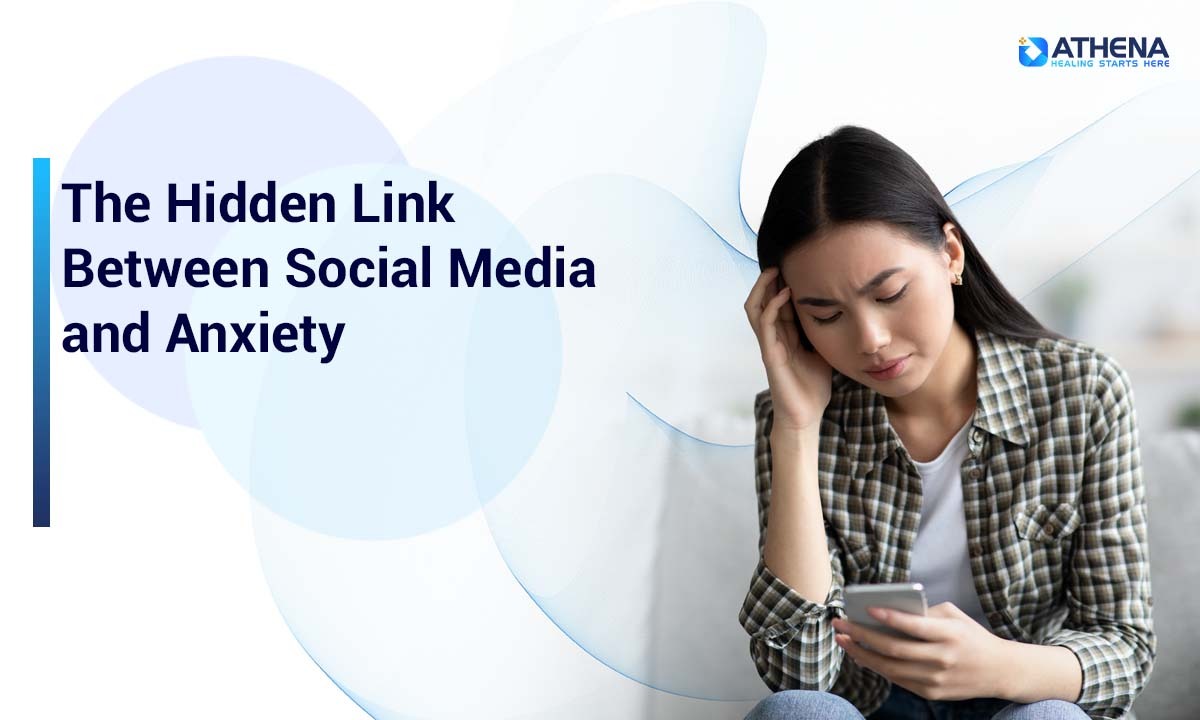
The intention behind the above-mentioned questions is to introspect and identify how one’s life is getting impacted by social media. According to research, there is a rapid surge in the number of users across diverse social media platforms, leading to a range of health concerns. While social media can offer some benefits, such as entertainment and social connections, excessive use can also have strong drawbacks. One of the many drawbacks is the relationship between social media and anxiety.
How Social Media Triggers Anxiety
Effects of social media on mental health can be observed in the form of anxiety, depression and fear of missing out that individuals of different age groups may experience. Some possible reasons contributing towards anxiety can include:
1. Constant comparison and fear of judgment
2. Pressure to seek social validation through likes, comments, etc
3. Unrealistic beauty standards and lifestyle expectations
4. Cyberbullying, trolling and online criticism
5. Persistent pressure of maintaining a perfect image online
Social media stress can be real and is caused by several different factors. The people from the younger generation may be prone towards getting impacted as their self-image and self-concept are still at a developing stage.
Effects of Social Media on Mental Health
The effects of social media on mental health can vary from person to person. Some commonly observed effects can include:
1. Increased stress and anxiety
2. Fear of missing out
3. Social media addiction
4. Disturbed sleep and daily routine
5. Negative thoughts about self-image
6. Self-esteem is getting impacted negatively
7. Withdrawing from real life
8. Challenges related to body image
9. A sense of dissatisfaction with oneself
Signs You May Have Social Media Anxiety
Some signs to watch out for regarding using social media and anxiety being triggered can include:
1. Feeling uneasy and a constant need to check social media
2. Refreshing feed and checking notifications due to anxiety
3. Comparing oneself with others through social media usage
4. Overthinking regarding one’s social media engagement
5. Avoiding real-life activities to engage in social media
The effects of social media on mental health can be drastic, and therefore, being cautious with social media use is important.
How to Reduce Social Media Anxiety
A lot of us struggle with this question – ‘How to reduce social media anxiety?’ Management and recovery from social media anxiety is possible and can be done with the help of systematic professional support. Some of the steps in this process can include:
1. Setting a daily time limit for social media usage, for example, using social media for 30 minutes daily
2. Keeping no device zones in your house, for example, no phone in the living room
3. Keeping no device time in your house, for example, no phone usage during lunch time
4. Avoiding negative comparison and making efforts to build one’s self-esteem independent of social media profile
5. Creating a no-phone use rule before going to bed, and instead having healthier alternatives, such as reading a book
You can take support from a trained psychologist and improve your overall wellness with the help of a structured treatment plan.
Digital Wellness Tips for Mental Health
Digital wellness tips refer to the daily activities that can be included in a routine for improving overall health, especially associated with the use of phones, tablets and laptops. Some of the tips can include:
1. Learning to distinguish between the reel and the real world
2. Identifying one’s screen time and making efforts to reduce that
3. Prioritising one’s sleep and a mindful daily routine
4. Creating regular breaks from screen usage and engaging in healthier habits
5. Finding alternative sources of entertainment and connection with others
Digital wellness tips can vary from person to person. For example, if someone primarily uses social media to connect with others, then the person may want to explore offline methods of doing the same, whereas if someone uses social media as a hobby, then they can explore other activities that do not require a screen and are engaging.
Conclusion
Social media and anxiety have associations for many people due to several different reasons. Anxiety is itself one of the most commonly observed psychological concerns. You can reach out to Athena Behavioral Health, and our team can help you identify any possible signs of social media addiction and offer personalised digital wellness tips for your concerns.
You can contact us at +91 9289086193, and we would be more than happy to support your wellness journey!