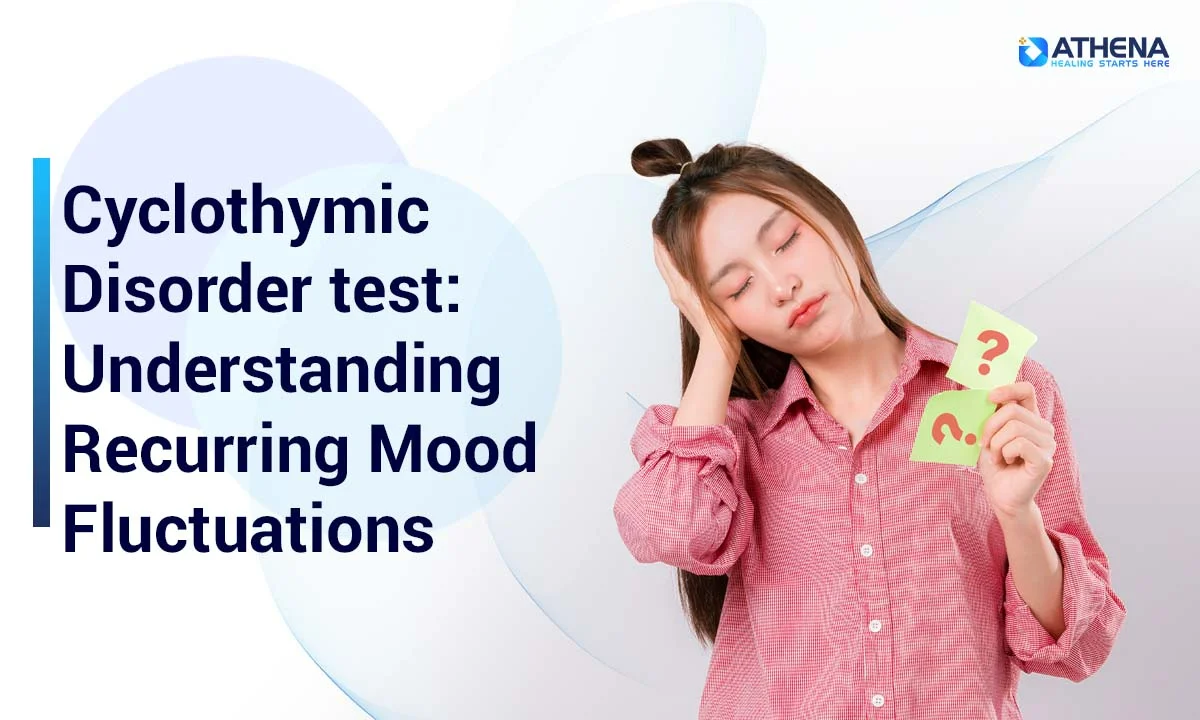

A cyclothymic disorder test helps you see whether your mood swings follow a repeating pattern or are just normal ups and downs. Many people go years feeling energetic for a few days, then flat and drained, without ever linking the two. This guide gives you a short self-check, explains what clinicians look for, and shows what to do once you have your result. It is a screening aid only, and a diagnosis can come only from a qualified mental health professional.
What Is Cyclothymic Disorder?
Cyclothymic Disorder, or Cyclothymia, is a form of persistent mood disorder characterized by constant shifts of mood ranging from mild elevations and depressions. The elevated mood phases are referred to as hypomania while depressive episodes represent low mood phases. Both sides are not severe enough to be qualified as manic or major depressive episodes respectively, but such cycle almost never ceases.
Due to less intensity of swings compared to bipolar disorder, such shifts are frequently attributed to one’s temperament. In other words, patients consider themselves moody, passionate and unpredictable people.
How Common Is Cyclothymic Disorder?
Cyclothymia is more common than most people expect, yet it is rarely diagnosed. The table below shows the figures most often reported in psychiatric research.
Measures | Reported figures |
Lifetime prevalence in the general population | About 0.4% to 1% |
Share of people in mood disorder clinics | Roughly 3% to 5% |
Typical age of onset | Adolescence or early adulthood |
Gender spread | Men and women affected about equally |
People with a family history of bipolar I | Around 30% |
Chance of later developing bipolar I or II | Estimated 15% to 50% |
Cyclothymic Disorder Test Online: 12-Question Self-Check
The test on cyclothymic disorder online includes all the aspects of the disorder, its highs, lows, and the connection between them. You should answer the questions about the last two years, or one year if you are younger than 18. The answers should be related to usual experience, not to your best or worst week.
I have experienced periods of unusual energy, vitality, or confidence without any reason.
During such periods I have slept much less and did not have problems with that.
I had talked faster than usually and started new projects.
I have taken impulsive decisions about money or made some risky choices and have repented afterwards.
I also have periods of low energy, sadness, or emptiness.
During such lows everything, which I used to enjoy stopped bringing me pleasure.
My concentration and motivation were sharply reduced.
My sleep and appetite have changed greatly.
All these changes have occurred regularly and I have hardly experienced two months of stability.
People, who knew me, have observed that my mood was changing.
Such changes influenced my work, study, relationships, or finances.
How to Read Your Cyclothymia Test Result
Count your Yes answers and compare the total with the table. This cyclothymia test is an informal screening tool and not a validated clinical scale, so use the result to decide whether to seek an evaluation. Questions 9, 11 and 12 carry the most weight because they describe repetition, impact and duration.
Yes answers | What to do next |
0 to 4 | Your mood is likely within the normal range. Keep an eye on it if anything bothers you. |
5 to 8 | Some features of mood cycling are present. Track your mood daily for 2 to 4 weeks. |
9 to 12 | Your answers match many features clinicians look for. Book a professional evaluation. |
What Are the Symptoms of Cyclothymic Disorder?
Cyclothymic disorder symptoms fall into two groups that alternate, often with only short calm gaps between them. The highs can feel productive and pleasant, which is why they usually go unreported. The lows are generally what push people to ask for help.
During a high phase, you may notice:
A cheerful, restless or irritable mood
Racing thoughts and fast speech
Much less need for sleep
Inflated confidence and a rush of new ideas
Impulsive spending or risky choices
During a low phase, you may notice:
A flat or sad mood without an obvious cause
Constant tiredness
Trouble concentrating or making decisions
Changes in sleep and appetite
Pulling away from friends and family
What Are the DSM-5 Criteria for Cyclothymic Disorder?
The psychiatrists will match your personal history against the DSM-5 cyclothymic disorder criteria. The criteria give information on how long the symptoms have to be experienced, how often they need to happen and what intensity they can have. This knowledge is helpful for describing your experience at the appointment.
The important criteria are:
At least 2 years of symptoms in adults, or 1 year in children/teenagers.
Lots of times when you have had milder highs and lots of times when you have had milder lows.
Symptoms are happening more than half the time, without a break of more than 2 months.
No period of mania, hypomania, or major depression ever happened.
The symptoms cannot be explained through use of drugs/substances or due to another medical condition like a thyroid problem.
Distress or problems in everyday functioning.
Cyclothymia vs Bipolar Disorder: What Is the Difference?
Cyclothymia is part of the same spectrum of disorders as bipolar disorder; thus, they can be easily mistaken for each other. The main distinction between them is the degree of severity, as well as whether an episode has been experienced before. In the case of cyclothymia, both mood elevations and depressions are less severe than those of a full episode.
The distinction matters because cyclothymia can progress. When swings keep growing stronger, structured bipolar disorder treatment with a psychiatrist is a safer route than managing alone. The National Institute of Mental Health lists cyclothymic disorder among the recognised forms of bipolar-related illness in its bipolar disorder overview.
Features | Cyclothymia | Bipolar II | Bipolar I |
Highs | Mild, below hypomania level | Hypomania | Full mania |
Lows | Mild, below major depression level | Major depressive episodes | Often severe depression |
Pattern | Constant shifting | Separate episodes | Separate episodes |
Hospital care | Rarely needed | Occasionally | Sometimes needed |
How Is Cyclothymic Disorder Diagnosed?
The diagnosis of cyclothymia disorder is done through an interview. The high mood is felt productive, the low mood is attributed to stress, and each of the symptoms appears too trivial to be worried about. A psychiatrist builds the full picture through a psychiatric assessment and diagnosis that reviews your mood history, sleep, family background and any medical or substance-related causes. Cyclothymia is also differentiated from similar conditions such as attention deficit hyperactivity disorder (ADHD), anxiety and borderline personality disorder. The use of a mood diary for one month will make the process much easier.
You will be required to record your mood on a scale from 1 to 10, the number of hours you sleep and how energetic you feel.
How Is Cyclothymic Disorder Treated?
Medication is used in conjunction with psychotherapy and behavioral routines and, in certain circumstances, the administration of medication. Psychotherapy helps the individual recognize their symptoms before they worsen, while the psychiatrist determines whether it is necessary to prescribe mood stabilizers. Antidepressants can be dangerous when taken individually because they elevate the mood.
Daily habits that support steadier moods include:
Fixed sleep and wake times, including weekends.
Regular physical activity.
Cutting back on alcohol, which tends to deepen the swings.
Mindfulness, yoga and wellness practice, which helps you notice shifts earlier.
Sharing your mood log with someone you trust.
Depression Treatment at Athena Behavioral Health
The low phase of cyclothymia can look exactly like depression, and treating it as depression alone can miss the larger pattern. Athena Behavioral Health offers psychiatrist-led depression treatment across NABH-accredited centres in Gurgaon, Delhi and Noida. Every plan starts with a detailed assessment of up to 90 minutes. It checks for medical causes and asks about any history of high-energy phases, which helps avoid starting the wrong medicine.
Care is matched to how severe the symptoms are:
Mild depression is usually treated with cognitive behavioural therapy first
Moderate to severe depression often combines medication with therapy
Interpersonal therapy supports people whose low mood followed grief or major life changes
Mindfulness-based therapy lowers the chance of repeated episodes
Family counselling helps relatives understand and support recovery