
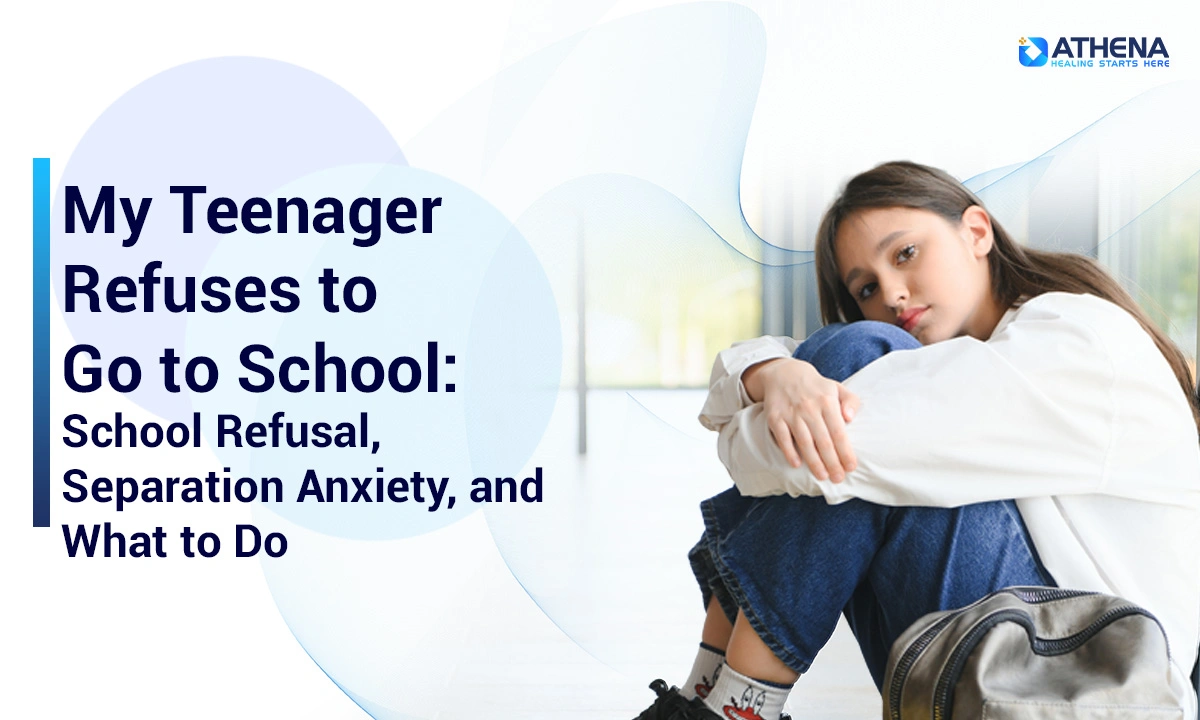

If your teenager refuses to go to school India, it may be more than typical teenage behaviour. School refusal is often linked to anxiety, separation anxiety, bullying, depression, or academic stress, especially during board exams. Identifying the underlying cause early and seeking appropriate mental health support can help your teenager return to school with confidence.
If your teenager refuses to go to school India, it's important to look beyond assumptions of laziness or rebellion. Persistent school refusal often signals emotional distress rather than defiance. At Athena Behavioral Health, we help families understand the reasons behind school refusal and provide evidence-based treatment that supports adolescents in returning to school and everyday life. The first step is understanding what's really happening beneath the surface.
What Is School Refusal?
Many parents assume that refusing to attend school is simply a phase or an act of teenage defiance. However, school refusal is a recognised behavioural and emotional concern where a child or teenager experiences intense distress about attending school.
Unlike truancy, teenagers with school refusal usually want to succeed academically but feel emotionally overwhelmed by the thought of going to school. They may experience anxiety, panic, physical symptoms, or emotional exhaustion that make attendance extremely difficult.
School refusal can affect students of any age, but it commonly becomes more noticeable during adolescence, when academic expectations, social pressures, and emotional changes intensify.
School Refusal vs. Typical Teenage Behaviour
Teenagers naturally seek independence and occasionally argue about school. Missing a class occasionally or complaining about homework is common.
School refusal is different because the distress is persistent and emotionally driven. A teenager may cry before school, experience panic attacks, complain of headaches or stomach pain every school morning, or become extremely anxious the night before classes.
Understanding this distinction helps parents respond with empathy rather than punishment.
Why Does a Teenager Refuse to Go to School?
Every teenager's experience is unique. School refusal is rarely caused by one factor alone. Instead, it often develops due to several emotional, psychological, and environmental influences.
Board Exam Pressure
One of the most common reasons a teenager refuses to go to school India is overwhelming academic pressure. Students preparing for Class 10 and Class 12 board examinations often carry enormous expectations from themselves, parents, schools, and coaching institutes.
The fear of disappointing others or failing important examinations can create significant anxiety that makes attending school feel unbearable.
Clinical Anxiety Disorders
Underlying conditions such as generalized anxiety, social phobia, or panic disorder make classroom settings intimidating. To explore how anxiety presents across different ages, read our resource on whether a
Separation Anxiety
Although separation anxiety is commonly associated with younger children, it can also affect adolescents. Some teenagers experience excessive fear about being away from their parents or worry constantly about something happening to family members while they are at school.
Depression
Depression can reduce motivation, energy, concentration, and interest in school. A teenager may appear withdrawn, tired, or emotionally numb rather than openly distressed.
Parents wondering whether a teenager's despair is typical can explore whether
Bullying and Peer Difficulties
Bullying, cyberbullying, social exclusion, or friendship conflicts can make school feel emotionally unsafe. Teenagers often hesitate to tell their parents about these experiences due to embarrassment or fear.
Learning Difficulties
Conditions such as ADHD, dyslexia, autism spectrum disorder, or other learning differences may make school increasingly stressful if they remain unidentified or unsupported.
Digital Overuse and Smartphone Dependence
Late-night screen use disrupts sleep cycles and increases social comparison, contributing to morning exhaustion and school avoidance. Learn more about managing
Signs That Your Teen May Be Experiencing School Refusal
Parents should pay attention to recurring patterns rather than isolated incidents.
Common signs include:
Frequent stomach aches or headaches before school
Physical symptoms that disappear after staying home
Panic attacks on school mornings
Crying before leaving for school
Difficulty sleeping before school days
Sudden drop in academic performance
Increased irritability or emotional outbursts
Social withdrawal
Avoiding conversations about school
Repeated requests to stay home
Recognising these warning signs early allows parents to intervene before the problem becomes more severe.
The Unique Impact of Board Exam Pressure in India
Academic competition in India can significantly affect adolescent mental health. Board examinations, entrance tests, and high parental expectations often create an environment where teenagers feel their future depends entirely on academic performance.
Many students compare themselves with classmates or social media success stories, leading to perfectionism and fear of failure. Coaching classes, long study hours, and limited opportunities for relaxation can further increase emotional exhaustion.
When these pressures become overwhelming, school refusal may emerge as an attempt to avoid intense emotional distress rather than academic responsibility.
What Parents Should Do
If your teenager refuses to go to school India, responding calmly can make a meaningful difference.
Listen Without Judgement
Encourage your teenager to share their feelings without immediately offering solutions or criticism. Feeling heard often reduces emotional distress.
Stay Calm
Avoid reacting with anger or punishment. Strong emotional reactions may increase anxiety and make communication more difficult.
Speak With the School
Teachers, school counsellors, and administrators can provide valuable insight into attendance patterns, peer relationships, and academic concerns.
Maintain Daily Routines
Keeping regular sleeping, eating, and waking schedules helps provide stability while addressing the underlying issue.
Encourage a Gradual Return
For some teenagers, returning to school gradually rather than immediately attending full days may feel more manageable. This approach should be planned collaboratively with parents, the school, and a mental health professional.
What Parents Should Avoid
Certain responses may unintentionally worsen school refusal.
Avoid:
Labelling your teenager as lazy
Comparing them with siblings or classmates
Dismissing their fears
Threatening punishment
Assuming they will "grow out of it"
Ignoring persistent emotional symptoms
Compassion combined with appropriate professional support is generally more effective than discipline alone.
When Should You Seek Professional Help?
Parents should consider professional assessment if school refusal continues for more than two weeks or is accompanied by:
Panic attacks
Persistent anxiety
Depression
Self-harm thoughts
Severe emotional distress
Significant decline in academic performance
Complete withdrawal from social activities
Early intervention often prevents school refusal from becoming a long-term problem. Knowing whether to consult a clinical therapist or a medical doctor is an important step; learn more in our detailed guide on
How Mental Health Professionals Can Help
When a teenager refuses to go to school India, professional support focuses on understanding the underlying cause rather than simply improving attendance.
Treatment may include:
Comprehensive psychological assessment
Individual psychotherapy
Cognitive Behavioural Therapy (CBT)
Anxiety management techniques
Family counselling
Emotional regulation strategies
School reintegration planning
Collaboration with teachers and school counsellors
Each treatment plan is personalised to meet the teenager's emotional, psychological, and educational needs.
Can School Refusal Be Prevented?
While every situation is different, parents can reduce the risk by encouraging open communication, maintaining realistic academic expectations, promoting healthy routines, and checking in regularly about school experiences.
Teaching coping skills, emotional resilience, and stress management also helps teenagers navigate academic challenges more confidently.
Most importantly, taking emotional concerns seriously from the beginning encourages teenagers to seek help before difficulties become overwhelming.
Conclusion
If your teenager refuses to go to school India, remember that persistent school refusal is rarely a sign of laziness or poor discipline. More often, it reflects genuine emotional distress that deserves understanding and professional attention. By identifying the underlying cause early and working closely with schools and mental health professionals, parents can help teenagers rebuild confidence, manage anxiety, and return to learning in a healthier and more positive way.
Help Your Teen Return to School With Confidence
If your teenager refuses to go to school India, you don't have to navigate this journey alone. At Athena Behavioral Health, our experienced mental health specialists provide compassionate, evidence-based care for adolescents struggling with school refusal, anxiety, separation anxiety, depression, and other emotional challenges. Through comprehensive assessments, personalised therapy, family counselling, and structured school reintegration planning, we help teenagers regain confidence and reconnect with their education. Reach out to Athena Behavioral Health today to take the first step towards your teenager's emotional well-being and a healthier future.