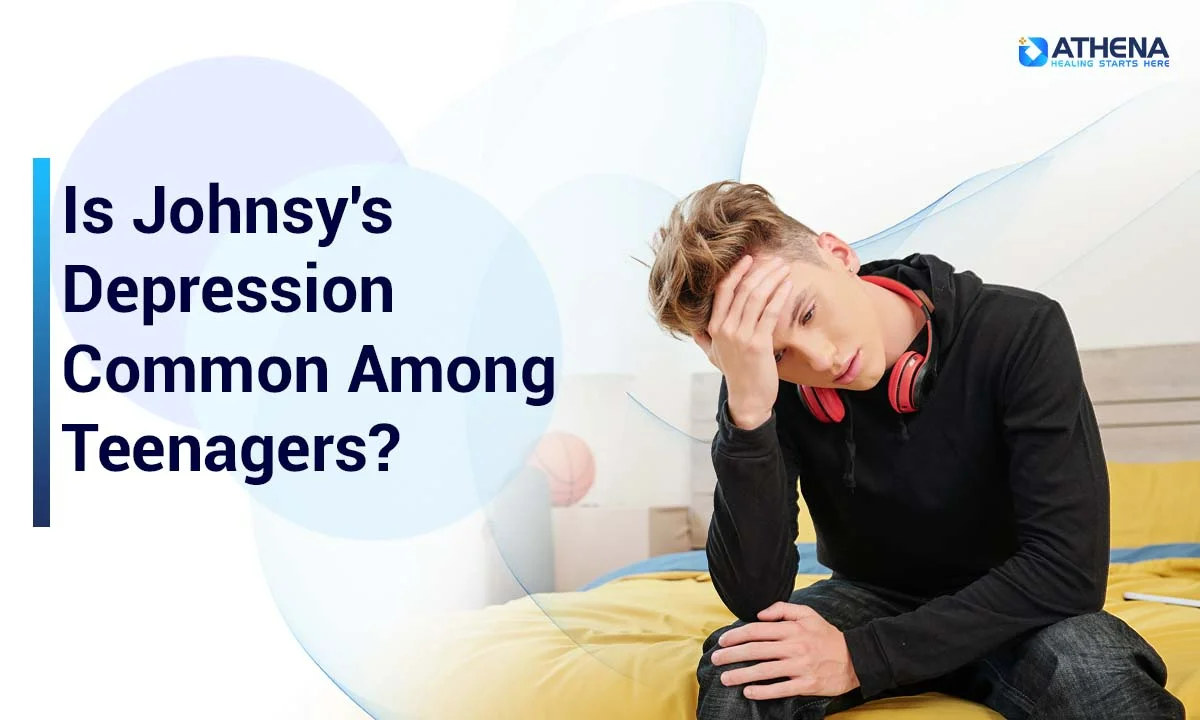

Do you think the feeling of depression Johnsy has is common among teenagers? If you are a student, this is probably a question from your English paper on O. Henry's The Last Leaf. If you are a parent, the worry may be quieter: your child has stopped talking at dinner, and you wonder whether it is more than a phase. The short answer to both is yes. Johnsy's hopelessness is a familiar pattern, and teenagers today show it in very similar ways. This guide explains what depression looks like in teens, why it happens, how to tell it apart from normal moodiness, and how to help.
What Does Johnsy's Story Say About Teenage Depression?
In The Last Leaf, Johnsy falls ill with pneumonia and stops fighting. She tells her friend Sue that she will die when the last leaf falls from the ivy outside her window. Her body is sick, but the bigger problem is that she has lost the will to recover. A doctor today would call this hopelessness, a core feature of depression.
The story turns when an old painter, Behrman, paints a leaf on the wall that does not fall. Johnsy begins to recover because someone noticed her despair and acted on it. That is the lesson for families: depression in a teenager improves when an adult sees it and responds.
Is Depression Common in Teenagers?
Yes. The World Health Organization estimates that about one in seven young people aged 10 to 19 lives with a mental health condition, and depression is among the leading causes of illness in this age group. Depression is rare in children younger than six, but rates rise sharply once puberty begins, because hormones, school pressure and social life all change at the same time.
In India, board exams, tuition schedules, comparison with classmates and long hours on the phone add to that load. Many teens hide how they feel, so the cases you can see are fewer than the cases that exist. Our child and teen mental health guide explains how mental health problems differ at each age.
What Causes Depression in Teenagers?
No single cause explains it. Most teens carry a mix of these:
Family history: a parent or sibling with depression raises the risk.
Academic pressure: fear of marks, ranks and entrance exams.
Social stress: bullying, a breakup, a lost friendship or feeling left out.
Social media: constant comparison with edited lives.
Loss or trauma: a death, a divorce, a move or abuse.
Body changes: puberty, sleep disruption and hormone shifts.
Because the causes overlap, treatment usually works on several fronts at once rather than on one trigger.
What Are the Signs of Depression in a Teenager?
Teens rarely say "I am depressed." They say "nothing matters" or "I am tired of everything." Watch for these changes lasting two weeks or more:
Sadness or irritability on most days
Loss of interest in music, sport, friends or hobbies they once loved
Sleeping far more or far less than usual
Changes in appetite or noticeable weight change
Falling marks, skipped classes or refusing to go to school
Staying in their room and avoiding family
Remarks such as "I am a burden" or "what is the point"
Headaches or stomach aches with no medical cause
Self-harm marks or talk about death
How Is Depression Different From Normal Teenage Moodiness?
What you notice | Normal teenage mood | Possible depression |
Duration | A few hours to a day or two | Two weeks or longer |
Mood | Shifts with events, lifts with friends | Stays low, even at good moments |
Interest | Still enjoys some activities | Loses interest in almost everything |
Sleep and appetite | Occasional late nights | Clear, lasting change |
School and friends | Minor dips | Marks fall, friendships fade |
Response to comfort | Calms down after talking | Feels worse, shuts down |
If the right-hand column sounds familiar, a clinical assessment is the next step. You can read how depression treatment works at Athena.
Do Boys and Girls Show Depression Differently?
Often, yes. A 14-year-old girl may cry easily, criticise her body, withdraw from friends and speak harshly about herself. A 15-year-old boy is more likely to show anger, take risks, snap at family or say he is bored all the time. Adults tend to read the boy's behaviour as a bad attitude and miss the depression underneath. Neither pattern is fixed, so judge by the change from your teen's usual self.
How Can You Help a Depressed Teenager?
A depressed son or daughter will not open up because you demand it. These steps work better:
Choose a calm moment, ideally side by side during a walk or a drive.
Start with what you have seen: "You have been sleeping late and skipping meals. I am worried."
Listen without fixing. Avoid "others have it worse."
Ask directly whether they have thought about hurting themselves. Asking does not plant the idea.
Keep simple routines for sleep, meals and some daily movement.
Move the phone out of the bedroom at night.
How Do You Discipline a Depressed Teenager?
Rules still matter, but punishment for symptoms backfires. Taking away the phone because marks dropped, or shouting about a messy room, tells a depressed teen that they are failing. Keep a few firm rules around safety, such as curfew and no substances, and ease off on low energy and low grades. A therapist can help the family agree on rules everyone can follow, and psychotherapy and counselling often include sessions with parents.
What Should You Do if a Teenager Is Suicidal?
Take it seriously every time. Warning signs include talk of death, giving away belongings, searching for ways to die, or sudden calm after a long period of despair. Stay with your teen, remove medicines, pesticides, sharp objects and ropes from reach, and do not leave them alone. Call 112 or take them to the nearest hospital emergency. The Tele-MANAS helpline at 14416 and Athena's 24x7 line at +91 95992 23591 are also available. Read more about the role of mental health care in suicide prevention.
When Should You Seek Professional Help?
See a professional if a low mood lasts more than two weeks, school or friendships are suffering, your teen uses alcohol or drugs, or there is any self-harm. Treatment begins with an assessment by a psychiatrist or psychologist. Cognitive behavioural therapy helps teens change harsh thought patterns, family sessions repair communication, and medicine is added for moderate to severe depression. Athena's child and adolescent psychiatry team treats teens with both outpatient and inpatient care.
The Takeaway for Parents and Teens
Johnsy's despair was real, and so is the despair of many teenagers today. Depression is a health condition, not weakness or bad behaviour, and it responds to treatment. If you are a teen reading this, tell one adult you trust. If you are a parent, act on what you notice. Call Athena Behavioral Health at +91 9289086193 to book an appointment.