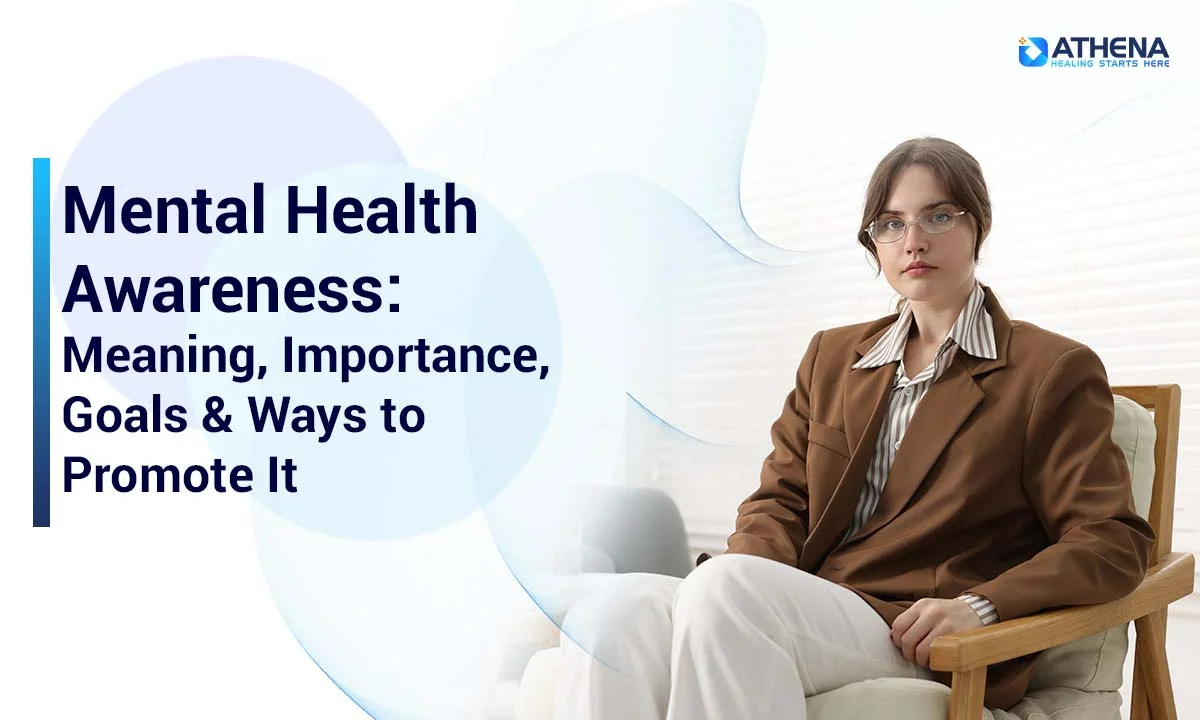

Ask a friend how they're doing and you'll probably hear "fine." Ask again, gently, and the answer often changes. Across the world, more than 1 billion people live with a mental health condition. That's about 1 in 7. Only 9% of people with depression get proper treatment. Many never speak up at all, because they don't know what they're feeling has a name, or they worry about what others will think.
This is the problem mental health awareness tries to fix. Below, you'll find what it actually means, the numbers behind it, how to spot trouble early, a few quick calming techniques, and nine simple ways to help more people talk about it.
Mental Health Awareness: Key Numbers
A few figures make the picture clear.
What we're measuring | The number |
People living with a mental disorder, worldwide | 1 billion+ (about 1 in 7) |
Teenagers (10 to 19) affected | About 14% |
Children (5 to 9) affected | About 7% |
People with depression who get adequate treatment | 9% |
Suicide deaths worldwide in 2021 | About 727,000 |
Mental health workers per 100,000 people | 13 |
Indian adults with a current mental disorder | 10.56% (close to 150 million) |
Urban metros vs rural India | 13.5% vs 6.9% |
Share of affected Indians who get no treatment | 84.5% |
Yearly global cost of depression and anxiety | About US$1 trillion |
Workdays lost to depression and anxiety each year | About 12 billion |
What Does Mental Health Awareness Actually Mean?
It means being able to talk about your mind the way you'd talk about your back or your blood pressure. You know the basic signs of common conditions. You know that asking for help is normal. And you know where to go when you need it.
Think of it as three skills:
- Knowing: what anxiety, depression and other conditions look like in real life.
- Accepting: that these are health issues, not character flaws.
- Acting: reaching out for yourself or for someone you care about.
Nobody expects you to diagnose a friend. The aim is simply to make sure no one sits alone with a problem because they never learned it was okay to say it out loud.
Why Mental Health Matters as Much as Physical Health
Your mental state touches almost everything: how well you sleep, how you handle work, how patient you are with your kids, whether you can enjoy a free weekend. When it slips, the rest of life tends to wobble with it.
Globally, anxiety and depression make up over two-thirds of all mental disorders. Suicide ranks among the top causes of death for young people. And support is stretched thin. There are only 13 mental health workers for every 100,000 people, and governments spend a median of just 2% of their health budgets on this area.
In India, if six people need help, fewer than one gets it. For anxiety disorders the gap is 82.9%. Most of the time, treatment isn't the missing piece. What's missing is recognition and the courage to speak first.
Why Mental Health Awareness Is Important for Everyone
The importance of mental health awareness is easiest to see by looking at who it helps. If you'd like a wider view of the topic, our piece on the importance of mental health awareness goes deeper. For now, here are the places where it makes the biggest difference.
People Reach Out Before Things Get Worse
Constant worry, a flat mood or pulling away from friends are much easier to treat early. Awareness helps people act on the first warning instead of the fifth. It also plants a useful idea: recovery from mental health struggles is always possible, even after a long, hard stretch.
Shame Loses Its Grip
Plenty of people wait years because they're afraid of being called weak. Each honest conversation takes a little power away from that fear, and makes it easier for the next person to speak.
Kids and Teens Get Noticed Sooner
About 1 in 7 teenagers is affected. A parent or teacher who can separate ordinary moodiness from real distress can step in early. Our child and teen mental health lays out what to watch for at different ages.
Adults Finally Understand Their Own Story
Some adult anxiety or anger starts much earlier in life. Learning how childhood trauma can affect adult mental health helps people see their reactions as understandable, not as personal failures.
Workplaces and Economies Run Better
Depression and anxiety together drain roughly US$1 trillion a year and cost about 12 billion workdays. Around 15% of working adults live with a mental disorder at any one time. Teams that feel safe speaking up lose less time and keep more people.
Benefits of Mental Health Awareness You Can See in Daily Life
When awareness grows in a family, school or office, the change shows up in practical ways.
- Conditions get spotted and treated sooner
- More people feel safe asking for help
- Families and friends know what to say, and what not to say
- Workplaces see fewer burnouts and sick days
- Fewer people reach a crisis point alone
What a Good Mental Health Awareness Program Aims to Do
A mental health awareness program works best when it has a clear purpose beyond a one-day poster campaign. Strong ones tend to aim for the following.
Aims | What it looks like |
Teach | Talks and workshops on symptoms and common conditions. |
Normalise | Treating mental health like any other health topic in everyday chat. |
Break myths | Correcting wrong ideas and harmful language. |
Open access | Making counselling and helplines easy to find and afford. |
Show recovery | Sharing real examples of people getting better. |
Prevent crises | Training students, parents and managers to notice early signs. |
How to Tell If Your Mental Health Is in a Good Place
Good mental health doesn't mean you're happy all the time. It means you can take a bad day without being knocked flat. You're probably doing okay if:
- Stress comes and goes without taking over.
- You have a few people you trust.
- You sleep, eat and focus reasonably well.
- You feel a range of emotions and bounce back from setbacks.
- Most days, you feel hopeful about what's ahead.
- You can ask for help when you need it.
Warning Signs of a Mental Health Problem to Take Seriously
Everyone has off days. It's worth paying attention when a change lasts more than two weeks or starts getting in the way of normal life. Look out for:
- Sadness, emptiness or irritability that won't lift.
- Constant worry, fear or panic attacks.
- Big shifts in sleep or appetite.
- Pulling away from friends, family and things you used to enjoy.
- Trouble concentrating at work or school.
- Drinking, smoking or using drugs more than usual.
- Thoughts of hurting yourself or ending your life.
If several of these sound familiar, talk to a mental health professional. If someone is in immediate danger, call emergency services.
Common Types of Mental Disorders, Explained Simply
There are many mental health conditions, and one person can have more than one. These are seven main groups.
Types | Examples | What it can feel like |
Anxiety disorders | Generalised anxiety, panic disorder, social anxiety, phobias | Constant worry, racing heart, avoiding situations |
Mood disorders | Depression, bipolar disorder | Long low periods or extreme swings in mood |
Trauma-related disorders | PTSD, acute stress reaction | Flashbacks, nightmares, always feeling on edge |
Obsessive-compulsive disorders | OCD, hoarding | Unwanted thoughts and repeated rituals |
Eating disorders | Anorexia, bulimia, binge eating | Unhealthy relationship with food and body image |
Psychotic disorders | Schizophrenia | Hearing or seeing things others don't, confused thinking |
Substance use disorders | Alcohol, tobacco and drug dependence | Cravings, loss of control, withdrawal |
A serious mental illness is a condition that heavily disrupts daily life, such as schizophrenia, severe bipolar disorder or major depression. These are treatable, and outcomes are better when care starts early. If anxiety has become a daily weight, professional anxiety disorder treatment can make a real difference.
Looking After Your Mind Daily vs Getting Professional Help
People often think mental care starts only after something breaks. The importance of mental health care is really the same as with your body. You eat well and move around before you get sick, and you also see a doctor when you do.
Basis | Daily self-care | Professional care |
Goal | Stay steady and build resilience | Treat a condition and restore normal functioning |
Examples | Sleep, exercise, time with friends, boundaries, quiet time | Therapy, medication, structured treatment |
Who helps | You, family and friends | Psychiatrists, psychologists, counsellors |
When | Every day | When symptoms stick around or disrupt life |
You need both. Daily habits keep you steady, and professional help takes over when habits alone aren't enough.
9 Everyday Habits for Better Mental Health
Wondering how to stay mentally stable? Small, boring habits do more than most people expect. Pick two or three to start.
- Sleep 7 to 9 hours at roughly the same time each night
- Move for about 30 minutes on most days
- Eat regular meals and drink enough water
- Spend time with people who make you feel at ease
- Cut back on late-night scrolling
- Give yourself a few quiet minutes daily with deep breathing or mindfulness and yoga
- Protect your free time and say no when you're overloaded
- Avoid using alcohol or drugs to cope
- Talk to someone sooner rather than later
Two Quick Tricks to Calm Anxiety Right Now
When anxiety spikes, you need something fast and simple. These two work anywhere and cost nothing. They help in the moment, but they aren't a replacement for treatment if anxiety is frequent or severe.
The 3-3-3 Rule
This one pulls your attention out of a spiral:
- Name 3 things you can see
- Name 3 sounds you can hear
- Move 3 parts of your body, like your fingers, shoulders or ankles
The 5-5-5 Breathing Method
A slow rhythm tells your body it's safe to settle:
- Breathe in through your nose for 5 seconds
- Hold for 5 seconds
- Breathe out slowly for 5 seconds
- Repeat for 3 to 5 minutes
Can Mental Illness Be Prevented? What Helps
You can't prevent everything, but you can stack the odds in your favour:
- Look after your sleep and physical health
- Keep close, supportive relationships
- Deal with stress before it piles up
- Stay away from substance misuse
- Ask for support after a loss, a trauma or a major life change
- Get early help for children and teens who seem to be struggling
9 Simple Ways to Promote Mental Health Awareness
You don't need a platform, a degree or a big budget. If you're asking how to promote mental health awareness, start with whatever feels easiest here.
- Ask properly: Say "How are you, really?" and wait. Don't rush to fix anything.
- Share useful things: A verified fact or a helpline number can reach someone who is quietly struggling.
- Change a few words: "I'm so OCD" and "she's crazy" keep stigma alive. Use accurate, respectful language.
- Raise it at work: Manager training, flexible leave and confidential support help, and it usually starts with leaders being open about mental health in the workplace.
- Take it to schools and colleges: Peer groups, life-skills classes and trained counsellors teach young people early.
- Join or host an event: Walks, talks and support circles work well, especially around World Mental Health Day on 10 October.
- Be honest about your own self-care: When parents and leaders say "I'm taking a break" or "I'm seeing a therapist," others feel allowed to do the same.
- Know the next step: Keep helpline numbers and trusted counsellors handy so you can point someone to them.
- Listen without diagnosing: You don't have to name the problem. "I'm worried about you, and I'm here" is enough.
Mental Health Myths vs What's Actually True
A lot of silence comes from wrong ideas. Here are the most common ones.
Myths | Reality |
Mental illness is rare | About 1 in 7 people worldwide live with one |
It's weakness or a bad attitude | These are health conditions shaped by biology, life events and environment |
People don't get better | Many people improve a great deal with the right support |
Therapy is only for serious cases | It also helps with stress, grief, relationships and everyday struggles |
It only affects adults | About 1 in 7 teenagers and 1 in 14 young children are affected |
Athena Behavioral Health: Support That Starts With Listening
Awareness gets someone to the door, but they still need somewhere to go. A person who finally says "I think I need help" should find a warm, qualified team, not a maze of confusing options.
That's what Athena Behavioral Health is built around. We support people dealing with anxiety, depression, trauma and the slow build-up of everyday stress. Care is shaped around you, your history and your pace, not around a label.
Families are welcome too, whether you're worried about a teenager or trying to support a partner or parent who is struggling. And alongside professional care, we encourage the small daily practices, like mindfulness and movement, that help people stay well once they start feeling better.