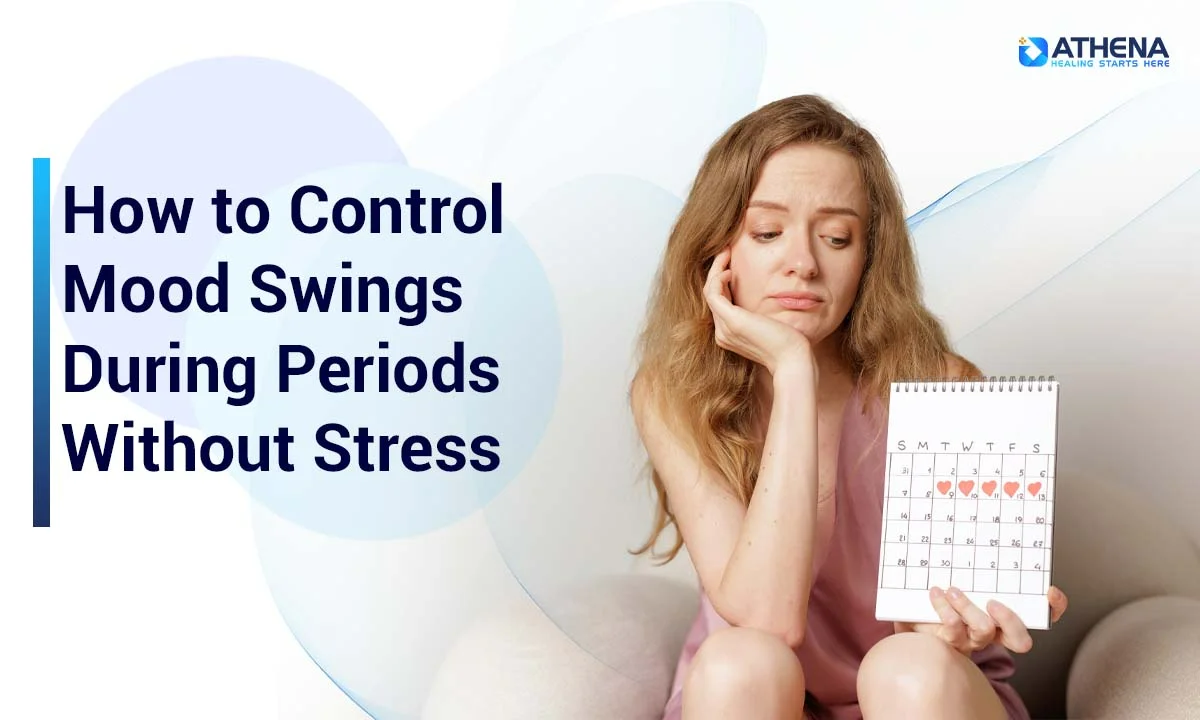

If you want to know how to control mood swings during periods, start by understanding what your body is doing. Today, you may feel okay; the next day, a slight remark may make you cry or react negatively, and afterwards, you are overcome by feelings of guilt. More than three-quarters of all women experience emotional or physical changes due to their menstrual cycle, while 48% of women exhibit symptoms of PMS. There is a biological reason behind the mood swings, but most women can control their intensity through certain practices and support.
What Are Mood Swings During Periods?
Period mood swings are fast, often unexplained shifts in emotion that show up around menstruation. You can go from calm to irritable, cheerful to tearful, or motivated to completely drained within the same day. Doctors treat them as a real response to hormone changes, and they range from mild annoyance to symptoms that disrupt work and relationships.
Why Do Women Get Mood Swings During Periods?
Your hormone levels fluctuate rapidly over the month. Both estrogen and progesterone fluctuate, peaking, and then lowering, and they affect serotonin, dopamine, and GABA, the neurotransmitters that dictate mood, motivation, and relaxation. If your hormone levels lower, so do these neurotransmitters.
Sensitivity is another contributing factor. Two different women may have the same hormone levels, but while one woman feels great, the other woman feels totally overwhelmed. It is all about how their brains react to these changes.
Why Do Mood Swings Happen During Periods and Not Before?
Most people link mood changes to the days before bleeding, but many women feel their lowest once the period has started. Several factors stack up at the same time, which explains why there are mood swings during periods even when the week before felt normal.
Lowest hormone levels: Estrogen and progesterone sit at their lowest point in the first days of bleeding.
Pain: Cramps, headaches and back pain use up emotional energy.
Disturbed sleep: Night-time discomfort cuts rest, and a tired brain reacts more strongly.
Low iron: Heavy bleeding can lower iron, which is linked to fatigue and a flat mood.
If your mood is steady before your period and drops after it starts, note it down for 2-3 cycles. That record helps a doctor spot the pattern quickly.
How Does Your Mood Change Through the Menstrual Cycle?
Moods have a cyclic pattern that goes through four stages. When you know your place in the cycle, things become less unpredictable and easier to plan for. Here is the typical order of the moods, although the length of each cycle varies from one individual to another.
Cycle Phases | Approx. Days | Hormone Trend | Common Mood |
Menstrual | 1-5 | Estrogen and progesterone low | Tired, sensitive, low energy |
Follicular | 6-13 | Estrogen rising | Lighter mood, better focus |
Ovulation | 14-16 | Estrogen at its peak | Confident, social, energetic |
Luteal | 17-28 | Progesterone rises, then both fall | Irritable, anxious, tearful |
PMS vs PMDD: What is the Difference?
Premenstrual syndrome occurs quite often and can be managed easily. Premenstrual Dysphoric Disorder, abbreviated PMDD, is a more serious condition requiring treatment by a doctor. They both occur cyclically, yet differ in terms of their impact on everyday functioning.
Basis | PMS | PMDD |
How common | About 48% of women | About 3-8% of women |
Mood symptoms | Mild to moderate irritability or sadness | Severe anger, hopelessness, anxiety |
Daily impact | Uncomfortable but manageable | Disrupts work, studies, relationships |
Self-harm thoughts | Rare | Possible, needs urgent help |
Usual treatment | Lifestyle changes | Therapy, medication, medical review |
How to Control Mood Swings During Periods: 9 Steps That Work
There is no need to alter all aspects of your life. Subtle changes have more effect than drastic changes, and most don't even require any money.
1. Monitor Your Mood Daily
Monitor your mood on a scale of 1 to 10 in a notes application or menstrual cycle tracking app. Within a couple of cycles, you'll discover the exact moment in which the dips occur, and anticipating a dip makes it a lot easier to deal with it.
2. Engage in Physical Activities
Engage in some form of physical activity for at least 150 minutes each week. This could be cycling, brisk walking, dancing, or swimming. Physical activities increase your endorphins and improve sleep. On difficult days, a simple 15-minute stretch will do.
3. Maintain Your Blood Sugar Levels
Skipping meals will only lead to irritability. Have small meals after every 3-4 hours, combine carbohydrates with protein (e.g., fruits and nuts, poha with curd). Include iron-rich food in your diet (spinach, lentils, dates, and jaggery) and restrict your intake of sweets.
4. Restrict Intake of Caffeine and Alcohol
They cause anxiety and interfere with sleep. During menstruation, replace your coffee intake by herbal tea or warm water mixed with lemon.
5. Protect Your Sleep
Try for 7-9 hours. Keep a regular bedtime, put your phone away an hour before sleeping, and use a heating pad so cramps do not wake you.
6. Consult Your Physician for Supplements
Calcium, magnesium and vitamin B6 supplements seem to improve premenstrual symptoms in certain research. According to one highly regarded study, supplementation with 1,200 milligrams of calcium per day cuts symptoms by almost half. However, dosages are important and too high doses of B6 might be dangerous; therefore, consult your physician.
7. Practice Calming Techniques at the Point of Irritation
If you feel irritated, perform 4-7-8 breathing technique: breathe in for 4 seconds, hold breath for 7 seconds, exhale for 8 seconds. Another way to cope with the wave is a 10-minute walk or just writing down how you feel.
8. Question Your Low-Phase Thoughts
In a low phase, thoughts like "nobody understands me" feel completely true. Cognitive behavioral therapy trains you to spot these thoughts and test them against facts. Practiced regularly, it changes your default reaction, and this explanation of how cognitive behavioral therapy rewires your brain shows why.
9. Get Medical Support if Self-Care Is Not Enough
If 2-3 cycles of lifestyle changes bring no relief, treatment can help. Doctors may suggest SSRIs, taken daily or only in the second half of the cycle, hormonal birth control, or structured therapy. Many women choose outpatient psychiatry because appointments fit around work and family life.
How Do Period Mood Swings Affect Relationships?
They seldom remain personal since your spouse, kids, and coworkers experience them as well. Afterward, the remorse experienced is even heavier than the conflict. There are just a few things that keep you and others safe.
Give a heads-up: "My period starts soon, so I may be extra sensitive" prevents most misunderstandings.
Delay big talks: Wait 3-4 days before serious conversations when you can.
Ask directly: Say whether you need space, help or comfort.
Pause, do not explode: "I need ten minutes" is a complete sentence.
Partners can help by listening first. "It's just your period" rarely lands well, while "What would make today easier?" opens the door.
Are Your Mood Swings Hormonal or Something Else?
These changes in mood that are linked with the menstrual cycle follow a pattern where they increase, peak, and subside during your menstrual period. If your moods change excessively within a month, relationships keep on switching between loving and hating phases, and you become fearful of being left behind and thus act impulsively, the problem might not only lie in your hormones. Mental conditions like depression, anxiety, bipolar disorder, and borderline personality disorder may all initially appear to be severe premenstrual syndrome. However, a psychiatric assessment will help differentiate them, and hence, treat what you truly have.
When Should You See a Doctor for Period Mood Swings?
Women often take years to ask for help assuming that there is nothing that can be done. Do not wait if you experience any of the following symptoms.
Mood swings interfere with your work, education, or relationships every month.
You feel desperate, extremely angry or panicked.
The symptoms persist after your period is over.
Three months of caring for yourself has not helped.
You have thoughts of harming yourself, and in this situation, seek help immediately.
Mood Swings and BPD Care at Athena Behavioral Health
Athena Behavioral Health supports people whose emotions feel bigger than they can handle. Care begins with a careful evaluation of your symptoms, history and daily life, and the team then builds a plan for mood swings, anxiety, depression and related concerns, with therapy and psychiatric support working together.
For people whose emotional shifts are intense and constant, Athena also provides borderline personality disorder treatment. This care focuses on steadier moods, calmer reactions and healthier relationships. Whether your mood swings follow your cycle or run deeper, you deserve a clear answer and a plan that fits you.