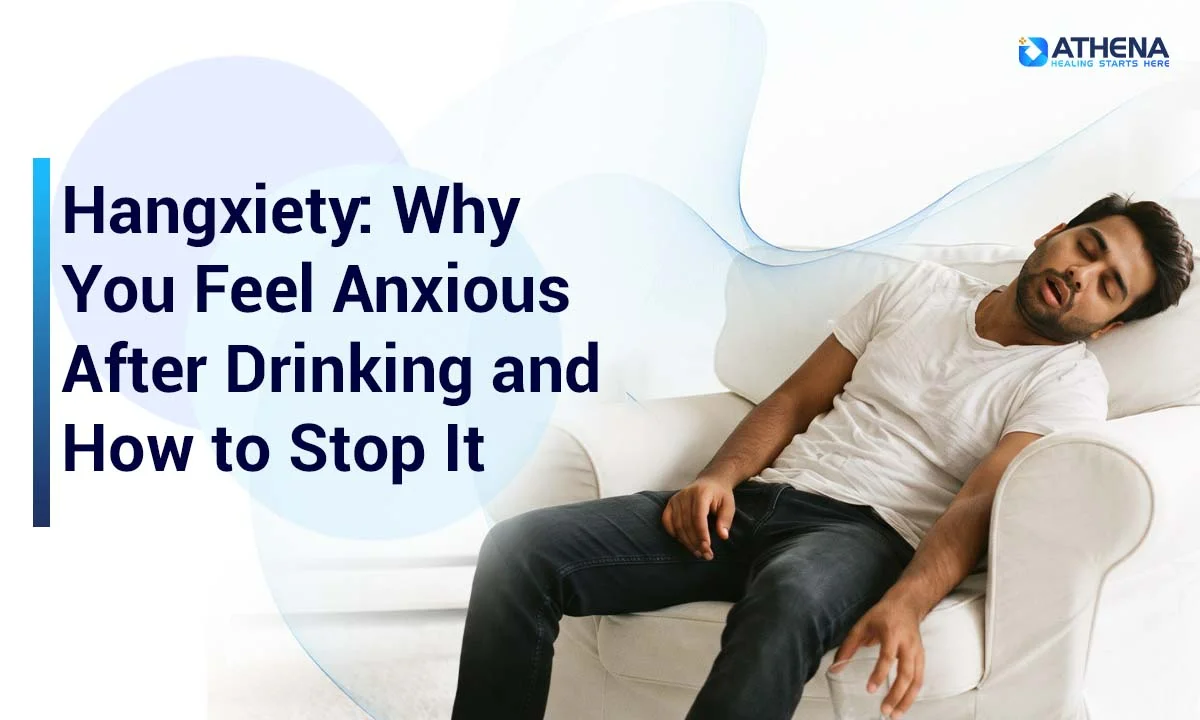

Hangxiety refers to the fear, guilt, and fast-thinking that occur after the effects of alcohol wear off. It could be that you slept for eight hours but woke up feeling an accelerated heartbeat and a realization that you made a fool out of yourself. It is not a sign of weakness. It has biological reasons, and once you learn what your body is doing, you can relax. In the following paragraphs, you will learn about hangxiety.
What Is Hangxiety?
Hangxiety is the combination of the words “hangover” and “anxiety.” This condition refers to a fear, panic, or doom feeling that emerges as alcohol is being eliminated from the body. This condition is not a medical diagnosis, but scientific studies support its existence. For example, in a UCL and University of Exeter study involving 97 social drinkers, the extremely shy subjects exhibited slight calmness after consuming approximately six units of alcohol, and later showed increased anxiety the following day.
Why Do I Feel Anxious After Drinking Alcohol?
You feel anxious after drinking because your brain overcorrects once alcohol wears off. Alcohol slows the nervous system while you drink, then the system swings the other way and runs faster than normal for hours. Several other factors add to it:
Calm chemicals fall: Alcohol raises GABA, which makes the brain calm, and lowers glutamate, which stimulates the brain. When alcohol leaves the body, it reverses its effect to make you overly stimulated.
Sleep gets worse: Alcohol disturbs your sleep pattern and lowers your REM sleep, during which the brain organizes the emotions.
Stress hormones increase: As the body eliminates the alcohol, adrenaline and cortisol increase, making your heart beat faster.
Lack of hydration and low blood sugar cause tremors: The combination of lack of hydration and low blood sugar level causes the tremors, which the brain understands as fear.
Inhibition falls, leading to worry: Since there is inhibition, the memory becomes cloudy.
Hangxiety Symptoms: How to Know If You Have It
The symptoms of hangxiety overlap with a normal hangover, but the emotional side is louder and harder to switch off. The table groups the most common signs so you can match them to your own experience.
Types | What it can feel like |
Emotional | Dread, shame, guilt, irritability, feeling close to tears |
Mental | Racing thoughts, replaying the evening, poor concentration |
Physical | Fast heartbeat, sweating, shaky hands, nausea, tight chest |
Behavioural | Avoiding messages, cancelling plans, wanting another drink |
If several of these show up after most nights out, your body is reacting strongly to alcohol.
How Long Does Hangxiety Last?
"Hangxiety" normally wears off within 12 to 24 hours, since the alcohol is gone from the blood, and the body rests and rehydrates. The liver eliminates about one alcoholic drink per hour, which means that more drinking takes more time to recover from.
Drinking pattern | Typical length of anxiety |
Light to moderate | A few hours to one day |
Heavy single session | One to three days |
Frequent or daily | Can linger or return every time |
The fact that the anxiety keeps repeating every single day is much more important than any particular morning.
Hangxiety vs. Hangover vs. Anxiety Attack: What's the Difference?
Both a pounding heart and shortness of breath may result from any of the three and the time element differentiates them. See the table for comparison.
Features | Hangover | Hangxiety | Anxiety attack |
Main feeling | Headache, nausea, tiredness | Dread, guilt, worry | Sudden, intense fear |
Trigger | Alcohol | Alcohol leaving the body | Can strike with no warning |
Duration | Up to a day | Hours to three days | Peaks within about 10 minutes |
If your symptoms came on suddenly and felt overwhelming, you may have had an anxiety attack rather than ordinary hangover anxiety, and the two call for different responses.
How to Stop Hangover Anxiety: 8 Fast Ways to Calm Down
Manage hangover anxiety through taking care of your physical state before managing your mind. There is no quick fix for hangxiety, but this process goes quicker than sleeping all day. Begin within the first hour after waking up:
Drink water or an electrolyte beverage steadily for the first hour.
Have something simple such as toast, eggs, oats, or a banana to regulate blood sugar.
Breathe slowly for three minutes, breathe in for four seconds and out for six to eight.
Label it; remind yourself that this is a chemical process and will be over soon.
Take a walk for 15 minutes; daylight and exercise lower stress hormones.
Have only one cup of caffeine.
Review the facts; write down what really occurred. If you need to apologize, send a quick message.
Go to bed earlier tonight and abstain from alcohol.
What Makes Hangover Anxiety Worse?
Some common fixes feel helpful for an hour and then backfire. Check this table before you reach for one.
Quick fix | Why it backfires |
Another drink | Delays the crash and links alcohol with relief |
Energy drinks or several coffees | Push heart rate and restlessness higher |
Sleeping tablets or sedatives | Risky with alcohol still in your system |
Scrolling in bed | Feeds the worry loop |
Is Hangxiety a Sign of Alcohol Use Disorder?
A hangxiety condition by itself is not a clear sign of an addiction to alcohol, but when it occurs regularly, it is a matter of concern. The study conducted by UCL established a relationship between more severe next-day anxiety among excessively shy people and high AUDIT results.The World Health Organization also lists mental and behavioural disorders among the harms tied to alcohol use.
Watch for these signs:
Anxiety after most nights you drink
Drinking the next day to ease the anxiety
Needing more alcohol for the same effect
Failed attempts to cut down
If you drink heavily or daily, do not stop suddenly on your own. Withdrawal can begin within 6 to 12 hours of the last drink, and an estimated 5 to 10% of people who quit abruptly after long, heavy use have seizures. Stopping under medical detoxification keeps the process safe, with doctors monitoring you around the clock.
Hangxiety Treatment: When to Get Professional Help
Rest, water, and food are sufficient for occasional mornings that start badly. An ongoing cycle requires planning, because the two are linked and feed off one another; you consume alcohol in order to calm yourself down, wake up feeling anxious and consume again. Hangxiety treatment involves tackling both aspects of this cycle:
The involvement of an anxiety disorder is diagnosed by a physician.
Therapy is used to learn coping mechanisms that don’t include drinking.
How to Prevent Hangxiety
Hangxiety is avoided primarily by reducing one’s intake of alcohol. In case one drinks, there are some ways of minimizing the withdrawal effects. The following list shows these ways arranged in descending order of effectiveness.
Abstain from drinking alcohol for some days or abstain completely.
Decide on a limit of drinks before having the first drink.
Have one glass of water between every alcoholic drink.
Eat properly before and during the time of drinking.
Athena Behavioral Health: Treatment for Alcohol Use and Anxiety Together
Athena Behavioral Health treats alcohol dependence and anxiety in parallel, since one tends to fuel the other. Treatment is confidential and non-judgmental, with support 24×7. The centres operate in Gurgaon, Delhi, Greater Noida, Guwahati, and there is a residence program for women.
Two programmes fit people whose hangxiety has become a habit:
Alcohol addiction treatment covers supervised detox, psychiatric assessment, therapy, family counselling, and relapse prevention, planned around your level of dependence.
Anxiety disorder treatment focuses on diagnosing and treating anxiety that continues on sober days, including cases where anxiety and drinking overlap.