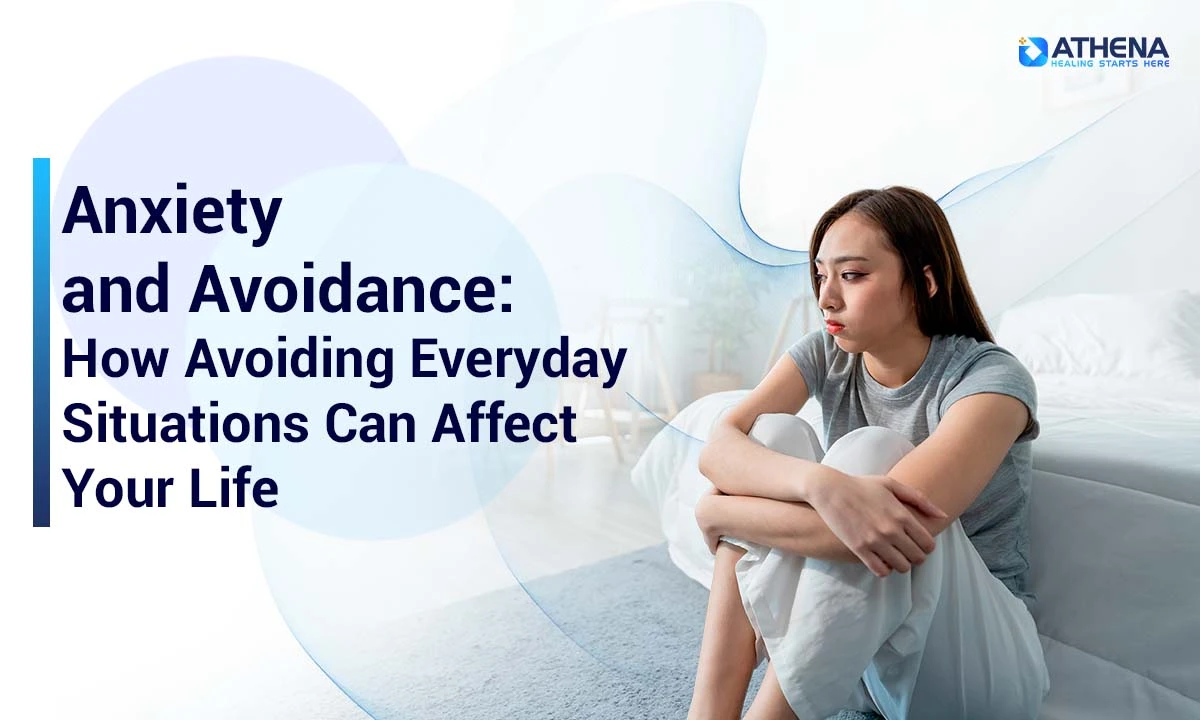

Quick question: how many things have you quietly stopped doing because they made you anxious?
Maybe it is phone calls, crowded markets, or a meeting where you might have to speak. Each skip feels small and sensible. But anxiety and avoidance work as a team, and over time the avoiding starts making your decisions for you. This blog explains how the anxiety avoidance cycle works, how it shows up in daily life and in close relationships, and what actually loosens it.
What Is the Anxiety Avoidance Cycle, and Why Does It Feel So Helpful?
Avoidance is the brain's fastest painkiller. You skip what scares you, and the fear drops within minutes. That relief feels like proof you made the right call, but your brain files away the wrong lesson: that was dangerous, and I only survived because I ran. Therapists call these escape moves safety behaviours, and they quietly keep anxiety alive.
The anxiety avoidance cycle usually runs like this:
Trigger: a place, a thought, a body sensation, or bedtime itself
Fear: racing heart, tight chest, a loud inner alarm
Avoidance: you cancel, leave, delay, or stay awake
Relief: the alarm quiets down
Reinforcement: your brain tags the trigger as a real threat, so the fear arrives faster next time
Every lap shrinks your comfort zone. Skipping one party turns into skipping calls, then skipping travel, then dreading your own bedroom, which is why anxiety at night is so often where the pattern shows up first. Over months, work, friendships, and sleep all take a hit, and the person who only wanted to be careful ends up stuck.
A wave of intense fear usually peaks within minutes and fades on its own, yet the dread of the next one can linger for days. Poor sleep then lowers your stress tolerance, so the anxiety hits harder. If this pattern sounds familiar, it usually points to an underlying anxiety problem, and a specialist team at a psychiatric hospital in India can confirm the cause and plan treatment.
Everyday Situations People Avoid, and What It Costs
Avoidance rarely stays in one corner of life. This is how it tends to spread:
Situation avoided | What it seems to protect you from | What it costs over time |
Going to bed on time | Lying awake with racing thoughts | Chronic sleep loss, irritability, poor focus |
Crowded places, the metro, markets | Panic in front of others | A shrinking social and work life |
Phone calls and social plans | Embarrassment, being judged | Loneliness, strained friendships |
Exercise | A racing heart that feels like panic | Losing a proven anxiety reliever |
Driving or travel | Being trapped during an episode | Dependence on others, missed opportunities |
Difficult talks with a partner | Conflict, rejection | Unresolved issues, growing distance |
Doctor visits | Bad news | Untreated anxiety, missed medical causes |
A research review on avoidance and anxiety disorders explains that avoidance can grow out of fear and then keep that fear going.
Anxious and Avoidant Attachment: When Avoidance Enters Relationships
Avoidance does not only show up as skipped places. It also shapes how we love. Psychologists group closeness habits into secure, anxious, and avoidant attachment styles, which describe how we handle both closeness and distance.
Secure: comfortable with intimacy and with independence.
Anxious: craves reassurance and fears being left.
Avoidant: values distance and pulls away when things feel too close.
When anxious and avoidant attachment meet, you get an anxious avoidant relationship. The anxious partner reaches out for reassurance, the avoidant partner feels crowded and withdraws, and that withdrawal raises the anxious partner's fear. It is the same anxiety avoidance cycle, played out between two people.
Attachment styles are patterns, not diagnoses, and they can shift. Awareness, a steady partner and therapy, either individual or as a couple, help both people learn to stay connected without chasing or running.
How to Avoid Stress and Anxiety From Taking Over Your Life
People often ask how to avoid stress and anxiety altogether. The honest answer is that you cannot, and trying is exactly what feeds the cycle. The same goes for how to avoid anxiety and fear: what works is changing how you respond to them. No single trick works for everyone, but a steady routine helps most people. Grounding and breathing, covered in this explainer on how to stop a panic attack, take the edge off within minutes. Use these steps to ease anxiety and avoidance together:
Keep a fixed wake-up time.
Wind down for 30 minutes before bed.
Cut late caffeine and alcohol.
Practice slow breathing during the day, not only when you are anxious.
Ride the wave: let the fear peak and pass without escaping.
Face the avoided thing in small steps, starting with the easiest.
Rule out body causes with a doctor.
A fair question is whether anxiety can be cured for good, and the honest answer is that it depends on treating the anxiety underneath, not only the avoidance. Anxiety disorders respond well to treatment, and many people regain full control of their routine. The main tool is cognitive behavioral therapy with gradual exposure, with medication from a psychiatrist added when needed. Please do not use alcohol or sleeping pills to silence the fear; if that has already started, a addiction center in India can treat the dependence alongside the anxiety.
A psychiatrist can rule out medical causes, confirm the diagnosis, and plan therapy and medication. Chest pain, fainting, or breathlessness that does not settle needs an urgent medical check, because a heart or breathing problem must be ruled out first. When avoidance and sleep loss have taken over everything, a supervised programme at a mental hospital in India gives you round-the-clock clinical support while you rebuild your routine.