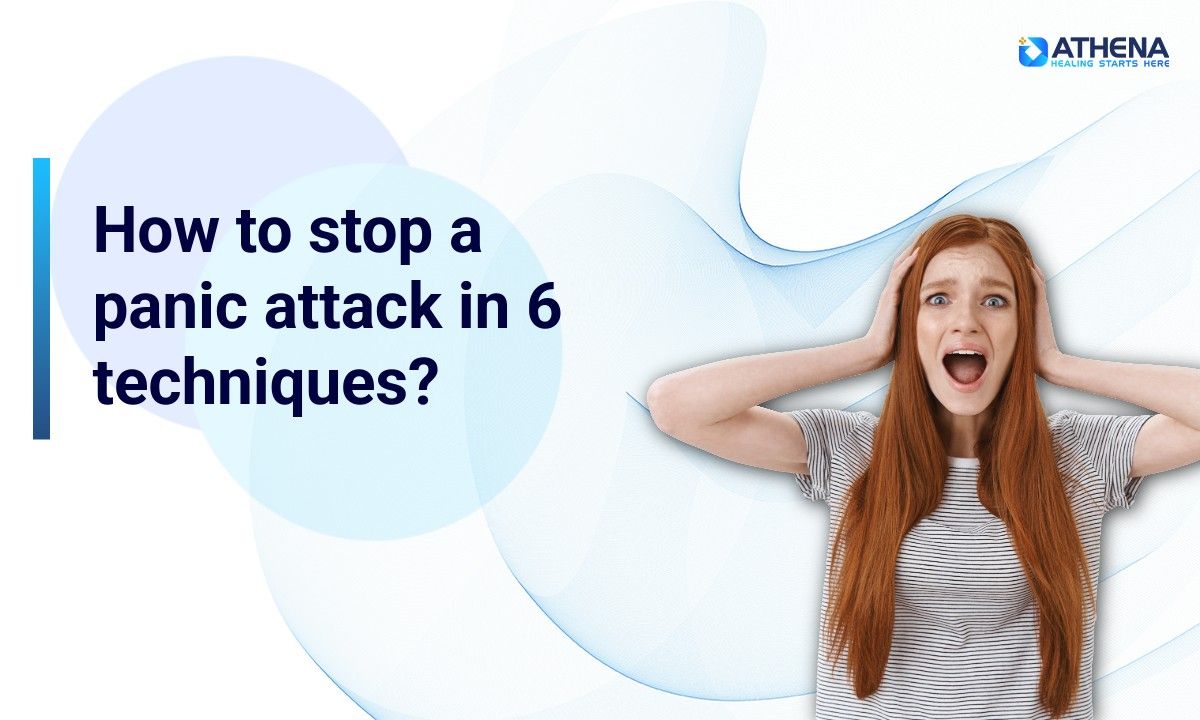

A panic attack can feel overwhelming, but it usually passes within minutes. If you're wondering how to stop a panic attack, focus on slowing your breathing, grounding yourself, relaxing your muscles, and reminding yourself that the symptoms are temporary. If panic attacks become frequent or interfere with daily life, seeking professional psychiatric care can help identify the cause and provide effective treatment.
If you're searching for how to stop a panic attack, the first step is knowing that you're not alone and that the symptoms are treatable. While self-help techniques can provide immediate relief, recurring panic attacks deserve professional attention.At Athena Behavioral Health, experienced psychiatrists provide personalized assessments and evidence-based panic disorder treatment to help people manage panic attacks and regain confidence in daily life.
What Is a Panic Attack?
A panic attack is a sudden surge of intense fear or discomfort that triggers powerful physical and emotional symptoms. Although it may feel like a medical emergency, a panic attack itself is not life-threatening.
During a panic attack, the body's fight-or-flight response becomes activated even when there is no immediate danger. Stress hormones such as adrenaline prepare the body to respond, causing noticeable physical changes.
Common symptoms include:
Rapid heartbeat (often prompting people to wonder if anxiety can trigger severe heart symptoms)
Chest tightness or discomfort
Shortness of breath
Sweating
Trembling or shaking
Dizziness or lightheadedness (leading many to question if anxiety causes dizzy spells)
Nausea
Tingling sensations
Feeling detached from reality
Fear of losing control or dying
Most panic attacks peak within about 10 minutes before gradually easing.
Panic Attack vs Anxiety Attack — What's the Difference?
Although the terms are often used interchangeably, there are key distinctions. For a detailed breakdown, explore how to distinguish an anxiety attack from a panic attack.
Panic Attack | Anxiety Attack |
Starts suddenly | Builds gradually |
Symptoms are intense | Symptoms vary in intensity |
Often peaks within minutes | May last much longer |
Can occur without an obvious trigger | Usually linked to ongoing stress or worry |
Understanding this difference helps determine the most appropriate coping strategies and treatment.
How to Stop a Panic Attack — 6 Techniques That Actually Work
Learning how to stop a panic attack begins with calming your nervous system rather than trying to fight the experience. These psychiatrist-recommended techniques are practical, evidence-based, and easy to use when symptoms begin.
1. Slow Down Your Breathing
Panic often causes rapid, shallow breathing, which can make dizziness and chest tightness feel worse.
Try slow, controlled breathing:
Breathe in gently through your nose for four seconds.
Pause briefly.
Exhale slowly through your mouth for six seconds.
Repeat for several minutes.
Focusing on a longer exhale signals your nervous system to begin relaxing.
2. Use the 5-4-3-2-1 Grounding Technique
Grounding helps shift your attention away from frightening thoughts and back to your surroundings.
Notice:
5 things you can see
4 things you can touch
3 things you can hear
2 things you can smell
1 thing you can taste
This simple exercise encourages your brain to reconnect with the present moment instead of the panic.
3. Remind Yourself, "This Is a Panic Attack"
One of the most effective ways to interrupt escalating fear is to acknowledge what is happening.
Try saying:
"This is a panic attack. It feels frightening, but it will pass."
Recognizing the symptoms for what they are can reduce the fear that often keeps the panic cycle going. This step is a vital component of practical strategies on how to stop panic attacks safely.
4. Relax Your Muscles One Group at a Time
Panic often causes muscles to tense without you realizing it.
Start with your feet:
Tighten the muscles for five seconds.
Release completely.
Move upward through your legs, hands, arms, shoulders, and face.
Progressive muscle relaxation helps reduce physical tension while promoting a greater sense of calm.
5. Focus on One Safe Object or Sensation
Choose something that anchors your attention.
You could:
Hold a cool bottle of water
Focus on the texture of your clothing
Watch a stationary object
Listen carefully to calming sounds
Redirecting your attention away from fearful thoughts helps reduce the intensity of the attack.
6. Stay Where You Are If It's Safe
Many people feel an overwhelming urge to leave immediately.
If you are in a safe environment, remaining where you are and allowing the symptoms to pass can gradually reduce the fear associated with future panic attacks.
Understanding how to stop a panic attack also means accepting that the sensations are temporary rather than dangerous.
What Not to Do During a Panic Attack
Certain reactions can unintentionally make symptoms feel worse.
Avoid:
Holding your breath
Fighting every sensation
Assuming the worst immediately
Consuming excessive caffeine
Searching repeatedly for alarming health information while symptoms are active
Using alcohol or unprescribed substances to cope
Instead, focus on calming strategies and seek professional guidance if attacks become frequent.
Why Do Panic Attacks Happen?
There is rarely one single cause. Panic attacks often develop through a combination of biological, psychological, and environmental factors.
Common triggers include:
Ongoing stress
Traumatic experiences
Major life transitions
Poor sleep
High caffeine intake
Certain medical conditions
Family history of an anxiety disorder
Not everyone has an identifiable trigger, which is why a comprehensive psychiatric evaluation can be valuable.
Can Panic Attacks Be Prevented?
Although panic attacks cannot always be prevented completely, many people reduce their frequency by applying methods on how to overcome anxiety and fear and maintaining healthy habits.
Helpful strategies include:
Maintaining a consistent sleep schedule
Regular physical activity
Practising mindfulness
Limiting caffeine if it worsens symptoms
Eating balanced meals
Attending therapy when recommended
Taking prescribed medication exactly as directed by a healthcare professional
These long-term habits complement the immediate techniques discussed in how to stop a panic attack strategies.
When Should You See a Psychiatrist?
Professional support is recommended if:
Panic attacks happen repeatedly.
You avoid places or situations because of fear.
Symptoms interfere with work, studies, or relationships.
You're unsure whether symptoms are caused by panic or an underlying issue like unaddressed depression.
Anxiety is affecting your overall quality of life.
Early evaluation can help prevent panic attacks from becoming more disruptive over time.
How Athena Behavioral Health Can Help
If you're repeatedly searching for how to stop a panic attack, it may be time to look beyond temporary coping techniques.
At Athena Behavioral Health, psychiatrists work with each individual to understand the underlying causes of panic attacks through a detailed mental health assessment. Treatment plans are personalized and may include psychotherapy, Cognitive Behavioral Therapy (CBT), medication when clinically appropriate, and practical lifestyle guidance. The goal is not only to reduce symptoms but also to build long-term confidence and emotional well-being.
Seeking help early can make recovery more manageable and help you return to daily life with greater peace of mind.
Key Takeaways
Knowing how to stop a panic attack starts with understanding that the symptoms, while frightening, are temporary and manageable. Simple techniques such as slow breathing, grounding, muscle relaxation, and calming self-talk can provide immediate support during an episode. If panic attacks become frequent or begin affecting your daily life, professional psychiatric care can help identify the underlying causes and provide effective, evidence-based treatment.
Take the next step with Athena Behavioral Health. If panic attacks are becoming more frequent, more intense, or preventing you from living the life you want, don't wait to seek support. Athena Behavioral Health offers compassionate psychiatric consultations, individualized panic attack treatment plans, and ongoing mental health care designed to help you move from coping with panic to confidently managing it.