 WhatsApp
 Emergency
“He’s Not the Same Person Anymore” — Early Signs Families Miss
 Share
Share
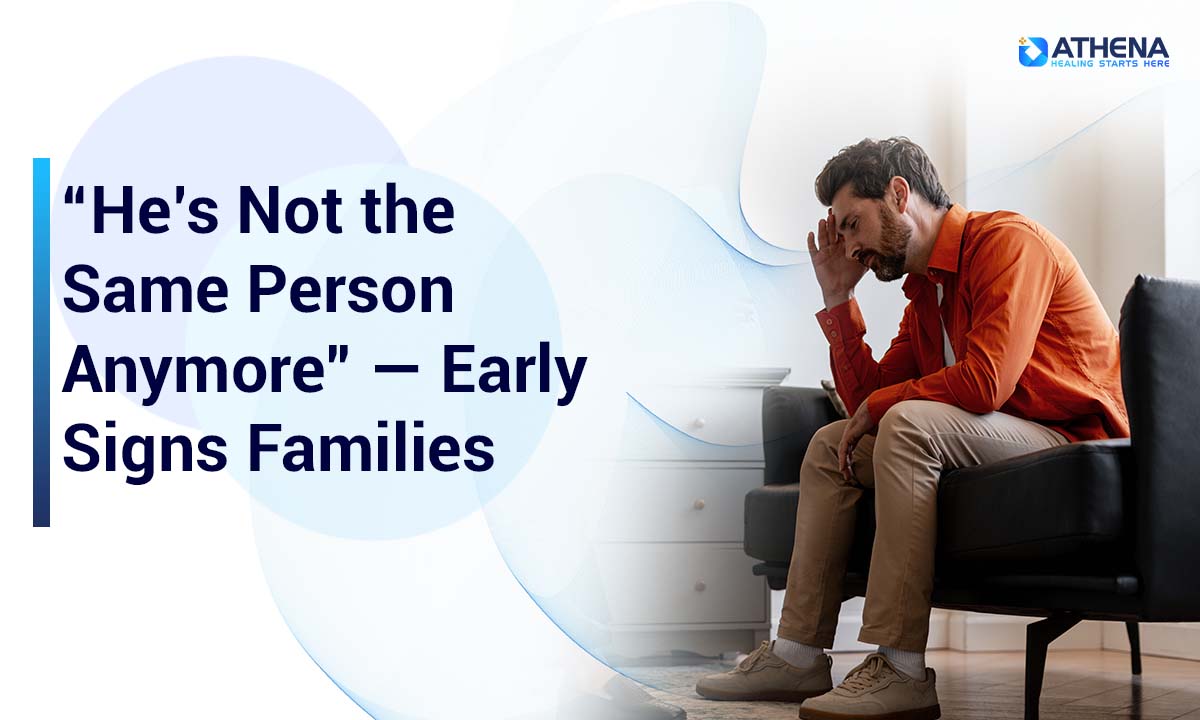
When a family member begins to act differently, it's a phrase they may hear from them. These changes may be very subtle, you may not notice them, or they may be dramatic, leaving family members with their mouths agape in amazement. Early identification of these changes can be significant in seeking help, achieving good outcomes and supporting mental health. Being a part of someone else's life and seeing them change so much in ways that you don't recognize can be difficult, and we at Athena Behavioral Health are here to help you identify the early warning signs.
Understanding Personality Changes
Personality is a set of characteristics, behaviors, and patterns that are unique to us. Changing personality doesn't necessarily mean severe issues, but frequent changes may be the result of psychological issues. During major life changes, sickness or psychological stressors, a family may hear “He's not the same person anymore.” Early signs of personality change may be very important for early intervention and support. Some of the common reasons for personality changes are:
- Stress or trauma that lasts for a prolonged period of time.
- Commencement of mental health conditions (anxiety, depression, bipolar disorder, etc.)
- Neurological disorders, such as dementia or traumatic brain injury
- Substance misuse
Changes in behavior happen over a course of time, but if there are drastic changes, they cannot be ignored.
Early Signs Families Often Miss
Sometimes families will be the first to see the changes, but just assume that it is a passing mood or “phase change.” Look for these signs and early warning signs of personality change:
1. Emotional Detachment
Many of the first symptoms are a lack of emotional interaction. This can include:
- Stay away from family and friends
- Decreased verbal ability or expression of emotions
- Indifference to once-important activities
These are classed as symptoms of emotional detachment and may be an initial indicator of depression, anxiety or other mental health issues.
2. Behavioral and/or mood changes
Sudden aggression, mood swings or irritability may be a sign of personality change. Watch for your loved one showing any of the following:
- Unexplained anger or frustration
- Loss of interest in hobbies/activities
- Making rash choices or taking chances
In some cases, these behaviours are seen with groups of personality disorders, for example, antisocial or borderline personality characteristics, and have a significant impact on family functioning.
3. Anxiety and depression symptoms
Common symptoms include worry, sadness or changes in personality. Be alert for signs of:
- A long time of being unhappy or depressed.
- Trouble sleeping, or changes in appetite.
- Too much anxiety or stress
- Social isolation/withdrawal from loved ones
Recognition of these symptoms at an early stage helps families engage in behavioral health services and supports positive outcomes and quality of life.
4. Mental or memory problems
If the person appears to have some difficulty with mental functioning, for example, forgetfulness or confusion, or poor decision-making, this suggests there are neurological or psychiatric issues. Recognizing these symptoms might be taken for granted as signs of stress or aging, but they could be attributed to a need to be evaluated for mental health problems.
5. Disinterest in Self-Care
Failure to maintain personal cleanliness, grooming or health habits is another mental health red flag. This may indicate depression, anxiety or other psychiatric illness and should be a red flag for a health care provider.
The Role of Family in Mental Health
When personality changes do occur, the first place to turn for support is to family members. Family relationships and mental health are tightly linked – the stressful family environment can worsen symptoms, and the supportive family environment can aid recovery. Families can support by:
- Supporting free, non-judging dialogue
- Noticing and recording changes in behaviour
- Assisting family and friends with mental health treatment near me
- Attending therapy sessions as needed
The awareness of mental health is of paramount importance. A good understanding of the early warning signs, the possible causes of the problem and the treatment options available can stop the situation from worsening and help the whole family unit to be healthier.
Seeking Professional Help
If your loved one is making chronic behavioral, mood, or personality changes, it is essential that they see a professional for an evaluation. We offer a full range of services at Athena Behavioral Health, such as:
- One-on-one counseling and individual counseling sessions for families.
- Prescribing drugs for mood and anxiety disorders.
- Treatment for personality and cognitive disorders (mood, anxiety, psychotic, and disruptive disorders will be covered in separate chapters.
- Resources for families with mental health issues.
Anticipating symptoms early provides families the opportunity to create a safe and healthy environment, and to support their loved one to recover.
Conclusion
“He's not the same guy anymore” is a call to action for families. Early signs of change in personality, emotional detachment and mental health warning signs can be identified to intervene in time. Awareness, support and professional guidance can help families navigate these changes together, maintaining relationships and mental health.
At Athena Behavioral Health, we are committed to helping families navigate these difficult transitions and are focused on mental health awareness and the provision of holistic behavioral health treatment that is specific to each person. Contact Athena Behavioral Health, a mental hospital in India, at +91 9289086193.