 WhatsApp
 Emergency
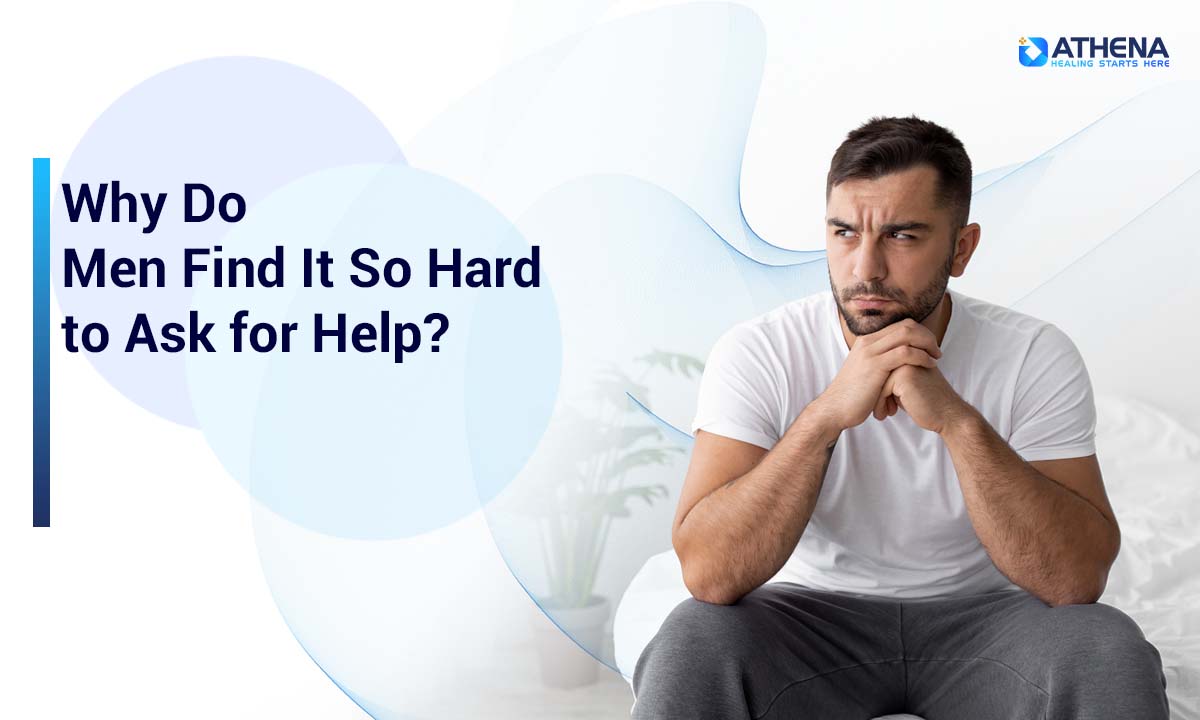
Why Do Men Find It So Hard to Ask for Help?
 Share
Share
The Silent Expectation Around Men
Men are expected to be composed, capable, and in control, no matter what they are going through inside. Emotional restraint is commonly promoted, and vulnerability is discouraged indirectly, at an early age.
Over time, this creates a pattern where men asking for help is something unnatural and uncomfortable. Not that men are not suffering--but because they are seldom accorded that language or that space in which to speak.
Masculinity and Vulnerability: A Difficult Balance
The key to the problem is the conflict between Masculinity and Vulnerability. Old-fashioned concepts of manhood focus on self-reliance, toughness, and emotional suppression. Although these characteristics in themselves are not harmful, they are restrictive when they eliminate the expression of emotions. Men often learn to:
- Stifle pain instead of dealing with it.
- Find solutions somewhere else and not within.
- Do not discuss emotionally revealing topics.
This results in a disconnection- men might be in distress yet have no power or even right to express it.
Why Men Don’t Seek Help
To explain the reason why men don't seek help, internal, rather than just societal barriers, must be considered.
Fear of being seen as a Weak Person.
Most men feel that seeking assistance is tantamount to losing power or control- particularly in the workplace or when it comes to family.
Internalised Mental Health Stigma.
The Mental Health Stigma for Men is self-perpetuated. Men can even undermine their struggles in supportive conditions.
Lack of Emotional Awareness
In the absence of developed emotional regulation, distress may be experienced as undefined and overwhelming, instead of specific and amenable to control.
Rather than telling someone that I feel anxious, it can manifest itself as:
- Irritability
- Withdrawal
- Work obsession
- Substance dependence
The Impact of Toxic Masculinity
The idea of toxic masculinity can be defined as strict requirements that prevent the expression of feelings and strengthen silence.
This is not to say that masculinity is bad - but when it is inhibiting, it denies men the possibility of:
- Seeking support
- Building emotional resilience
- Developing more significant interpersonal relationships.
With time, such isolation may escalate psychological and behavioural struggles.
When Emotional Suppression Turns Into Addiction
Raw emotions do not go away; they usually manifest themselves in different ways.
To most men, this brings about:
- Alcohol dependence
- Drug use
- Compulsive behaviours
It is this that leads to the need to put in place structured care like a rehab for men, not only to deal with substance use, but the underlying emotional patterns that underlie it.
Dual Diagnosis: Addressing the Root Cause
In most instances, addiction comes with related mental illnesses like anxiety, depression or even trauma. This involves Dual Diagnosis treatment for Men, whereby the psychological and substance use disorders are treated simultaneously.
In the absence of such an integrated approach:
- Symptoms may return
- Recovery remains surface-level
- Relapse risk increases
The Importance of Gender-Specific Treatment
Men tend to react in different ways to recovery settings and therapy. A gender specific addiction treatment approach offers:
- Peer psychological safety.
- Male behaviour models based on tailored therapy.
- Less inhibited in showing weakness.
This is especially crucial to high-performing individuals used to being in control and having their privacy.
The Urban Pressure: Gurgaon and Beyond.
Emotional pressures could increase in the busy cities where there is a strain to perform.
The increasing need for a rehab center in Gurgaon and a specialized mental health hospital is indicative of a change; men are suffering, yet are also gradually coming to seek structured assistance. Problems that are usually encountered are:
- Chronic stress and burnout.
- Performance pressure
- Relationship strain, like Emotional Regulation
- Burnout in disguise.
Approach to Men’s Mental Health at Athena Behavioral Health
At Athena Behavioral Health, treatment is tailored with a keen insight into the psychological tendencies that usually
- Discreet - full confidentiality.
- Structured – combining psychiatric and psychological care
- Individualised - based on personal emotional and behavioural styles.
Instead of concentrating on the symptoms, it is emphasized that:
- Building emotional regulation
- Dealing with internalised masculinity beliefs.
- Developing sustainable coping strategies.
This gives men the chance to approach recovery in a manner that makes sense to them, rather than coercing them.
Redefining Strength for Men
Strength is usually confused with stamina, which is not expressed. However, strength also consists of:
- Self-awareness
- Emotional clarity
- The skill to find help when required.
The fact that men seek help does not make them weak- being able to realize and seek help is a sign of psychological awareness and willingness to change.
Creating a Safe Space for Expression
The environment is important for men to be truly open. Care environments should provide:
- Privacy without compromise
- Non-judgmental therapeutic settings
- Experts in the behavioural patterns of men.
With such factors in place, resistance is diminished- and engagement is enhanced to a great extent.
Final Thoughts
When you find yourself frequently holding the whole world together on the outside, feeling overwhelmed on the inside, it is worth noting that it is not in vain; it is just not much recognised.
To most men, emotional exhaustion accumulates silently over time and is caused by the stress and thoughts kept at bay and the need to stay in control. With time, this may result in mental burnout, detachment, or unhealthy coping mechanisms.
The recognition of the necessity to support oneself is not a weakness, but a step in the right direction to clarity and control.
Care at Athena Behavioral Health aims at assisting men to leave silent endurance to organised, personalised recuperation. With a professional, non-judgmental manner, the emphasis is put on both emotional and behavioural patterns in a manner that is safe, confidential, and effective.
When you are having a hard time, or a friend is, getting the necessary help when you need it can make a difference.