
Best Depression Treatment in Gurgaon
Athena Behavioral Health provides depression treatment in Gurgaon built around what depression actually feels like from the inside, not just the symptom checklist version of it.
- Confidential psychiatric evaluation within 24 hours
- One-on-one sessions with a depression doctor in Gurgaon
- CBT and evidence-based talk therapy included
- Medication reviewed and adjusted, not just prescribed once
- Family briefed only with your consent
- Structured follow-up through the first year
Book Your Appointment
Accredited, Licensed & Trusted Care
Every aspect of our care is backed by proper accreditation and licensing. From patient safety to treatment protocols, we meet the standards that matter most to your family's trust and wellbeing.
NABH Accredited
Our facility follows nationally recognized healthcare standards and strict safety protocols, ensuring every treatment step meets certified clinical benchmarks for quality care.
Licensed by State Mental Healthcare Act, Haryana
We operate under full authorization from the Haryana State Mental Healthcare Act, meeting all regulatory and legal requirements for safe, ethical treatment.
Govt. Licensed De-Addiction Center
As a government licensed centre, we provide structured, medically supervised de-addiction and rehabilitation programs built for lasting recovery and wellbeing.

Depression Counselling in Gurgaon: The Symptoms That Get Blamed on Everything Except Depression
Depression treatment in Gurgaon often starts after months of blaming the wrong thing. The tiredness gets blamed on a heavy work schedule. The irritability gets blamed on traffic and deadlines. The loss of interest in things you used to enjoy gets brushed off as simply growing older or busier. It looks like going through an ordinary week while everything underneath feels flat and effortful. It's rarely just about mood, and almost always tangled up with sleep, appetite, concentration, and a body that feels slower than it used to.
At Athena Behavioral Health, depression treatment begins with a private, unhurried Psychiatric Assessment & Diagnosis. A psychiatrist works through when the low mood started, what's changed in daily functioning, and whether there's a medical or situational factor underneath it, before anything resembling a treatment plan is written down. Many patients tell us this is the first time anyone actually asked how long they'd been feeling this way, rather than assuming it would pass on its own.
If you're searching for the best psychiatrist in Gurgaon for depression, someone who treats the whole picture and not just a symptom list, reach out, and we'll walk you through exactly what the first session covers.
"If a patient expresses suicidal thoughts or a plan to end their life, treat it as a medical emergency. Contact your local emergency number or the nearest hospital immediately. Do not wait for the next scheduled appointment."
Our Dedicated Team for Depression Treatment in Gurgaon

Prof. (Dr.) Nimesh G. Desai

Dr. Ashish Mittal

Dr. Rahul Rai

Dr. Supriya Mathur

Dr. Adwitiya Ray

Dr. Mrigakshi Parasor

Dr. Anindo Mitra
Your First Visit to Athena: What Actually Gets Covered
We Start With Timeline, Not Just Symptoms
The first evaluation covers when the low mood, fatigue, and loss of interest actually began, what's changed in sleep and appetite, and how far it's spread into work and relationships.
A Full Session, Not a Rushed Consultation
Assessments run 60 to 90 minutes with a qualified depression doctor in Gurgaon, long enough to actually understand the pattern instead of guessing from a five-point scale.
Physical Health Gets Checked Alongside Mental Health
Thyroid issues, vitamin deficiencies, and certain medications can all produce depressive symptoms, so these are ruled out before a diagnosis is finalised.
Continuity of Care, Not a Rotating Roster
The same psychiatrist and therapist stay with your case from evaluation through discharge, so you're not repeating your history to someone new each visit.
Wellness Practices Support the Physical Side Too
Mindfulness, Yoga & Wellness sessions support sleep, energy, and the physical heaviness that often comes with depression.
Care Doesn't End When Treatment Does
Scheduled check-ins continue well past the initial treatment period, with particular attention during the months most associated with relapse.
Clinical Excellence
Doctors Trained to Look Past the Word "Sad"
Depression is frequently reduced to feeling sad, which makes it easy to overlook a presentation that's mostly physical, constant fatigue, unexplained body aches, appetite changes, or a churn of anxious, self-critical thinking rather than visible sadness. Our clinicians are trained to recognise this and understand that patients searching for depression counselling in Gurgaon are often managing far more than a low mood, including disrupted sleep, strained relationships, and a persistent sense that things won't improve.

No two patients present the same way. Someone dealing with a first depressive episode after a job loss needs a different plan than someone managing a third recurrence that hasn't responded to earlier treatment. This is part of why searches for the best depression treatment in Gurgaon often lead people to Athena through a direct referral, because the plan is actually built around the individual case, not a standard protocol.
One psychiatrist follows a patient from the first evaluation through every review, so continuity of care isn't left to chance.
Modern Lifetime Challenges
Why Depression Passes as "Just a Phase" in a City Like This
Long commutes and round-the-clock work expectations leave little room to notice a mood that's been low for weeks. A culture that still treats therapy as a last resort rather than a first step keeps people quiet longer than they should be.
Constant comparison through social media makes ordinary low periods feel like personal failure. All of this makes it easy for depression to go unaddressed here specifically.
There's a real difference between a difficult stretch and a depressive episode that needs clinical care.
A difficult phase: Mood improves with rest, good news, or a change in circumstances, and daily functioning stays largely intact.
Clinical depression: Low mood and loss of interest persist for weeks regardless of what's going on around you, and sleep, appetite, work, and relationships all start to suffer.

Depression in Gurgaon: What Has It Changed in Your Day?
Depression in Gurgaon rarely announces itself as sadness. It shows up as the 3 a.m. wake-up you blame on work, the tasks that suddenly take twice as long, and the plans you keep cancelling because everything feels like effort. Instead of asking how low the mood feels, this table looks at which parts of daily life depression has started to change, since that shapes how much support is needed. It reflects how our team generally thinks it through during an initial evaluation, though the right approach for any individual is always confirmed through a complete psychiatric assessment.
| Part of Life It Has Changed | What It Often Looks Like | Care Approach Generally Recommended |
| Energy and Body | Constant fatigue, body aches or headaches that rest doesn't touch, with no clear medical cause | A physical health check for thyroid or vitamin causes, alongside a psychiatric assessment and Mindfulness, Yoga & Wellness support |
| Sleep and Appetite | Waking at 3 or 4 a.m. unable to fall back asleep, or sleeping far more than usual and still feeling drained, with appetite shifting either way | Individual therapy with structured sleep and activity goals, and medication considered where clinically appropriate |
| Interest and Enjoyment | Hobbies, food and socialising feel like effort rather than pleasure, and nothing is looked forward to anymore | Weekly CBT targeting the thought patterns and withdrawal that keep the low mood going |
| Work and Focus | Simple tasks taking much longer, small decisions feeling overwhelming, and performance quietly slipping | Structured therapy with flexible scheduling, and Day Care Programme support if weekly sessions aren't enough |
| Relationships | Cancelling plans, going quiet on messages, and preferring to be left alone more than usual | Therapy with family involved only with consent, to rebuild connection at a comfortable pace |
| Recurring or Long-Standing Low Mood | A second or third episode, or symptoms that haven't responded to earlier treatment | Comprehensive reassessment, medication review and adjustment, and long-term follow-ups focused on relapse prevention |
| Emergency Signs | Thoughts of not wanting to be here, a plan to end one's life, or feeling that nothing will ever improve | Immediate medical attention and urgent psychiatric care, without waiting for the next scheduled appointment |
The Signs Most Often Explained Away
Because low mood is so often written off as stress or a busy season, the signs below tend to be dismissed for far longer than they should be.
Losing Interest in Almost Everything
Hobbies, food, socialising, even things you used to look forward to, start to feel like effort rather than pleasure.
Sleep Disrupted in Either Direction
Waking at 3 or 4am and being unable to fall back asleep, or sleeping far more than usual and still feeling exhausted.
Fatigue That Rest Doesn't Touch
A heaviness in the body and mind that doesn't lift no matter how much you sleep or slow down.
Simple Tasks Suddenly Feel Hard
Tasks that used to take minutes start taking much longer, and even small decisions feel overwhelming.
Pulling Away From People Close to You
Cancelling plans repeatedly, going quiet on messages, and preferring to be left alone more than usual.
Thoughts That Life Isn't Worth the Effort
Passing thoughts of not wanting to be here, or feeling like nothing will ever really improve, which need immediate clinical attention.
Not Sure If This Is You? Talk to a Specialist
Confidential Support, available 24×7
ABOUT THERAPY AT ATHENA
How Treatment Moves From First Session to Steady Ground
Step One, Complete Psychiatric Evaluation
A Psychiatric Assessment & Diagnosis covers symptom history, severity, and any medical factors that could be contributing, using standardised tools alongside clinical judgement.
Step Two, Individual Therapy
Psychotherapy & Counselling works through the specific triggers and thought patterns sustaining the depression, using CBT and other evidence-based approaches suited to the individual.
Step Three, Medication Monitored, Not Left Unchecked
Where medication is appropriate, it's started thoughtfully and reviewed at regular intervals to check response and adjust dosage, rather than left unchanged for months.
Step Four, Building a Routine That Actually Holds
Mindfulness, Yoga & Wellness practices, structured sleep and activity goals, and family involvement where it genuinely helps all support recovery that lasts beyond the first few weeks.
Why Choose Us
What Makes Depression Care at Athena Different

Every plan at Athena is built jointly by a psychiatrist and a therapist working from the same case understanding, with particular attention to how depression shows up differently across ages, professions, and life stages. Treating only the symptoms while ignoring what's maintaining them, such as unresolved grief, chronic work stress, or an underlying medical issue, rarely leads to change that lasts, which is why both are addressed together from the very first session.
Recovery doesn't stop at discharge. For patients who need more consistent structure than weekly sessions offer, our Day Care Programme provides several supervised hours at the centre each day while continuing to live at home, particularly useful during the early weeks when symptoms are at their heaviest.
If you're unsure whether what you're going through counts as depression or just a rough patch, that uncertainty itself is a reasonable enough reason to book an assessment and find out.
How We Help
From Your First Message to Ongoing Support
Reaching out is often the hardest part, especially when depression itself makes even small tasks feel like too much. Here's what happens once you do.
Call our care line or message us on WhatsApp, and expect confirmation of your first appointment the same day.
A psychiatrist goes through symptom history, daily functioning, and any physical health factors, either in person or over a private video call.
Individual therapy, medication where appropriate, and where useful, our Day Care Programme, are combined based on severity and what actually fits your life.
Scheduled check-ins continue afterward, with closer attention during periods that have triggered relapse before.
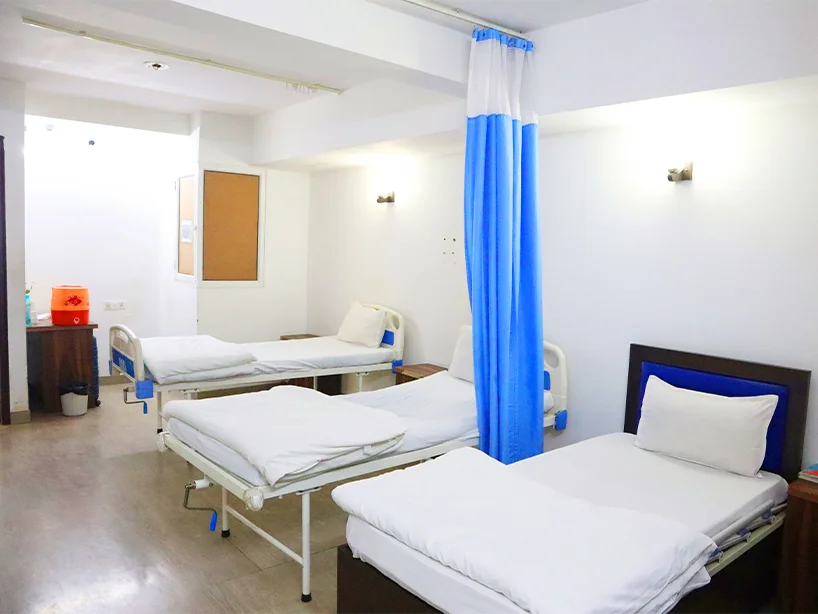
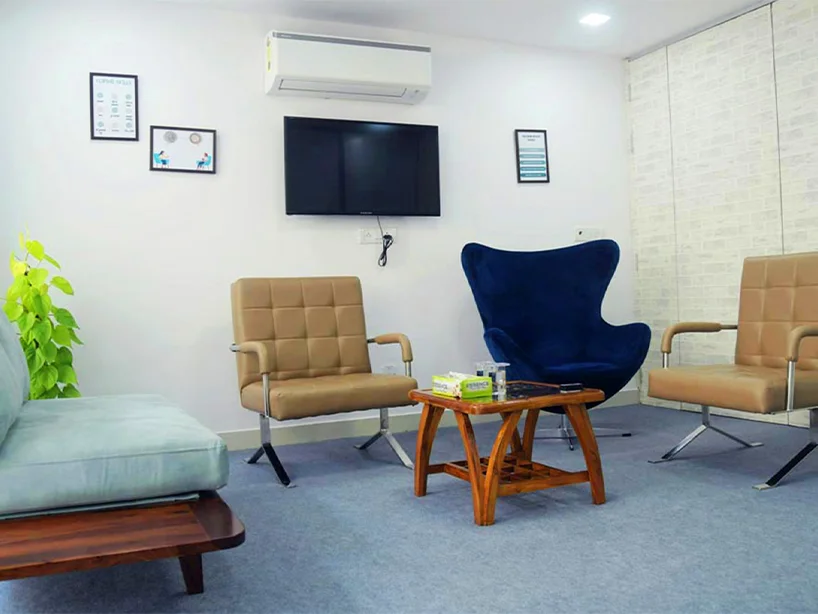
Take a Look Inside Our Gurgaon Facility






Conditions We Treat















.png)






What Our Patients Say
Frequently Asked Questions
If low mood, loss of interest, or fatigue has lasted more than two weeks and is affecting your sleep, work, or relationships regardless of what's going on around you, that points to something beyond an ordinary rough patch. A proper psychiatric evaluation can tell you where things actually stand.
Not necessarily, mild depression often responds well to structured therapy alone. Moderate to severe depression tends to respond better to a combination of medication and therapy, but this is decided individually after assessment, not assumed upfront.
Yes, Most patients are treated through regular outpatient sessions or the Day Care Programme, which allows several structured hours of support each day while you continue living at home and managing your usual responsibilities.
No, Antidepressants aren't designed to alter personality or artificially lift mood. They work to help you function closer to how you did before depression set in, and most patients describe feeling more like themselves, not different.
Yes. Nothing is shared with your workplace or family without your explicit consent, and this is discussed clearly before treatment begins.
Depression is a neurobiological condition, not a reaction that requires a specific trigger. It can develop gradually, without an obvious cause, and still significantly affect energy, motivation, and concentration. Treatment looks at what's sustaining it, not just what may have started it.
A single episode of moderate depression often responds to 6 to 12 weeks of combined treatment, though medication is typically continued for several months after symptoms improve to reduce relapse risk. Recurrent depression may need longer term, ongoing management.
It's common, and it's exactly why longer term treatment and relapse prevention matter for recurrent depression. Each episode is also a chance to identify early warning signs so intervention can happen sooner next time.
This is a common and often overlooked presentation of depression, including persistent fatigue, headaches, or body pain without an obvious medical cause. If standard medical treatment hasn't helped, a psychiatric evaluation is worth considering.
You'll spend around an hour with a psychiatrist discussing your symptoms, how long they've been present, your daily functioning, and any physical health factors. It's entirely confidential and shapes a treatment plan built specifically around you.
How to reach Athena - Gurgaon
Athena Behavioral Health, Gurgaon
202, Near DPS Public School, Sector 47, Gurugram, Haryana 122001
Landmark: Near DPS Public School, Sector 47
- DLF Phase 1, 2, 3, 4, and 5
- Cyber City and Udyog Vihar
- Sohna Road and Golf Course Road
- MG Road and IFFCO Chowk areas
- Sector 14, 22, 23, 29, 31, 45, 57, and 67
- Manesar and Dharuhera (industrial corridor)
Contact us: +919289086193
Speak to Our Care Team - 24×7 Confidential Support
Confidential help is just a call or chat away. Our team is ready to listen - without judgment, without pressure.