
Your heart pounds, your chest tightens, and you feel certain something is seriously wrong. Then it passes, and you spend the next week dreading the next one. If this sounds familiar, you likely want a straight answer to one question: what is panic disorder treatment, and does it work? It does. Most people who follow a proper plan see their attacks drop sharply within 12 to 16 weeks. This blog covers the causes, the symptoms, and the treatments that help.
What Is Panic Disorder and How Common Is It?
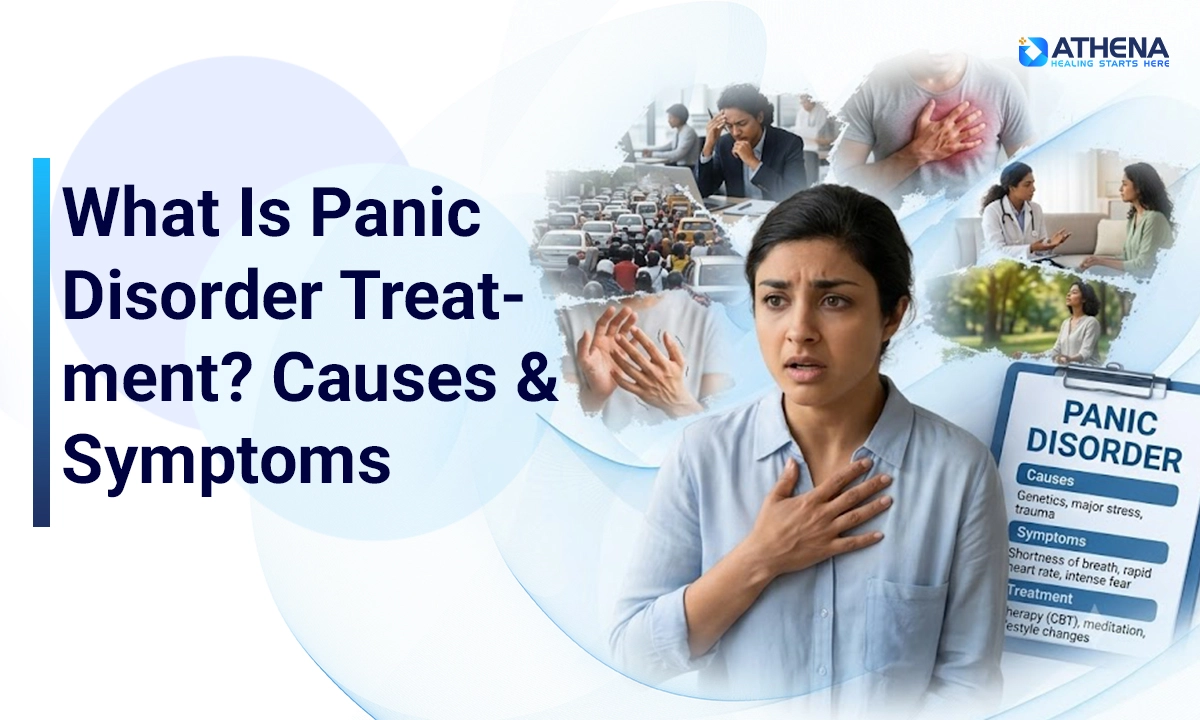
Panic disorder is a mental health condition where you have repeated, unexpected panic attacks and spend a lot of time fearing the next one. A single panic attack does not mean you have the disorder. About 11% of adults have one panic attack in a given year. Only around 2% to 3% develop panic disorder.
Women are about twice as likely as men to be diagnosed, and symptoms often begin between the late teens and the mid-30s. Panic disorder belongs to the wider family of anxiety disorders, which means it responds well to structured care.
Top Symptoms of Panic Disorder
A panic attack is an intense emotional response that occurs abruptly and peaks within about 10 minutes. Most panic attacks usually last between five and twenty minutes, but sometimes the exhaustion that they cause can continue much longer.
Physical symptoms of panic attacks include:
Heart palpitations or a pounding heart
Chest pain or discomfort
Shaking, dizziness, or tingling sensations in the hands
Feeling hot or cold, clammy, or sweaty
Shortness of breath or suffocation
Nausea or abdominal cramps
During a panic attack, people tend to feel detached from reality or their bodies. Moreover, the most common emotional symptom is a sudden fear of death, loss of control, or going crazy. Panic disorder is characterized by the fact that people suffering from it may avoid going to places where panic attacks occurred in the past, such as the gym, on the metro, or in a supermarket. In addition, if a person is concerned about having panic attacks for more than a month, this also characterizes panic disorder.
What Causes Panic Disorder?
There is not one particular reason that can explain why someone develops a panic disorder. Usually, several interrelated factors contribute to its development.
First, a familiar history is significant. If someone in the family has panic disorder, your risks increase due to genetic predisposition.
The second reason concerns how a person’s brain works and how their hormone system functions. For people with panic disorder, the fight or flight mechanism is triggered too quickly. As a result, a person’s body responds to the danger as if he is in mortal peril.
The third reason for panic disorder may be connected to stressful events. For some people, a breakup, job loss, the death of a loved one, or long-term stress can be a reason for developing panic attacks.
Also, certain personality types and response styles are more likely to lead to the development of panic disorder. For example, people who often catastrophize their physical symptoms, such as interpreting their heartbeat as a heart attack, are more likely to experience panic attacks.
What Is Panic Disorder Treatment? Top Options That Work
Panic disorder treatment combines therapy, medication when needed, and lifestyle changes. Your psychiatrist builds the mix around your symptoms, history, and daily life. Panic disorder treatment at Athena Behavioral Health starts with a full psychiatric assessment before any plan is set.
Treatment | How It Helps | Typical Timeline |
Cognitive Behavioral Therapy (CBT) | Changes fearful thoughts and teaches you to face triggers | 12 to 16 weekly sessions |
Exposure therapy | Safely recreates body sensations so they lose their power | 8 to 12 sessions |
SSRIs and SNRIs | Calm the brain’s alarm system and reduce attack frequency | 4 to 6 weeks to take full effect |
Short-term benzodiazepines | Give quick relief in severe cases, under strict supervision | Days to a few weeks |
Breathing and relaxation training | Slows the body’s panic response | Practised daily |
CBT has the most extensive evidence base of all treatments for panic disorder. Up to 70-90% of patients who undergo it benefit from it significantly. Treatment with drugs as an independent method is considered optimal only when combined with psychotherapy.
Benefits of Seeking Treatment Early
Reduction in the number of attacks by 50-70% in the first two months
Normalization of the patient’s attitude towards panic attacks
Reduction or complete elimination of secondary consequences such as depression and substance abuse
Rapid improvement and prolonged remission
Treatment of Panic Disorder in India: What to Look Out For?
It is crucial to choose the right panic treatment in India. First, it is necessary to determine whether the clinic employs both psychiatrists and clinical psychologists. Ask them about the available treatment methods – CBT, psychopharmacology, and ongoing aftercare. Also, when choosing a clinic, it is important to consider whether the staff will respect the confidentiality of your personal information, as many patients are concerned about this.
Some people recover well with weekly outpatient sessions. Others, especially those with severe attacks, alcohol or drug use, or a lack of calm at home, do better in a residential program. A quiet, structured setting such as Athena Luxus in Delhi NCR gives you space to focus only on recovery, with daily therapy and round-the-clock clinical support.
When Should You See a Doctor?
Book an appointment with us if:
There have been two or more unrelated panic attacks
There is constant worry about having another panic attack that lasts for a month or more
There is avoidance of circumstances or places that cause fear
There is the use of alcohol or other drugs to control symptoms
There is chest discomfort that has not been evaluated by a physician
Chest discomfort is a physical symptom that requires an initial medical evaluation to rule out any potential cardiac illness. A specialist will be able to confirm a diagnosis of panic disorder following medical tests to rule out other conditions. Our team at Athena Behavioral Health can walk you through each step of a well-documented management plan.
Conclusion
Panic disorder is a condition that might be alarming, but it is also one of the most successfully treated mental health problems. Understanding the symptoms and causes can help you know when to seek specialist help and what to expect from treatment. If you feel that your quality of life is being affected by recurrent panic attacks, do not hesitate to contact a specialist at Athena Behavioral Health.