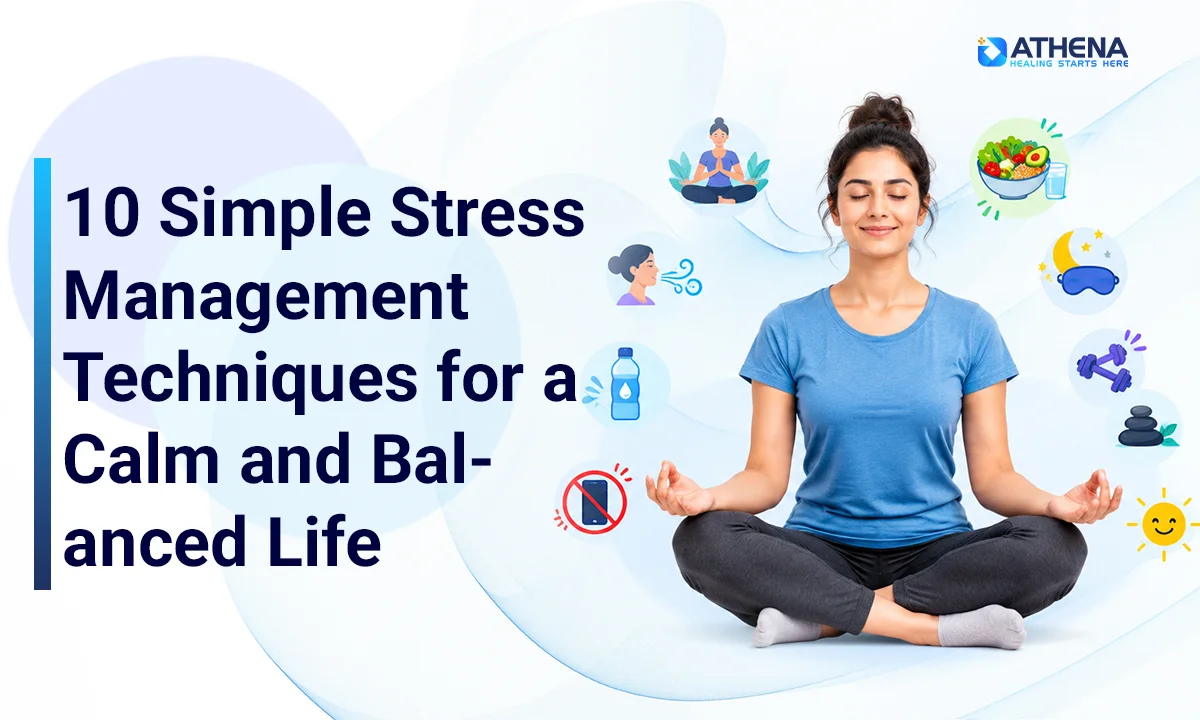

Tight shoulders, a mind that won't switch off and a to-do list that keeps growing: this is what stress feels like for millions of people. Almost everyone deals with it at some point, and many carry it for months without noticing how much it has taken over their sleep, mood and relationships. The encouraging part is that stress responds well to small daily habits. Below are 10 simple stress management techniques, specific advice for students and working professionals, and clear signs that it's time to speak to a specialist.
What Is Stress?
Stress is the response of your body towards anything that seems stressful, such as deadlines, disputes, and financial problems. The hormones are released from your body in order to help you cope with the situation, such as cortisol and adrenaline. It works well when the stress is temporary. However, when stress becomes persistent, the hormones become the reason behind your insomnia, digestion, and mood disorders.
Signs You Are Stressed
Stress looks different from person to person, so it helps to know your own pattern. These are the signals people notice most often:
Headaches, jaw clenching or tight neck and shoulders.
Trouble falling asleep or waking up in the early hours.
Snapping at people over small things.
Forgetting things or struggling to focus.
Eating much more or much less than usual.
10 Simple Stress Management Techniques
These stress reduction techniques need no equipment and little time. Pick two or three that suit your day and build from there.
1. Box Breathing
Breathe in for 4 counts, hold for 4, breathe out for 4 and hold for 4. Repeat for 2 to 5 minutes. It slows your heart rate quickly, which is why it ranks among the most useful stress relief exercises.
2. Daily Movement
Exercise uses up stress hormones and releases endorphins, the chemicals that lift your mood. Aim for about 30 minutes on most days. Walking, swimming, yoga and cycling all count.
3. Mindfulness for Stress
Sit somewhere quiet for 5 to 10 minutes and follow your breath. Each time your mind drifts, bring it back without scolding yourself. Practised daily, mindfulness for stress helps you spot worry early instead of being pulled into it.
4. A Steady Sleep Routine
Most adults feel best with 7 to 9 hours of sleep. Keep the same bedtime and wake-up time, put your phone away an hour before bed, and avoid tea or coffee late in the afternoon.
5. Question Your Worst-Case Thoughts
When a worry hits, ask whether it's a fact or a fear, and what is most likely to happen. Over time this habit loosens the grip of overthinking, and it is among the simplest ways to reduce stress and anxiety at the same time.
6. Write Things Down
Spend 10 minutes before bed listing what bothered you and one small step for tomorrow. A worry on paper usually looks smaller than the one repeating in your head.
7. Talk to Someone Who Knows You Well
Explaining what you feel can help ease the burden. You don't have to receive any suggestions from this person. Listening is often more than sufficient.
8. Eat and Drink Thoughtfully
Eating balanced meals that contain protein, grains, and veggies will make sure you maintain stable energy levels. Drink enough water and consume minimal amounts of coffee, sugar, and alcohol as they all tend to increase your level of nervousness.
9. Organize Your Schedule and Refuse Some Work
Choose three main activities you would like to do each day, break larger activities into smaller parts and take a five-minute break each 60 or 90 minutes. Saying no to additional tasks that you cannot do is one of the most practical stress management methods.
10. Include Activities You Love
Listening to music, walking outside, engaging in some hobby or spending time with your pet will give your mind a well-deserved break. Even 15 minutes per day will be helpful.
A Simple Daily Routine to Lower Stress
If you aren't sure how to fit these habits into your day, this plan is a good starting point.
Time of Day | What to Do | How Long |
Morning | Box breathing | 2–5 minutes |
Midday | Walk or stretch | 15–30 minutes |
Afternoon | Short break without screens | 5 minutes |
Evening | Journaling or a hobby | 10–15 minutes |
Night | Phone away, lights low | 60 minutes before bed |
Stress Management for Students
Examinations, results and comparisons may weigh down on students’ shoulders. There are a number of ways to manage the stress:
Study for 25 minutes and take a 5 minute break.
Plan for the exams weeks in advance, and not days before.
Ensure you get enough sleep the night before an examination.
Avoid comparing your grades with those of other students.
Let someone like your parents, teachers, or counselors know once your stress interferes with studies.
How to Manage Stress at Work
Working for too many hours, face deadlines, and receive late night emails can make one run dry of energy. Some changes to be made to ease the situation include:
Writing down the top three priorities before opening one’s email.
Turning off all alerts when concentrating.
Having lunch away from the office.
Taking two minutes of deep breaths before an important meeting.
Not checking work emails once the day is done.
Stress vs Anxiety: What Is the Difference?
The two feel similar but behave differently, and knowing which one you're dealing with helps you choose the right response.
Features | Stress | Anxiety |
Trigger | A clear event or pressure | Often vague or constant |
How long it lasts | Eases once the situation ends | Stays even when things are calm |
Main feeling | Overloaded and tense | Fearful and on edge |
What helps | Rest, planning, healthy habits | Often needs professional support |
Warning Signs That Need Professional Help
Self-help works well for everyday pressure, but it has limits. Reach out to a specialist if you notice any of these:
Constant worry or irritability for more than 2 weeks.
Panic attacks or a racing heart with no clear cause.
Staying away from friends and family.
Relying on alcohol or other substances to switch off.
Feeling hopeless or having thoughts of self-harm.
Many people wait until things get out of hand. Reading about what happens when stress turns scary can help you recognise the point where support becomes necessary.
Can Trauma Look Like Stress?
Sometimes what feels like ordinary stress is a reaction to a frightening or painful event. If you keep reliving what happened, feel numb or jump at small sounds weeks afterwards, the cause may run deeper than daily pressure. It helps to understand what causes post-traumatic stress disorder, because spotting it early leads to faster recovery.
When to Try Stress Management Therapy
When stress continues to affect your sleeping, working, or relationship after trying the above-mentioned tips, then counseling is one way you can seek professional help. The trained counselor will help you figure out the cause of your stress and equip you with coping mechanisms. Counseling and psychotherapy sessions can enable you to:
Understand your triggers
Change thought patterns that keep stress going
Work through difficult emotions in a safe space
Build habits that last
Stress Management Support at Athena Behavioral Health
At Athena Behavioral Health, stress is regarded as a genuine medical condition, which one should not just endure but seek help for. The psychiatrists and psychologists at Athena Behavioral Health have helped numerous individuals coming from diverse backgrounds such as students, working professionals, parents and senior managers who feel overburdened with responsibilities to an extent that they cannot cope with anymore.
Here is what our stress care includes:
A detailed psychiatric assessment to understand what is driving your symptoms.
One-to-one therapy and counselling that fit your routine.
Care for anxiety, low mood and panic attacks.
Mindfulness, yoga and relaxation sessions.
Corporate wellness programmes for teams under pressure.
Specialist PTSD treatment for people whose stress began after a traumatic event.
Online consultations if you prefer to talk from home.
You don't need to be in crisis to book a visit. Many people come to us simply because they are tired of feeling tense all the time.