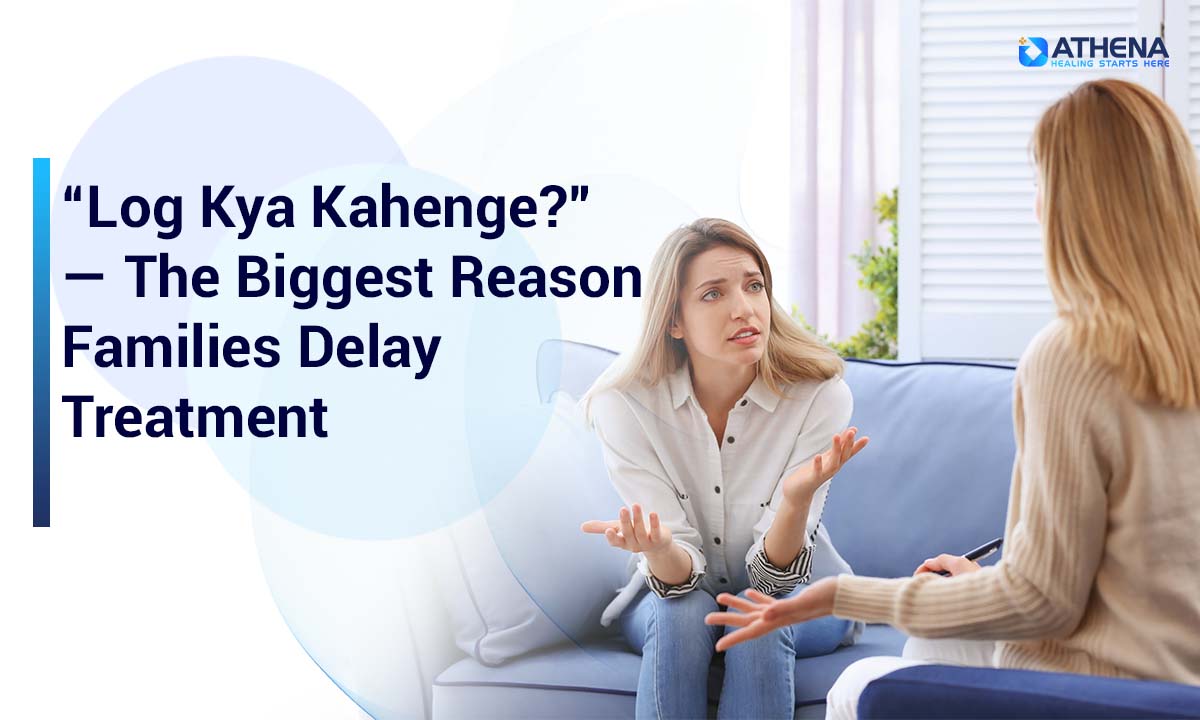

In fact, the first thing that comes to mind when faced with mental health issues in many homes in India isn't treatment. It is silent. A child stops speaking, a parent starts moody, a young adult starts avoiding people, a human being starts using alcohol or substance, etc. to cope — and yet, the family says, “Thoda time do, sab theek ho jayega.” However, there is a fear in the depths of one's heart that grows, a fear of what will happen, but log kya kahenge?
This fear is one of the most significant drivers of families' delay in seeking care. But it's not just because they don't love the person. Indeed, numerous families are afraid, uncertain, embarrassed, or concerned about what people will think of them before asking for assistance. Mental health and addiction continue to have a stigma attached to them in India.
Many of the mental health conditions are curable with the right care, and people experiencing mental health conditions often are subject to stigma, discrimination, and human rights abuses, according to the World Health Organization.
Why Families Delay Treatment in India
The answer is fear — and there are many reasons why families put off treatment. Fear of relatives. Fear of neighbours. Eating food or missing meals because of fear of marriage issues. Fear of society. Worry that others will make negative judgments about the person being 'mad,' 'weak,' 'spoiled,' or 'characterless. A family may say:
“Don’t tell anyone.”
Hiding from relatives: “Let's just keep it a secret from the family.”
“Where will their future be?
“Nopes, folks will cease sending out proposals.”
“Society will say it's our fault.”
The fear of society in treatment becomes hazardous. Families realize that getting treatment is not a sign of support, but rather a sign of shame. They would rather deal with it at home rather than take the person to a psychiatrist, therapist or rehab centre. They might go to religious gatherings, berate the individual, take the phone away or tell them to “be strong” or do nothing whatsoever.
Mental health disorders, addiction, depression, anxiety, bipolar disorder, trauma, and substance dependence don't go away when a family keeps them hidden. Often, the condition is worsened by silence.
Social Pressure and Mental Health: The Hidden Damage
The link between social pressure and mental health is a very real one. In many families, people are trained to keep the image intact at any cost. This leaves one or two people in pain. The person is already feeling things are hard for them inside, and now they feel bad about being a burden to the family.
In Indian society, mental health is only talked about when it gets serious. Early indicators are not paid attention to. Teenager anxiety is known as drama. Depression in women is considered to be a sign of laziness. When a man is addicted to it, it becomes his bad company. When an old man or woman is confused or sad, it is termed age-related. When professional assistance is finally thought of, the condition might have become more complicated.
National Mental Health Programme (NMHP) is a component of the Government of India that has set the following objectives: public awareness, stigma reduction, early detection, treatment, and community-based mental health. This is a fact that stigma is not just a family problem; it's a public health problem. The impact of peer pressure on mental health.
Children can be engaging in bullying behaviour in secret and be afraid of being judged. Students at college can drink, smoke, or use drugs, etc., to “fit in.” Anxiety can be hidden by working professionals as others appear successful. It is common for married people to remain silent about emotional abuse because family members say, “Adjust karna padta hai.” Other people in the family community may gossip, interfering with the family's desire to receive treatment.
How Peer Pressure Affects Mental Health
Peer pressure can cause an individual to feel vulnerable when asking for assistance. It can cause families to think that taking treatment is a sign of failure. However, the reality is the other way around. Don't feel bad about asking for help. It is courage.
Fever, diabetes, and heart problems are not exceptions to the norm where families would not ask “Log kya kahenge?”. They seek medical attention. The same urgency and dignity should be given to mental health.
Early Treatment Saves Lives!
The adage, early treatment saves lives is not only emotional, but it's also practical. Early help can minimize the impact of symptoms, avoid escalating to a crisis, aid better family relationships, and help the person to return to living their daily life sooner.
If families wait to get care, issues can escalate. Depression can be serious. People can get anxious and develop panic attacks. Addiction can harm physical health, finances, career, and relationships. Untreated schizophrenia or manic-depressive disorder may result in risky behavior. Self-harm may be more likely to happen if the person is emotionally distressed.
The initial interventions may involve psychiatric consultation, therapy, counselling, psychiatric medication if necessary, family sessions, rehabilitation, de-addiction, lifestyle modification, and aftercare planning. The right treatment depends on the condition of the person.
Athena Behavioral Health in India offers mental health as well as addiction treatment facilities, including help for issues like addiction, panic attacks, PTSD, OCD and other psychiatric conditions. Families often feel overwhelmed and unsure of what to do, so professional evaluation can be helpful to ensure they are aware of the situation and the appropriate level of care.
What Families Should Stop Saying
Families may postpone treatment due to the timing of words and/or the word used. They are ordinary lines that can cause great pain:
“Bas positive socho.”
Kya tumhe kaun-sa kaam hota raha?
“Humare time depression mai nahi aata the.”
This is because of all these mobiles.
“When I get married, all will be right with the world.”
“Giving up rehab will ensure that I will be reborn.”
These statements can close the door to communication. The individual might cease to convey their pain. Rather, families ought to say:
“We are with you.”
Let's talk to somebody!
“You are not a burden.”
“It's not something to be embarrassed about.”
“Society will take care of itself later; your health first.”
This seemingly insignificant shift in language can make a person feel safe enough to seek assistance
The Real Shame Is Not Treatment — It Is Delay
Many families believe that treatment will affect their reputation. If the person suffers from a disease without treatment, it can ruin their health, self-confidence, education, marriage, career and life. It's not the treatment, it's the lack of it. Delay is.
A family that chooses to help is not weak. It is responsible.
It is not an overreaction if a parent brings their child to a psychiatrist. They are safeguarding their child. An encouragement to therapy is not exposing family problems when a spouse is doing it. The aim is to cure them.
Someone who is going into rehab does not have to be finished! They are starting to recover.
The mission of Athena Behavioral Health is to provide a place to learn about mental health without stigma, with a supportive environment for individuals and families. The easier it is to recover, the more the family members stop blaming and begin to participate.
How Athena Behavioral Health Can Help
Athena Behavioral Health provides behavioral health and addiction treatment to patients who are experiencing mental health challenges and incorporates family involvement and structured treatment. But for many, the first step is not to get in, it's just to talk to the experts. Families should contact us if they observe:
Sudden mood changes
Being isolated from friends and family.
Changes in sleep or appetite.
Alcohol or drug dependence (as defined in ICD-10).
Panic attack or intense fear or anxiety
Thoughts of self-harm or hopelessness
Aggressive or unusual behaviour
Lack of motivation for work, school, or activities of daily living (ADLs)
Early help can stop things escalating to an emergency situation.
Conclusion
“Log kya kahenge?” has taken too long and it has broken too many families and silenced too many. This question needs to be changed for a better one:
What is our loved one in need of at this moment?
Mental health issues are not a personal fault. Addiction is not a character flaw. Therapy is not to be embarrassed about. Rehab is not a death sentence. Treatment is support. Treatment is protection. Treatment is hope.
Fears of society, more than illness, precede family treatment. However, healing started when families chose to love each other rather than judging, to act rather than to be silent, and to take care of one another rather than look down on one another.
While some families are encouraged to seek treatment at Athena Behavioral Health, we encourage all families, across the board in India, to take the first step before it becomes a problem. When help is given early, recovery is possible. Contact Athena Behavioral Health, a mental hospital in India at +91 9289086193.