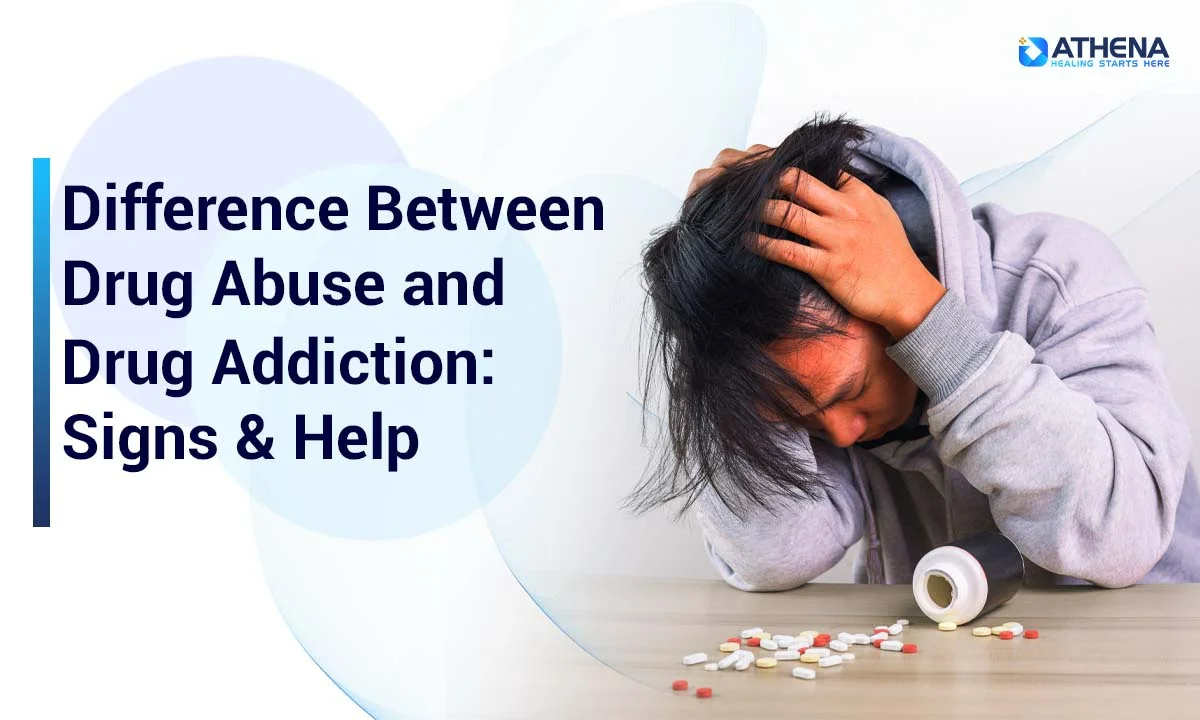

It often starts small: a pill to relax, a smoke after a bad day, a party that slowly becomes a routine. About 2.8% of Indians, roughly 3.1 crore people, reported using a cannabis product in the past year, and around 72 lakh of them need help for their cannabis use. The same national survey found that about 5.7 crore Indians are affected by harmful or dependent alcohol use, which means one in every three alcohol users needs help. Behind these numbers are families asking the same question: "Is this just a phase, or is it something serious?" Knowing the difference between drug abuse and drug addiction helps you answer that question and act at the right time. This guide explains both stages, the warning signs, the impact in India, and the treatment options available.
What Is Drug Abuse?
Drug abuse means using a substance in a harmful way. This could mean taking too much, using a drug for the wrong reason, or using it in risky situations. The person can usually still stop if they truly decide to, but the habit has already started to cost them something, such as their health, performance, or relationships.
Common Patterns of Drug Abuse
Misuse looks different in every person, but certain patterns appear again and again. These are the ones seen most often:
- Taking someone else's prescription or exceeding your own prescribed dose.
- Using cannabis, pills, or party drugs to escape stress or anxiety.
- Mixing drugs with alcohol.
- Using a substance before driving, studying, or going to work.
- Using drugs to feel confident in social situations.
What Is Drug Addiction?
Drug addiction is a long-term health condition in which a person keeps using a drug despite clear damage to their life. Cravings begin to override judgment, and promises to quit are broken again and again. Doctors treat addiction as a medical and mental health condition, which means it needs proper care rather than blame or punishment.
What Changes in the Brain
Drugs trigger a surge of pleasure chemicals in the brain's reward system. With repeated use, the brain adapts and starts relying on the drug to feel normal. Tolerance rises, so the person needs more to get the same effect, and stopping causes uncomfortable withdrawal. This is why someone with addiction cannot simply "decide" to quit.
Difference Between Drug Abuse vs Drug Addiction
The easiest way to understand drug abuse vs drug addiction is to compare control, cravings, physical dependence, and the impact on daily life. The table below breaks down the main differences so you can see where a situation might fall.
Factors | Drug Abuse | Drug Addiction |
Meaning | Harmful or risky use of a substance | Compulsive use despite serious harm |
Control | Still possible to cut down or stop | Largely lost, repeated failed attempts |
Cravings | Occasional or situational | Frequent, intense, and hard to ignore |
Tolerance | Low or mild | Rises steadily, needs more each time |
Withdrawal | Rare or very mild | Common, can be painful or dangerous |
Motivation | Use is often social, emotional, or for stress relief | Use is driven by physical and psychological need |
Daily life | Partly affected | Seriously disrupted |
Relationships | Some strain and mistrust | Deep conflict, isolation, broken trust |
Awareness | Person often recognises the problem | Person often denies or minimises it |
Care needed | Counseling, education, early support | Structured medical and therapeutic treatment |
Can Abuse Become an Addiction?
Yes, and it usually happens quietly. Someone who uses only on weekends may need the drug daily within a few months, because the brain keeps adjusting to it. Stress, trauma, family history, and easy access speed up this slide. That gradual shift is the strongest reason to act while the problem is still at the abuse stage.
Warning Signs to Notice
Changes in behavior usually appear before physical damage, so family members and close friends are often the first to notice. The signs differ slightly between the two stages, and spotting them early makes recovery easier.
Early Signs of Drug Abuse
At this stage the person still manages daily tasks, but something feels off. Watch for these signals:
- Using more often or in larger amounts than planned.
- Lying about where they were or what they took.
- Falling grades, missed deadlines, or frequent absences.
- Sudden irritability, mood swings, or secretive behavior.
- New friend groups and a loss of interest in old ones.
Signs Addiction Has Set In
Once dependence develops, the changes are harder to hide and touch every area of life. Common signs include:
- Strong cravings and repeated failed attempts to stop.
- Shaking, sweating, nausea, or anxiety when the drug wears off.
- Spending most of the day getting, using, or recovering from the drug.
- Borrowing money or selling belongings to buy it.
- Neglecting hygiene, health, family, and responsibilities.
- Continuing to use even after facing serious consequences.
Effects of Drug Addiction in India
The effects of drug addiction in India are visible in hospitals, homes, and workplaces across both metros and smaller towns. Young adults are especially exposed because of peer pressure, easy availability, and academic and career stress. Because of social stigma, many families wait too long before seeking help, and the damage grows in the meantime.
Health Effects
Addiction can harm the liver, heart, lungs, and brain, and it often worsens depression, anxiety, and sleep problems. Injecting drugs also raises the risk of infections such as HIV and hepatitis. Overdose is a constant danger, especially with opioids and mixed substances.
Family, Career, and Financial Effects
Households often face debt, constant arguments, and shame that pushes them into silence. Jobs suffer as attendance and focus decline, and savings disappear quickly. Children in the home may experience fear, neglect, and emotional stress. Starting treatment early prevents much of this damage and gives families a chance to heal together.
Drug Abuse Treatment
Drug abuse treatment aims to break the pattern before dependence forms. It usually includes counseling, education about risks, stress management, and building healthier coping habits, along with family support and regular check-ins. Cannabis is one of the first substances many people misuse, and early cannabis addiction treatment can stop casual use from becoming a daily dependence.
Drug Addiction Treatment
Drug addiction treatment goes further because both the body and the mind need to heal. It begins with supervised detox, moves into therapy, and continues with a long-term plan to prevent relapse. A complete drug addiction treatment program joins all these steps into one plan shaped around the person's history, substance, and health.
The Stages of Recovery
Most people move through four stages, and each one has its own purpose. The table below shows what happens at each point and why it matters.
Stages | What Happens | Why It Matters |
Assessment | Doctors review the substance used, physical health, and mental state | Creates a safe, personalised plan |
Detox | The body clears the drug under medical supervision | Manages withdrawal and reduces risk |
Therapy | Individual, group, and family sessions treat triggers and thought patterns | Addresses the root causes of use |
Aftercare | Follow-ups, support groups, and relapse prevention planning | Protects long-term recovery |
Choosing a Rehab Center
The right treatment center for drug addiction can decide how well recovery holds. Many families in the NCR prefer a rehabilitation centre in Gurgaon because it keeps loved ones close and makes family sessions easy. Others begin by searching for a nasha mukti kendra in Gurgaon, which offers a structured and supportive setting near home.
What a Good Center Offers
When comparing rehabilitation centers for drug addicts, use this checklist to judge quality:
- Licensed doctors and qualified psychologists.
- Round-the-clock medical detox supervision.
- A treatment plan built for the individual.
- Support for co-occurring conditions like anxiety and depression.
- Family counseling and clear aftercare support.
- Honest communication about the process and costs.
Supporting a Loved One
Pick a calm, private moment and speak from concern rather than anger. Avoid lectures, threats, and ultimatums, and do not cover up for their behavior or hand over money that could fund use. Listen first, then offer practical help, such as booking a professional assessment. People recover more readily when they feel supported instead of judged, and your patience can make the difference.
About Athena Behavioral Health
Athena Behavioral Health is a mental health and addiction care provider that helps individuals and families deal with substance use in a private, judgment-free environment. The team understands that every person's story is different, so care is planned around the individual and not around a fixed template.
What Athena Offers
Support at Athena covers the full journey, from the first assessment to life after treatment:
- Medical assessment and supervised detox.
- Individual and group therapy.
- Treatment for anxiety, depression, and other co-occurring conditions.
- Family counseling and guidance.
- Aftercare and relapse prevention support.
Get Help Today
If you are addicted to drugs, Athena Behavioral Health provides drug addiction treatment designed around your needs. You do not have to manage this alone, and reaching out today is a strong first step toward recovery.
Conclusion
The difference between drug abuse and drug addiction comes down to control. Abuse is harmful use that early help can often stop, while addiction requires structured medical and psychological care. Whichever stage you or someone close to you is at, acting sooner improves the outcome. Contact Athena Behavioral Health today to take that first step.