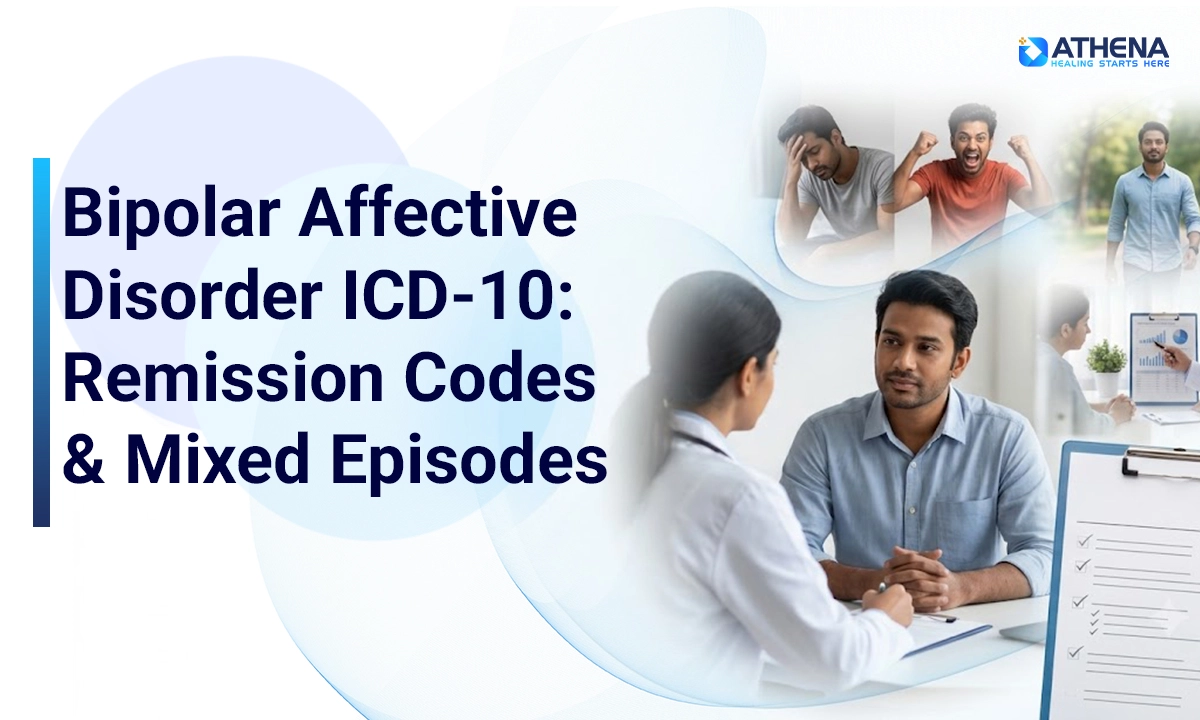

Doctors give their diagnoses in a snap, and the code that follows it can confuse you more than ever before. Does F31.6 mean it is severe? Is F31.70 a relief? Why has my diagnosis code changed on the last trip? All of these are clarified by the bipolar affective disorder ICD 10 coding system as soon as you know how to read it. In this blog post, we will decode what each code means, how remission is noted and how mixed episodes are labeled so that you can converse confidently with your hospitals, insurers and of course, the doctor.
What Is Bipolar Affective Disorder ICD 10 And Why Does It Matter?
ICD 10 is the World Health Organization's classification of diseases. All bipolar diagnoses fall under the umbrella of F31. Each digit following F31 indicates to the next medical professional, hospital, or insurer the patient's current condition: mania, depression, a mix of the two, or remission.
Why is this number important? Well, bipolar disorder is extremely common and often misunderstood. The WHO estimates that 40 million people suffer from it worldwide, while the National Mental Health Survey of India reports a prevalence of about 0.3 percent. Having accurate code helps you communicate with your medical providers, process claims faster, and track the progression of your illness. If you want the clinical basics behind the code, this guide on bipolar disorder types, symptoms and myths covers them.
ICD 10 Code for Bipolar Affective Disorder: The Full F31 Table
Code | Meaning | In simple words |
F31.0 | Current episode hypomanic | Elevated mood, less sleep, still functioning |
F31.1 | Current episode manic, no psychotic symptoms | Intense high mood, risky choices |
F31.2 | Current episode manic, with psychotic symptoms | Mania with delusions or hallucinations |
F31.3 | Current episode mild or moderate depression | Low mood with some daily function |
F31.4 | Current episode severe depression, no psychosis | Deep low mood, little daily function |
F31.5 | Current episode severe depression, with psychosis | Severe low mood with delusions or hallucinations |
F31.6 | Current episode mixed | Manic and depressive symptoms together |
F31.7 | Currently in remission | No significant mood disturbance for months |
F31.8 | Other bipolar affective disorders | Includes bipolar II |
F31.9 | Unspecified | Not enough detail recorded |
The US version, ICD 10 CM, adds extra digits, such as F31.81 for bipolar II. Most Indian hospitals use the WHO version, though insurers sometimes ask for the CM format.
Top Facts About Bipolar Mixed Episode ICD 10 (F31.6)
A mixed episode is probably the most misunderstood of the definitions listed here. According to WHO criteria, both manic and depressive symptoms need to be present at a notable level for most of the day, nearly every day, for at least 2 weeks, or occur within a shortened time period. In other words, a person could be simultaneously racing and feeling hopeless in the same hour.
Common features of mixed episodes include:
Racing thoughts combined with feelings of sadness
High energy associated with irritability or restlessness
Insomnia with no sense of refreshment after sleep
Spending sprees or arguments followed by guilt
People with mixed states are at greater risk, too, since there is a higher chance that they will find ways to act out their despair, perhaps by using alcohol or other drugs to dull their feelings. People sometimes hide stimulant use behind a busy, productive life, a pattern explained in this piece on high-functioning cocaine addiction. Doctors treat the mood disorder and the substance use together, because treating one alone rarely works.
Bipolar Affective Disorder Remission Status Unspecified ICD 10: What F31.70 Means
Remission is the term desired by any family member. Its definition, according to the WHO system, is F31.7: the presence of at least two mood episodes in the past, one of which was manic, hypomanic, or mixed, with no significant mood disturbance for several months.
F31.70 in the ICD-10-CM version stands for "currently in remission, most recent episode unspecified." This code is used when the record does not specify whether the most recent episode was manic, depressed, or mixed. Moreover, the CM system further divides the remission into:
Partial remission (F31.71, F31.73, F31.75, F31.77) – a presence of any mood symptoms;
Full remission (F31.72, F31.74, F31.76, F31.78) – an absence of any mood symptoms.
Remission does not mean a cure; therefore, people still have the risk of a relapse. Such events are often associated with discontinuation of medications and disruption of sleep patterns; hence, treatment should be continued, at least at a lower dose.
How Do Doctors Pick the Right Bipolar ICD 10 Code?
A psychiatrist usually goes through your history first. They will ask you about the previous episodes – how long they had lasted, whether they were more severe, if there were psychoses, and how you feel today. They will also rule out some thyroid problems, drug abuse, and other mental illnesses that could be confused with bipolar disorder.
Then, the doctor will assign you a code. If your state is changing, the code will change as well. For example, if you were on the F31.3 code last year, you may move to F31.7 this year. This is completely normal because it means your treatment has been effective.
The Benefits of the Correct Code Early on
Everything you get coded helps you later. Firstly, this code helps you establish the right treatment for your specific case. Secondly, it is less likely that your medical insurance will refuse to cover your treatment. Besides, if you switch psychiatrists, the new one will quickly understand your case. Also, you and your relatives will see how effectively the treatment is working if your code changes from year to year.
What Is the Most Effective Treatment for Bipolar Disorder in India?
The most successful treatment method prevents the recurrence of episodes. It usually involves both psychotherapy and medications. Lithium and antipsychotics are used to stabilize the mood. Psychotherapies such as CBT, family psychoeducation, and social rhythm therapy help you recognize potential triggers and gain control over your illness. Maintaining healthy rhythms, avoiding alcohol, and developing a detailed plan for preventing episodes will help you keep your bipolar disorder at bay.
At Athena Behavioral Health, psychiatrists, psychologists, and therapists develop a single plan for each patient, ranging from outpatient visits to residential care for severe or mixed episodes. You can see how that works on the bipolar disorder treatment page. The team also supports families, who often carry the heaviest load. People with a co-occurring substance problem get dual diagnosis care in the same plan.
Conclusion
The F31 code is a map of where you stand today, not a life sentence. Remission codes show recovery, mixed episode codes show where extra support is needed, and each change tells a story of progress. If you or someone close to you needs a diagnosis or a treatment plan, Athena runs a trusted bipolar disorder rehab centre in Gurgaon where specialists can start with a first consultation.