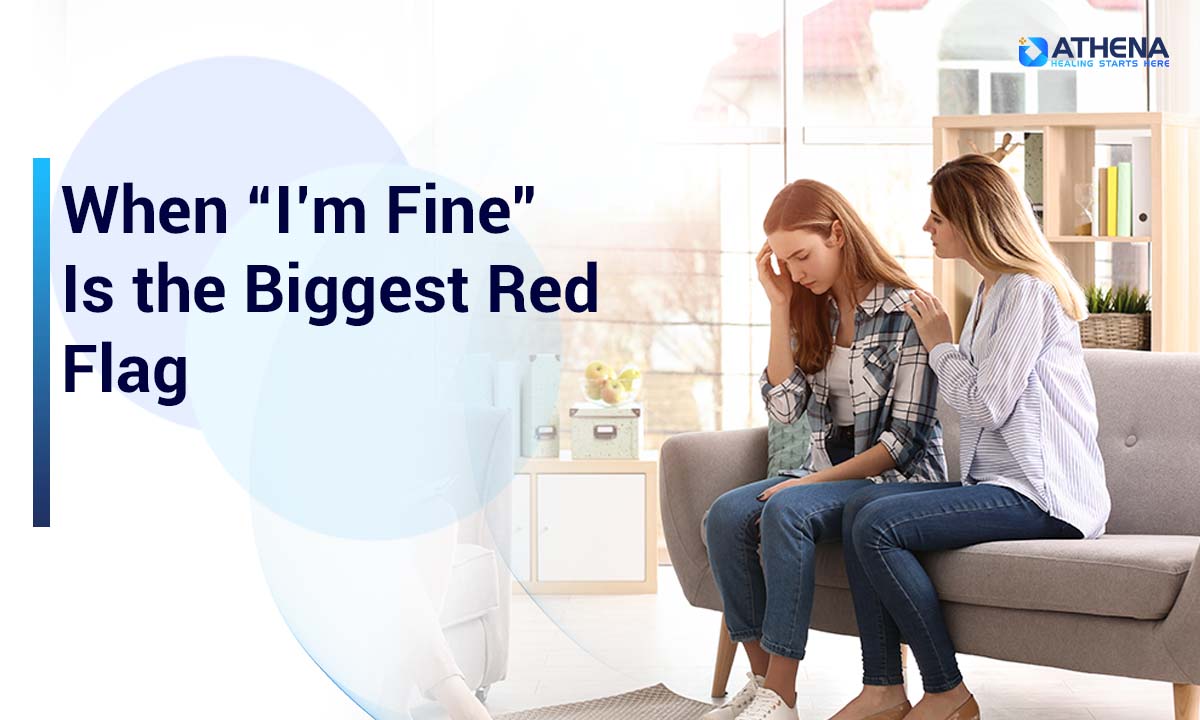

The words “I'm fine” have become one of the most understated warning signals of mental health disorders in India, where mental health remains a taboo topic. Sometimes, when people say they're okay, that's what they mean, but sometimes that isn't the case, and it's easy to nod and smile that someone is fine. We've seen a disturbing trend at Athena Behavioral Health: People who constantly tell us that they are fine are also suffering from an anxiety disorder, depression, or other mental health condition, without realizing it.
In this article, you will learn why you should never say “I'm fine,” as well as the ways you can look for little signs of mental health conditions and ways you can work toward promoting mental wellness.
Why “I’m Fine” Can Be Misleading
If someone tells you, ‘I'm fine,' it could mean it. However, more often it's a way of coping. In our culture, it would be considered a weakness to admit vulnerability. This means that individuals hide conflicts within. The seemingly simple word may be a complex set of emotional health issues:
Judgement avoidance: others don't want to be judged by a mental disorder or not understood.
Avoiding problems: Some think that mental illness isn't serious enough to share.
Denial of reality: When someone admits there's a problem, they may have to face some emotions they are not ready to deal with.
Cultural norms: There is still a taboo associated with talking about Mental health awareness in many Indian homes.
The problem is that these people might not be able to get help until they are already deteriorating. What may have been controllable with therapy or support groups can become serious mental health issues by this time.
Hidden Signs Behind “I’m Fine”
It's important to grasp the 'hidden messages' of this phrase. A person may say they are okay, but their actions contradict this:
Withdrawal from friends, family or social groups.
Some sleep and/or changes in appetite are associated with disruptions in mental wellness.
Decreased interest in previously caring for hobbies.
Irritability and mood swings are common characteristics of anxiety disorders.
Regular tiredness or attention deficit symptoms.
It's something you can't always hear if you say “I'm fine,” but you can listen for these subtle cues to keep potential crises from happening.
Why Mental Health Awareness Matters
Don't pay attention to "I'm fine" and keep the cycle of silence going. To increase awareness of mental health conditions and encourage people to seek support when needed. Promoting awareness also:
Minimizes the taboo associated with mental illness.
Promotes positive strategies for emotional well-being.
Promotes a culture of mental health and recovery.
Early intervention is extremely important to recovery at Athena Behavioral Health. This encompasses therapies tailored to anxiety disorders, depression and assistance for those who have issues with substance misuse, including recovery from alcohol use.
Tips for Mental Health- Who Says “I’m Fine.”
When you have concerns about a word said but not followed up by an action, there are some steps you can take:
Ask questions regularly: Questions such as “How are you really feeling?” can open some doors.
Be a good listener: Hearing can be the first step in mental health recovery at times.
Increase access to professional help: Recommendations for therapy centers near me or finding a therapist near me can help make professional help more accessible.
Share information: Information about support groups or helplines, so they know help is available.
Provide safe spaces: Allowing others to be open and honest without fear of judgment can lead to honesty.
“I’m Fine” in the Context of Mental Disorders
People who suffer from: have been found by Athena Behavioral Health to repeatedly state that they are fine.
Anxiety disorders: May be afraid of overwhelming others with their worry.
Depression: The lack of energy and hopelessness may disguise itself in familiar little promises.
Alcohol use issues: “I'm fine” is a way of covering up or concealing a relapse or craving in recovery.
Promoting Your Own Mental Wellness
If you are reading this and thinking to yourself, "I wish I could be better for myself mentally," here are some tips to help you be better:
Be mindful: Meditate or journal to express emotions.
Regular exercise: Physical activity promotes emotional health.
Take proactive steps towards therapy: Don't wait until a crisis to contact a therapy center near me.
Don't self-stigmatize: Recognizing difficulties does not make you weak; it makes you human.
Engage in social connection: Resilient relationships nurture healing.
When to Take “I’m Fine” Seriously
If the “I'm fine” is not happening all the time, or if it is but the behavior is, it's not necessarily a crisis, but it should be taken seriously if it happens repeatedly. Immediate steps include:
Appointing a licensed therapist.
Tracking the development of anxiety disorders or mental illnesses.
Keeping supportive family members/friends in contact.
Seeking advice from mental health teaching and community programs.
Conclusion
The word “I’m fine” is a simple expression that can be the most vocal of cries for help. Through listening, inviting frank discussion, and promoting mental health, we can help to lift the silence and offer assistance to those who are silently suffering. Our work in India at Athena Behavioral Health is to inspire people to face their obstacles with courage, compassion, and expert guidance.Contact Athena Behavioral Health, a mental hospital in India at +91 9289086193.