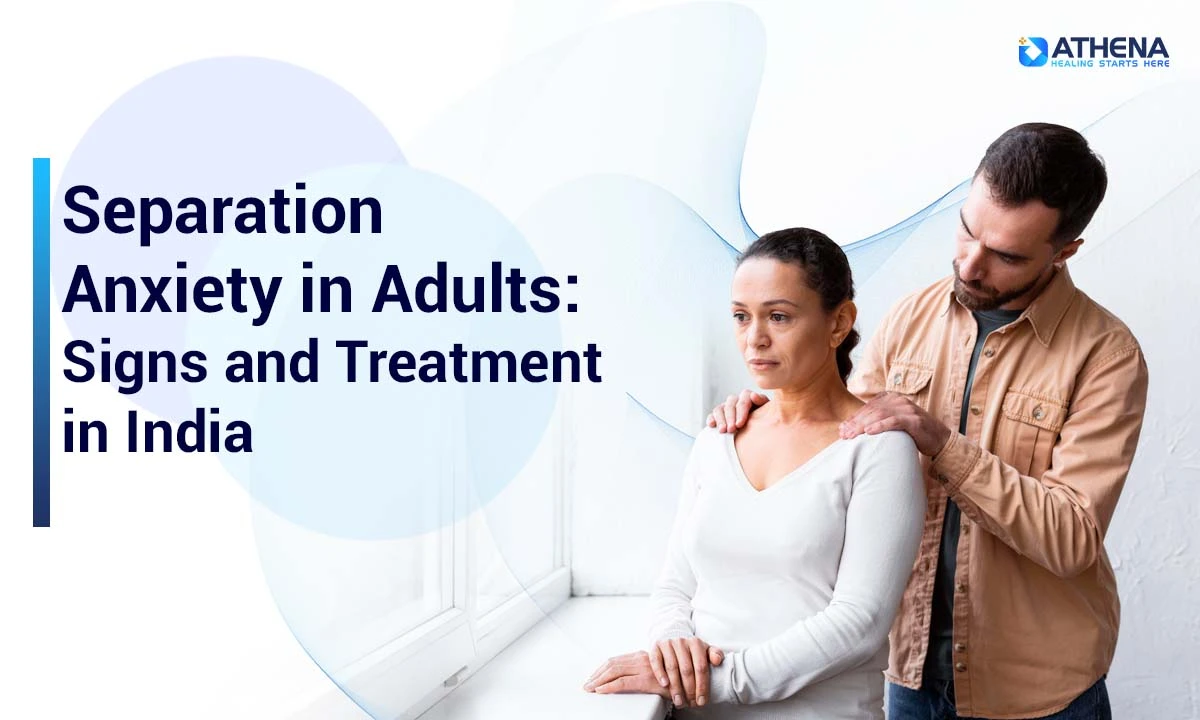

Does your chest tighten when your partner leaves for work? Do you panic if your mother does not pick up the phone? Many people laugh it off as being too attached. But separation anxiety in adults is a real, diagnosable and treatable condition. This blog explains the signs, causes and treatment options in plain words, so you can tell the difference between normal closeness and a problem that needs professional care.
What Is Adult Separation Anxiety Disorder?
Separation anxiety disorder is an intense fear of being apart from a person you are deeply attached to. For years it was seen only as a childhood problem. Since 2013, the DSM-5 has also recognised adult separation anxiety disorder, and the numbers explain why:
- A large US survey found a lifetime prevalence of about 6.6% in adults.
- Around 77% of those adult cases began after childhood.
- DSM-5 estimates a 12-month prevalence of 0.9% to 1.9% in adults.
- In adults, symptoms usually need to last 6 months or more before a diagnosis is made.
It sits within the wider group of anxiety disorders, which the WHO says affected roughly 301 million people worldwide in 2019.
Top Separation Anxiety Symptoms to Watch For
Separation anxiety symptoms usually show up in three ways.
Emotional
- Constant worry that something bad will happen to your loved one
- Fear of being alone at home
- Distress when you even think about a separation
Physical
- Racing heart, sweating or shaky hands
- Stomach pain, nausea or headaches
- Trouble sleeping when the person is away
Behavioural
- Calling or texting again and again to check on them
- Refusing to travel, work late or sleep elsewhere
- Nightmares about losing someone
Signs of Separation Anxiety in Adults vs Normal Attachment
Situation | Healthy Attachment | Separation Anxiety |
Partner travels for work | Misses them, stays in touch | Panics, calls many times a day |
Child leaves home for studies | Feels sad, adjusts in weeks | Cannot function, fears for their safety |
Being alone at home | Comfortable | Feels unsafe, avoids it |
Impact on daily life | Minimal | Affects work, sleep and health |
- Needing constant reassurance that your partner will not leave
- Getting upset when your partner meets friends without you
- Struggling after a move to a new city for a job
- Becoming overly dependent on a parent, even in your thirties or forties
Over time, partners feel smothered and conflict grows, which makes the fear worse.
What Causes Separation Anxiety in Adults?
There is rarely one single reason. Common triggers include:
- Loss of a parent, sibling or close friend
- Childhood separation, illness or an overprotective upbringing
- A traumatic event, accident or abuse
- Major life changes such as marriage, a new job or an empty nest
- A family history of anxiety
- Other conditions, such as panic disorder or depression
Is It Treatable? Key Benefits of Early Treatment
Yes, and earlier is better. India's National Mental Health Survey found that 70% to 92% of people with a mental health condition receive no treatment. Seeking help early has real benefits:
- Fewer panic episodes and better sleep
- Healthier, less clingy relationships
- Better focus at work
- Lower risk of developing depression or substance use
Top Treatment Options for Adult Separation Anxiety
Good anxiety disorder treatment is personalised. The usual options are:
- Psychotherapy for anxiety: Cognitive behavioural therapy (CBT) helps you spot fearful thoughts and replace them. Gradual exposure builds comfort with time apart. Structured psychotherapy and counselling is considered the first line of care.
- Medication: A psychiatrist may prescribe SSRIs or short-term anti-anxiety medicines when symptoms are severe.
- Mindfulness and yoga: Breathing and relaxation practices calm the body's alarm system.
- Family sessions: Loved ones learn how to support you without feeding the fear.
- Inpatient or day care: When symptoms stop you from working or sleeping, a supervised setting gives round the clock support.
At Athena Behavioral Health, psychiatrists and clinical psychologists build a plan after a full assessment, combining therapy, medication review and family involvement under one roof. You can read more about our anxiety disorder treatment programme.
Simple Self-Help Steps Between Sessions
- Practise short, planned separations and increase them slowly
- Replace repeated check-ins with one fixed daily call
- Try 5 minutes of slow breathing when panic rises
- Keep a routine for sleep, meals and exercise
- Build your own hobbies and friendships
When to Seek Help and Where in India
Reach out if the fear lasts over 6 months, disturbs your job or marriage, or comes with panic attacks or low mood. Choosing the right specialized addiction and mental health treatment across India matters as much as the diagnosis. Look for qualified psychiatrists, private rooms, family involvement and aftercare. Athena has centres in Gurugram, Noida and Guwahati, including a women only facility, so you can choose a setting that feels safe.
Conclusion
Separation anxiety in adults is not weakness or over attachment. It is a medical condition with clear signs and proven treatment. With the right therapy and support, most people regain trust in themselves and their relationships. If this article sounded familiar, talk to the care team at Athena Behavioral Health today. One honest conversation can be the first step.