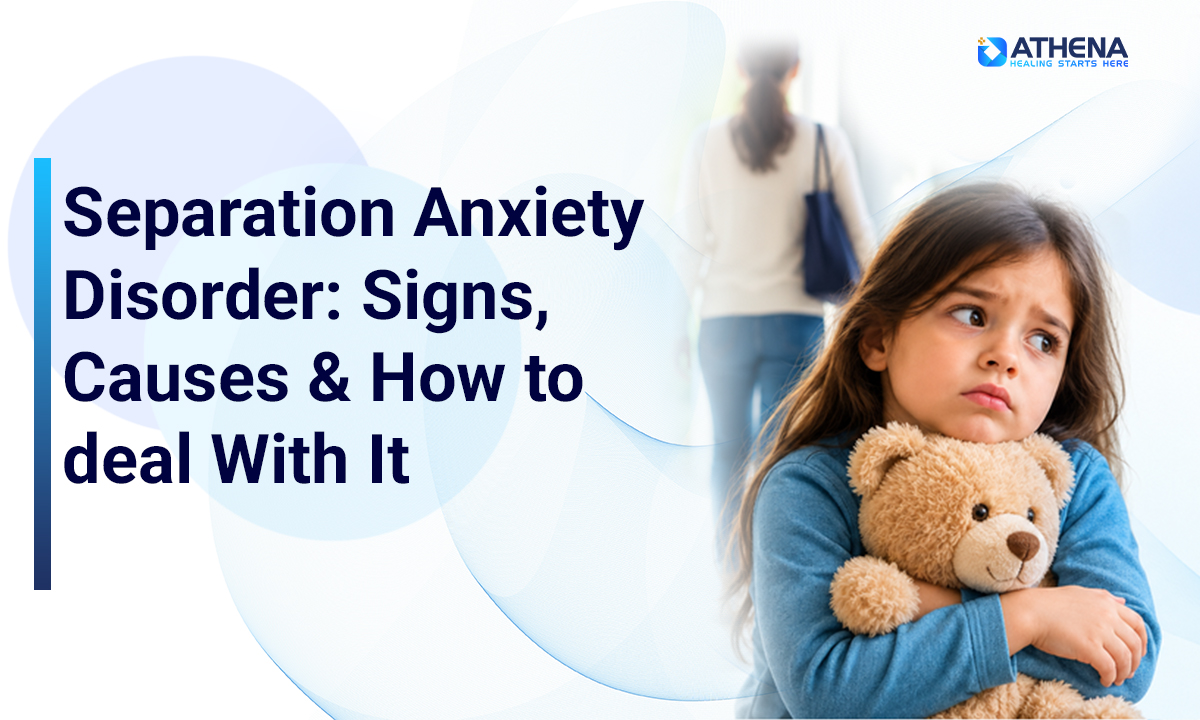

Does the prospect of being separated from your child partner or home cause an unbearable feeling of panic in your chest? You're not alone, unfortunately. Separation anxiety disorder is a common and easily treatable disorder that plagues children and adults every day, with the majority never even aware that they suffer from it. This article will list some of the most common causes, symptoms, and treatments for the disorder.
What Is Separation Anxiety Disorder?
Separation anxiety disorder is an unrealistic fear of being separated from a person, object, or place. Most toddlers will experience it at some point, when they are dropped off at preschool for the first time. What makes it into an actual diagnosable disorder, however, is that the fear is constant, out of control, and doesn't subside after several weeks at the very least.
The symptoms need to be present for at least four weeks in children according to the DSM-5, while most adults will on average experience the disorder for around six months. Studies suggest that roughly 4% of children and 6.6% of adults will suffer from separation anxiety at some point in their lives. Many adults are unaware that they struggle with the disorder for years at a time.
Top Signs of Separation Anxiety
All those who struggle with separation anxiety display some of the following warning signs:
Unreasonable worry that a loved one or important object is going to be harmed, injured, or lost
Distress when in preparation for a separation or during the separation itself
Refusing to partake in activities that involve separation
Nightmares surrounding the idea or experience of separation
Physical symptoms such as headaches or stomach pains, especially before a separation
Anxiety attacks or an increased heart rate when preparing for or experiencing a separation
Calling or contacting loved ones excessively out of worry
Be sure to analyze how long these last and how much they interfere with work, school, or relationships. A pounding heart and shortness of breath before a goodbye can also look like a panic attack, and the two often overlap.
Separation Anxiety Disorder in Adults
Although many people think that separation anxiety is only characteristic of childhood, in reality, this disorder can occur in adults quite often. It is claimed by scientists that more than three quarters of all adult cases began in childhood. The change that triggered the disorder can be a loved one's business trip, a child's college graduation, or even a move.
Adults who suffer from separation anxiety describe this feeling as an obsession to be constantly with a person who is dear to them. Patients cannot tolerate it when their partner does not answer the call and try to avoid all situations where they have to be apart. As a result, they may refuse to take a job, which requires business trips or change jobs if they have to move away. Parental and maternal separation anxiety are examples of the disorder, where people cannot leave their children alone. Parents may be overwhelmed with guilt and unable to cope with the slightest separation from their child.
Causes of Separation Anxiety Disorder
No single cause explains it. Most people develop it through a mix of the following:
Early loss or upheaval: the death of a loved one, divorce, or a sudden move
Family history: anxiety disorders tend to run in families
Temperament: naturally cautious or sensitive people carry a higher risk
Overprotective or unpredictable caregiving: both can teach the brain that separation is unsafe
Major stress: illness, job loss, or trauma can bring on fear of separation, even in people who never had it before
Separation anxiety also shares roots with other anxiety disorders such as generalized anxiety and social anxiety, which is why one person can carry more than one at a time.
Separation Anxiety Symptoms: Children vs Adults
This quick table shows how separation anxiety disorder symptoms change with age.
Area | Children | Adults |
Main fear | Losing a parent or caregiver | Losing a partner, child, or close friend |
Behavior | Clinging, tantrums, school refusal | Constant checking, avoiding travel |
Sleep | Refusing to sleep alone | Insomnia, disturbing dreams |
Body | Stomach aches, headaches | Palpitations, chest tightness |
Impact | Missed school, few friendships | Strained relationships, work problems |
When Anxiety Leads to Substance Use
Untreated anxiety rarely stays contained. Some people turn to alcohol, sedatives, or stimulants to quiet the worry or to cope with feeling alone. A glass of wine to calm the nerves can slowly turn into alcohol addiction without anyone noticing the shift. If anxiety and substance use feed each other, treating only one rarely works. Both need attention at the same time.
How to Deal With Separation Anxiety in Relationships
Separation anxiety can be harmful even in the most loving relationships, as partners can feel both smothered and unsupported. The following steps may help such couples:
Naming the problem: Explaining the situation as anxiety instead of lack of trust can help both parties;
Gradual separations: The anxious partner needs to practice being separated from the loved one and then try to increase the duration;
Establishing schedules: Both people can set a specific time for a call or meeting instead of having constant contact;
Controlling breathing: If the panic begins to grow, the person should slow down their breathing for two minutes;
Creating new habits: The anxious partner should try to spend time with other people as much as possible;
Creating a complex plan: Writing a detailed strategy can be helpful in case of separation anxiety as it will have particular goals for overcoming panic.
Such simple steps as naming the issue and gradual separations can help people with separation anxiety, especially if they are mild and occasional. If the problem persists, consulting a professional can help to develop individual tactics and speed up the healing process.
Separation Anxiety Disorder Treatment: Top Benefits of Getting Help
The good news is that separation anxiety treatment is effective, with most patients recovering after undergoing psychotherapy and sometimes psychiatric drugs.
Psychotherapy: helps patients identify and change thinking patterns that contribute to the disorder.
Exposure therapy: encourages patients to increase their tolerance to separation by gradually exposing them to separation-inducing stimuli in a controlled manner.
Drug: an SSRI antidepressant may be prescribed by a psychiatrist to patients with severe cases.
The involvement of family members is especially important in the treatment of children and adolescents.
The separation anxiety treatment benefits extend beyond fewer panic attacks. Patients can get more restful sleep, resume previous activities such as traveling, and enjoy a loving relationship without the fear of separation. At Athena Behavioral Health, our psychiatrists and psychologists work closely with patients to address their specific concerns related to separation anxiety.
We develop an individualized treatment plan depending on the patient's age, medical history and personal goals. Our personalized anxiety treatment programs also target any co-occurring substance abuse disorders.
When Should You Seek Professional Help?
Contact if the fear persists for more than a few weeks, if it causes you or your child to avoid school or work, or if it is accompanied by panic attacks, heavy alcohol use, or suicidal thoughts. Getting help early can significantly reduce the duration of the condition. Our structured treatment program can help you or your loved one return to normal life as soon as possible if you feel that your daily activities are being disrupted. We have facilities in Gurugram, Noida, and Guwahati, the first ever women's treatment center in India, and separate programs for men and women. Our rehab center in Gurgaon provides round-the-clock care in a confidential and serene environment.
Conclusion
Separation anxiety disorder is common, easily treatable at any age, and the faster a person gets professional help, the quicker their life goes back to normal. Athena Behavioral Health is ready to listen to your concerns and help you take the next step.