 WhatsApp
 Emergency
Signs It’s Time to Take a Mental Health Break (Before Burnout Hits)
 Share
Share
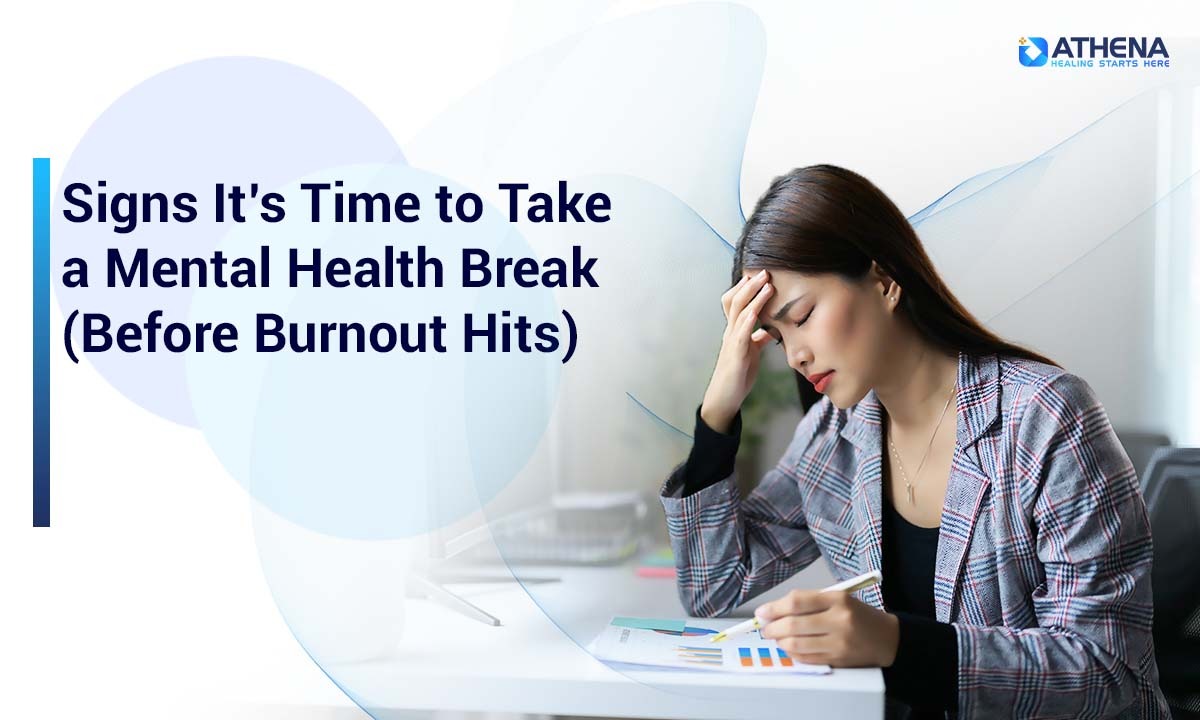
Burnout is a state of complete physical, mental and emotional exhaustion. It can occur due to constant stress, lack of self-care and hectic schedule. Burnout symptoms can include irritable mood, feeling lethargic, frequent headaches, etc. One meaningful way of preventing burnout is taking a healthy mental health break.
Mental health break can look different for each individual; however, the intention shall remain the same, that is, feeling calmer and releasing distress.
What is a Mental Health Break?
A pause from the hectic daily routine to rejuvenate oneself can be understood as a mental health break. The duration of this break can vary as per individual needs, for instance, from a few days to weeks or months as needed. The intentional pause aims to restore overall balance and improve well-being. Mental exhaustion symptoms can gradually reduce, and one’s body can start feeling refreshed through a peaceful mental health break.
Signs You Need a Mental Health Break
Some of the signs and mental and emotional exhaustion symptoms can be observed by oneself and others, indicating a need for a mental health break. These signs can include:
1. Lack of energy despite sufficient sleep
2. Feeling drained and worn out
3. Easily annoyed in relationships
4. Struggling with daily activities
5. Unhealthy changes in the sleep cycle
If you notice these signs in yourself or a loved one, a gentle check-in can be a step towards a better future!
Stress and Mental Health
Numerous studies have been done to understand the relationship between stress and mental health. While a certain level of stress may act as a motivating push to achieve one’s goals, if the lines get crossed and stress goes beyond that, then it can negatively influence mental health. Stress and mental health are associated in the following ways:
1. Chronic stress leading to deteriorated mental health
2. High stress levels may make one feel anxious and low
3. Healthy coping strategies can improve mental health
4. Relaxation techniques can reduce stress and support recovery
5. Ulcers, headache, and body ache may be observed due to extreme stress
Stress can be the beginning of many mental health concerns. If managed properly and at the right time, one can achieve better overall wellness.
How to Prevent Burnout
We grow up learning that prevention is better than a cure! It is not just limited towards physical health but also to mental health. If you are wondering how to prevent burnout before it takes control of your life, here are some ways to make an effort towards that:
1. Taking regular and healthy breaks for the mind and body
2. Maintaining work-life balance and personal boundaries
3. Practising health-promoting behaviour, such as yoga and a healthy diet
4. Taking out time for hobbies and creative activities that uplift mood
5. Prioritising sleep and maintaining a healthy sleep routine
These are some ways to focus on maintenance of a healthy routine and lifestyle so as to prevent burnout. Apart from following these, one can also become more mindful and notice any possible early signs of burnout to take prompt steps.
When to Seek Professional Support
As a human, one may experience a spectrum of different emotions such as excitement, disgust, happiness, sadness, tiredness, enthusiasm, etc. At times, if these emotions start feeling overwhelming or one may not be able to regulate emotions, a mental health professional’s support may be needed. Here are some of the many times when seeking professional support can be helpful:
1. Emotions are becoming difficult to handle and are negatively influencing daily routine.
2. Work performance is declining, and lack of motivation in daily activities
3. You notice your boundaries often get blurred, and you are unable to maintain a work-life balance
4. Difficulty in interpersonal relationships due to increased conflicts and communication issues
5. The physical body gets impacted with no identifiable biological reason, such as frequent headaches, blood pressure issues, etc
6. You start noticing changes in unhealthy changes in sleep, appetite and use of unhelpful coping mechanisms
Conclusion
If you are looking for a perfect place to begin your mental health break, then reach out to Athena Behavioral Health. Our professionals will work collaboratively with you so as to understand the psychological concerns, burnout symptoms and mental exhaustion symptoms. We offer a detailed treatment plan allowing you to heal at your own pace. Our treatment plan incorporates a wide range of strategies such as individual counselling sessions, sleep hygiene maintenance, participation in recreational activities and building togetherness.
You can connect with our professionals today with a simple call at +91 9289086193!