
PTSD and Addiction Treatment in Delhi
Athena Behavioral Health brings together trauma-trained psychiatrists, clinical psychologists, and addiction specialists for ptsd and addiction treatment in Delhi, built for people whose past trauma and current substance use have quietly become one connected struggle rather than two separate ones.
- 24/7 Medically Supervised Detox
- Trauma-Informed Dual Diagnosis Care
- Trauma-Focused CBT and EMDR-Based Therapy
- Structured Relapse Prevention & Aftercare
- Family Counseling & Support
- Both Residential & Outpatient Options
Book Your Appointment

PTSD and Addiction Treatment in Delhi: The Substance Was Never the Real Problem
Usually there was a night that wouldn't quiet down, a memory that kept resurfacing at the worst moments, a body that stayed on high alert long after the actual danger passed. Alcohol or drugs offered relief from that, briefly. But relief that comes from a substance rather than actual healing tends to cost more the longer it's relied on, and the trauma underneath never actually gets smaller, it just gets buried under something else. If you are not ready to walk into a centre yet, an online consultation with a specialist can be a gentle first step, letting you talk through what is happening from the privacy of your own home.
Treatment for ptsd and addiction at Athena Behavioral Health Delhi treats that connection as the starting point, not an afterthought discovered halfway through a standard rehab stay. Every patient goes through trauma-informed dual diagnosis care from day one, where the trauma history and the substance use history are mapped out together, by the same clinical team, working from the same file. Anyone comparing ptsd and addiction treatment centers in Delhi will find that this integrated starting point is exactly what separates specialist care from general addiction treatment with trauma bolted on as an extra module.
"If someone is expressing suicidal thoughts, experiencing acute trauma-related crisis, or showing signs of severe withdrawal, call your local emergency number or get to the nearest emergency room immediately. Ruling out a crisis always comes first."
Meet Our Psychiatrists for PTSD and Addiction Treatment in Delhi

Prof. (Dr.) Nimesh G. Desai

Dr. Ashish Mittal

Dr. Rahul Rai
Inside Our Delhi Programme: What's Actually Different Here
Detox Monitored for Trauma Signals, Not Just Vitals
Our medical staff watch closely for how withdrawal can amplify hypervigilance, nightmares, or panic attacks, symptoms that are frequently misread as a trauma flare-up when they're actually part of the withdrawal process itself.
Real Trauma Therapy, Not Just Talk Therapy With a Trauma Label
Trauma-Focused CBT and, where clinically indicated, EMDR are used to actually process the traumatic memory and dismantle the beliefs it left behind, rather than circling the topic in general conversation.
One File, One Diagnosis, One Coordinated Plan
PTSD and substance use get assessed together in the same intake, with grounding and stabilisation work always coming before any direct trauma processing begins.
No Exceptions When It Comes to Confidentiality
Regardless of whether you are a corporate big shot, a public person, or just an individual seeking confidentiality, the confidentiality policy is the same for everyone.
Aftercare Based on Well-Known Vulnerabilities
After-care sessions and family sessions go on beyond discharge time, focusing on particular events when there are higher risks of both symptoms of trauma and cravings showing up again at the same time.
Relapse Prevention Plan Based on Individual Real Triggers
Instead of general recommendations of what to do if you run into various situations, your treatment team creates a plan tailored specifically for each situation which may lead to relapse.
Clinical Excellence
Clinicians Who Won't Treat This as Two Unrelated Cases

A general therapist in Delhi who occasionally sees addiction clients isn't the same as a team trained specifically in trauma-focused modalities. Our psychiatrists, trauma-trained psychologists, and addiction specialists have built sequenced protocols that move a patient carefully through detox, trauma processing, and long-term stability, treating neither condition as secondary to the other.
The clinical logic here is straightforward: trying to process trauma while someone is still actively using substances rarely works, because the substance itself blocks the emotional regulation trauma work depends on. And pursuing sobriety while an active trauma response runs untreated underneath tends to leave people with nothing left to lean on once the substance is removed. That's exactly why medical monitoring, grounding techniques, and trauma-specific therapy all start together, not in sequence.
Every treatment plan is built from a genuine understanding of that individual's trauma and substance use history, not from a fixed template applied across the board. This is what makes patients and families searching for the best ptsd and addiction treatment in Delhi consistently choose Athena.
Modern Lifetime Challenges
Why Delhi Makes This Combination So Easy to Miss
The pace of Delhi does not allow for an individual to spend any time sitting with any challenging experience, be it a car accident or some scary experience at work or from past events that have never been processed. A culture that demands quick recovery and visible functionality makes substance abuse the easiest and most efficient coping mechanism, eventually developing into its own problem stacked on top of the original one.
Situational Substance Abuse is essentially a response to a specific stressful period in life, perhaps a job loss, a personal setback, or a temporary crisis. In most cases, it tends to resolve itself naturally once that particular source of stress is removed and daily life finds its usual balance again.
PTSD Plus Substance Abuse works quite differently. Here, substance use has gradually developed into the default, almost automatic way of dealing with flashbacks or hypervigilance stemming from untreated trauma, rather than remaining tied to any single, passing event in a person's life.
Without proper intervention from a trusted rehab centre in Delhi, this pattern rarely resolves on its own and often grows more entrenched over time, keeping both the underlying trauma and the addiction quietly reinforcing one another well into the future.

Residential or Outpatient: Which Format Actually Fits Your Situation
Choosing between residential and outpatient care often feels like the hardest decision before treatment even begins. Both formats at Athena Behavioral Health follow the same trauma-informed clinical approach, only the structure around you changes.
| Aspect | Residential Programme | Outpatient Programme |
| Daily Structure | Round-the-clock stay with a fixed schedule of therapy, meals, and rest built into each day | Scheduled sessions attended while continuing to live at home and manage daily routines |
| Best Suited For | Those dealing with severe withdrawal risk, intense trauma symptoms, or an unsafe home environment | Those with milder symptoms, stable home support, and work or family responsibilities to maintain |
| Level of Supervision | Continuous medical and clinical presence throughout detox and early stabilisation | Regular check-ins with the care team, with medical support available as needed |
| Family Involvement | Structured family sessions scheduled around the residential calendar | Greater flexibility for families to join sessions around their own routines |
| Typical Time Commitment | Full-time stay through detox, stabilisation, and initial trauma work | Ongoing weekly or bi-weekly sessions stretched over a longer calendar period |
The Signs That Rarely Get Traced Back to Their Real Cause
Recognizing there's a problem is nearly always the hardest step. If any of the following sound familiar, either for yourself or someone close to you, it's worth speaking to a specialized team.
A Spike in Use Around Specific Dates or Reminders
Drinking or drug use that noticeably increases around anniversaries, certain situations, or anything connected to the original event.
Substances as the Only Way to Sleep or Settle Down
Reaching for alcohol or drugs specifically to manage nightmares, racing thoughts, or a persistent sense that something's wrong.
Avoiding Certain Things While Quietly Using More
Steering clear of people, places, or topics linked to the trauma, while substance use climbs steadily and unnoticed in the background.
A Gradual Slide in Work and Relationships
Missed deadlines, pulling away from people, or a visible decline in functioning that tracks closely with both trauma symptoms and heavier use.
Physical Symptoms Mistaken for a Trigger
A racing heart or sweating when substance use stops, often misread as trauma resurfacing rather than actual withdrawal.
Numbness That Never Really Lifts
A persistent sense of emotional flatness that continues even during periods without any substance use at all.
Not Sure If This Is You? Talk to a Specialist
Confidential Support, available 24×7
ABOUT THERAPY AT ATHENA
The Sequence We Actually Follow
Step One, Understanding the Full Picture
Every admission opens with a comprehensive assessment covering trauma history, substance use patterns, physical health, and specifically how the two have been reinforcing each other.
Step Two, Detox Handled With Trauma in Mind
Where withdrawal management is needed, it's carried out with close medical supervision and specific attention to how it can intensify hypervigilance, nightmares, or anxiety.
Step Three, Stability First, Always
Grounding techniques and emotional regulation skills are taught and practiced before any trauma memory is directly addressed, since skipping this stage is a well-known way to make trauma processing backfire.
Step Four, Processing the Trauma Itself
Once stabilised, Trauma-Focused CBT and, where appropriate, EMDR work through the memory and the beliefs formed around it, at a pace the patient can genuinely tolerate, alongside continued addiction-focused work.
Why Choose Us
What a Genuine Recovery Partner Looks Like, Compared to Just Another Facility

The thing that really sets Athena of Delhi apart is not one particular aspect but clinical depth with treatment that is truly integrated for both disorders. Our interdisciplinary treatment team, consisting of psychiatrists, trauma-informed psychologists, addiction specialists, nurses, and qualified counselors, assesses and modifies the patient's treatment plan as trauma symptoms and sobriety change throughout the process.
Recovery does not begin the moment patients walk through the door of our facility. Patients are given tools for avoiding relapse and are clear on their triggers while having a solid outpatient program that actually works for them. Healing from a trauma is never an easy task and it is very possible for trauma symptoms and cravings to come unexpectedly despite making great strides forward.
For professionals, our executive program is designed with real career demands in mind, offering flexible schedules, private rooms, and support with work-related matters whenever clinically appropriate. This way, stepping into treatment doesn't mean stepping entirely away from the responsibilities that matter most.
How We Help
From Your First Call to Real Progress
Taking this step is very difficult, even more so when dealing with a complex situation like dual diagnosis of PTSD and addiction. Here's what reaching out really entails.
Call our confidential admissions number or use the chat on our website to have your queries answered, your concerns sorted and book your first appointment.
An evaluation conducted by our medical and psychiatric professionals will help us figure out the right level of care that you require.
Withdrawal process will be carefully supervised, with both the physical symptoms of withdrawal and those related to trauma being monitored.
Grounding, trauma processing, addiction-specific therapy and family sessions are all conducted simultaneously during this stage.
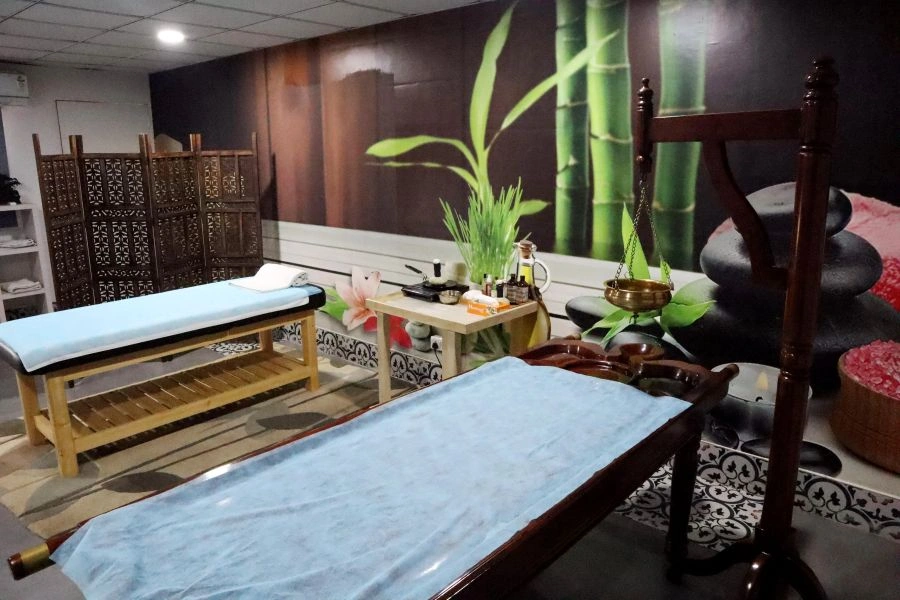
Take a Look Inside Our Delhi Facility







Conditions We Treat















.png)






WHAT OUR PATIENTS SAY
Frequently Asked Questions
It varies by individual clinical need, but most patients stay engaged with treatment for 30 to 90 days. Detox, where needed, generally takes five to ten days, followed by grounding work, trauma processing, and structured relapse prevention.
No, Confidentiality is treated as a legal and ethical obligation here, and nothing about your treatment is shared with employers, family, or anyone else without your explicit written consent.
Because the two conditions actively reinforce each other. Sobriety without trauma treatment tends to leave someone exposed to symptoms they have no coping tool left for, and trauma processing attempted during active substance use rarely holds, since the substance interferes with the emotional regulation that trauma work depends on.
It's treated as a setback to work through immediately, not a failure. Our clinical team reassesses, stabilises where needed, revisits grounding and coping strategies, and strengthens the aftercare plan going forward.
Our clinicians assess dependency severity, trauma symptom intensity, withdrawal history, and home environment at the first visit to recommend the right level of care for your specific situation.
Yes, potentially. Withdrawal can significantly intensify trauma symptoms like hypervigilance, nightmares, or panic, and in some cases carries genuine medical risk. Medically supervised detox ensures both are monitored safely together.
Yes, Family counseling sessions are built specifically around helping loved ones support recovery without unintentionally triggering trauma responses at home.
Trauma-Focused CBT, EMDR where clinically appropriate, Motivational Interviewing, and individual, group, and family counseling, alongside yoga, mindfulness, and other lifestyle-focused work.
No, Trauma-focused therapy is deliberately paced, and grounding skills are always established first. You're never asked to share more than you're genuinely ready for.
Not at all. Most people arrive believing these are two separate, unrelated problems, or without even realizing that a past experience has anything to do with their current substance use. That connection is exactly what the initial assessment is built to uncover.
How to reach Athena - Delhi
Athena Luxus, Delhi
Athena Luxus, South Delhi, New Delhi
Landmark: South Delhi
- South Delhi
- Central Delhi
- Gurugram border areas
- Noida border areas
Contact us: +919289086193
Speak to Our Care Team - 24×7 Confidential Support
Confidential help is just a call or chat away. Our team is ready to listen - without judgment, without pressure.
