
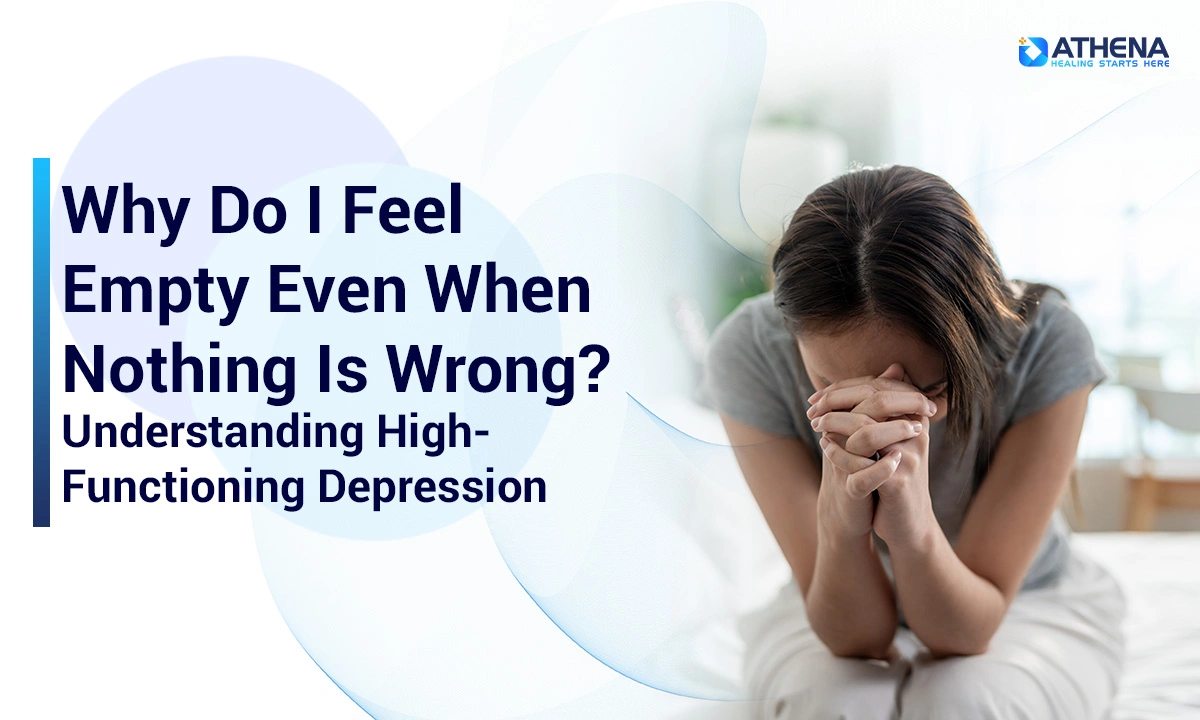

Feeling empty for no reason can happen even when life appears stable. Persistent emotional emptiness may be linked to high-functioning depression, chronic stress, burnout, anxiety, or unmet emotional needs. If these feelings continue for weeks or begin affecting your daily life, speaking with a qualified mental health professional can help identify the cause and guide appropriate treatment.
If you've ever wondered, why do I feel empty for no reason, you're not alone. Feeling emotionally disconnected despite having a good job, supportive relationships, or a comfortable life is more common than many people realize. At Athena Behavioral Health, we help people understand the underlying causes of these emotions and provide personalized depression treatment for a variety of mental health conditions. If these feelings are persistent, booking a professional assessment is an important first step.
What Does It Mean to Feel Empty for No Reason?
Feeling empty is different from simply feeling sad after a difficult event. Instead, it often feels like a lack of emotional connection, motivation, or fulfillment. You may go through your daily routine, complete your responsibilities, and even smile around others, yet still feel as though something is missing.
When people ask, why do I feel empty for no reason, they're often describing a sense of numbness that doesn't seem connected to any obvious problem. This emotional disconnect can develop gradually and may be easy to overlook because it doesn't always interfere with work or family life at first.
Is It Normal to Feel Empty Even When Life Is Going Well?
Yes, it can happen.
Many people believe emotional well-being should naturally follow external success. However, mental health is influenced by much more than career achievements or personal relationships.
You might have:
A stable career
Close friends or family
Financial security
Good physical health
Yet still experience emotional emptiness.
This doesn't mean you're ungrateful or "making it up." Emotional health is shaped by biological, psychological, and social factors. Chronic stress, perfectionism, unresolved emotional experiences, and ongoing mental health conditions can all contribute to these feelings.
Understanding the difference between stress and depression or recognizing the difference between anxiety and depression can provide much-needed clarity on what you are experiencing.
What Is High-Functioning Depression?
High-functioning depression is a term commonly used to describe people who continue managing daily responsibilities while experiencing ongoing depressive symptoms. Although it isn't an official medical diagnosis, it often overlaps with Persistent Depressive Disorder (PDD) or other forms of depression.
Unlike major depressive episodes that may significantly disrupt daily life, people with high-functioning depression often continue working, caring for family, and meeting obligations. Because they appear successful on the outside, their emotional struggles often remain hidden.
This is one reason many individuals continue asking themselves, why do I feel empty for no reason, without realizing depression could be contributing to those emotions.
High-Functioning Depression vs. Burnout
Burnout is generally linked to prolonged stress, especially related to work or caregiving. High-functioning depression affects mood more broadly and can continue even after stressful situations improve.
High-Functioning Depression vs. Temporary Sadness
Everyone experiences sadness occasionally. Depression involves persistent emotional changes that continue for weeks or months and affect overall well-being rather than being tied to a single event.
Why Do I Feel Empty for No Reason? Common Causes
Several factors may contribute to emotional emptiness.
High-Functioning Depression
Persistent low mood, emotional numbness, reduced enjoyment in activities, and fatigue may all be signs of depression that aren't immediately obvious.
Chronic Stress
Long-term stress can leave your mind emotionally exhausted. Over time, prolonged physiological stress can also impact physical wellness; for instance, research shows can depression cause heart attack risks due to chronic strain on the body.
Emotional Burnout
Constantly giving your energy to work, family, or other responsibilities without enough rest can gradually reduce your emotional resilience.
Anxiety Disorders
Living with ongoing anxiety often requires significant emotional effort, leaving some people feeling detached or emotionally drained.
Perfectionism
People who constantly push themselves to achieve more may overlook their own emotional needs, eventually leading to feelings of emptiness despite success.
Unresolved Emotional Experiences
Past trauma, childhood experiences, or unresolved grief may continue influencing emotional health long after the original event has passed.
Lack of Purpose
Sometimes emotional emptiness develops when daily life feels repetitive or disconnected from your personal values and goals.
Signs You May Be Experiencing High-Functioning Depression
If you've been asking yourself, why do I feel empty for no reason, consider whether you recognize several of these symptoms:
Feeling emotionally numb
Constant fatigue despite adequate rest
Difficulty enjoying hobbies you once loved
Persistent self-criticism
Loss of motivation
Trouble concentrating
Changes in sleep patterns
Feeling isolated even around loved ones
Continuing to function while struggling internally
Feeling emotionally "flat" most days
Experiencing these symptoms doesn't automatically mean you have depression, but persistent symptoms deserve professional evaluation.
Why High-Functioning Depression Often Goes Unnoticed
One of the biggest challenges with high-functioning depression is that many people don't recognize it.
Society often praises productivity and resilience. If you're meeting deadlines, raising a family, and maintaining relationships, others may assume you're doing well.
Many people also compare themselves to others and think:
"I'm functioning, so I can't be depressed."
"Other people have it worse."
"I should just be grateful."
These beliefs can delay seeking support, allowing symptoms to continue for months or even years.
When Feeling Empty Could Be a Sign of Depression
Occasional emotional lows are part of being human. However, if you've repeatedly wondered, why do I feel empty for no reason, and the feeling lasts for more than two weeks, it's worth speaking with a mental health professional.
Many people wonder, can depression go away without medication? While mild symptoms may improve with therapy and lifestyle changes, severe or high-functioning depression often benefits from structured professional interventions.
Other warning signs include:
Persistent hopelessness
Ongoing emotional numbness
Difficulty experiencing joy
Changes in appetite or sleep
Loss of interest in daily activities
Difficulty concentrating
Declining work or relationship satisfaction
Only a qualified mental health professional can diagnose depression after a comprehensive evaluation.
How to Cope When You Feel Empty Inside
While professional support is often the most effective approach, these healthy habits may improve emotional well-being.
Reconnect With Your Emotions
Journaling, mindfulness, or simply checking in with yourself each day can help identify emotions you've been pushing aside.
Prioritize Sleep
Quality sleep supports emotional regulation and overall mental health.
Stay Physically Active
Regular movement has been shown to improve mood and reduce symptoms of depression and anxiety.
Build Meaningful Connections
Talking openly with trusted friends or family members may reduce feelings of isolation.
Practice Self-Compassion
Avoid judging yourself for struggling emotionally. Mental health challenges can affect anyone, regardless of external success.
Seek Professional Support
If you continue wondering, why do I feel empty for no reason, despite making healthy lifestyle changes, professional treatment can help uncover the underlying cause.
Furthermore, if a family member is struggling, knowing how to help someone with depression who refuses help can make a significant difference in getting them support.
How High-Functioning Depression Is Treated
Treatment is personalized based on each person's symptoms and needs. Depending on the country and setting—such as accessing specialized depression treatment in India—treatment typically combines multiple evidence-based options:
Cognitive Behavioral Therapy (CBT)
Individual psychotherapy
Medication when clinically appropriate.
Mindfulness-based interventions
Lifestyle modifications
Ongoing emotional support and relapse prevention strategies
Many people experience meaningful improvement when treatment addresses both emotional symptoms and contributing life factors.
You Don't Have to Carry These Feelings Alone
Feeling emotionally empty doesn't mean you're weak, ungrateful, or failing. It may be your mind's way of signaling that something needs attention.
At Athena Behavioral Health, our experienced psychiatrists, psychologists, and therapists provide compassionate, evidence-based care for depression, anxiety, and related mental health conditions. Every treatment plan is tailored to your individual needs, helping you understand what's behind your symptoms and supporting your journey toward recovery. If you've been asking yourself, why do I feel empty for no reason, don't wait for the feelings to become overwhelming. Book a confidential consultation with Athena Behavioral Health today and take the first step toward feeling like yourself again.