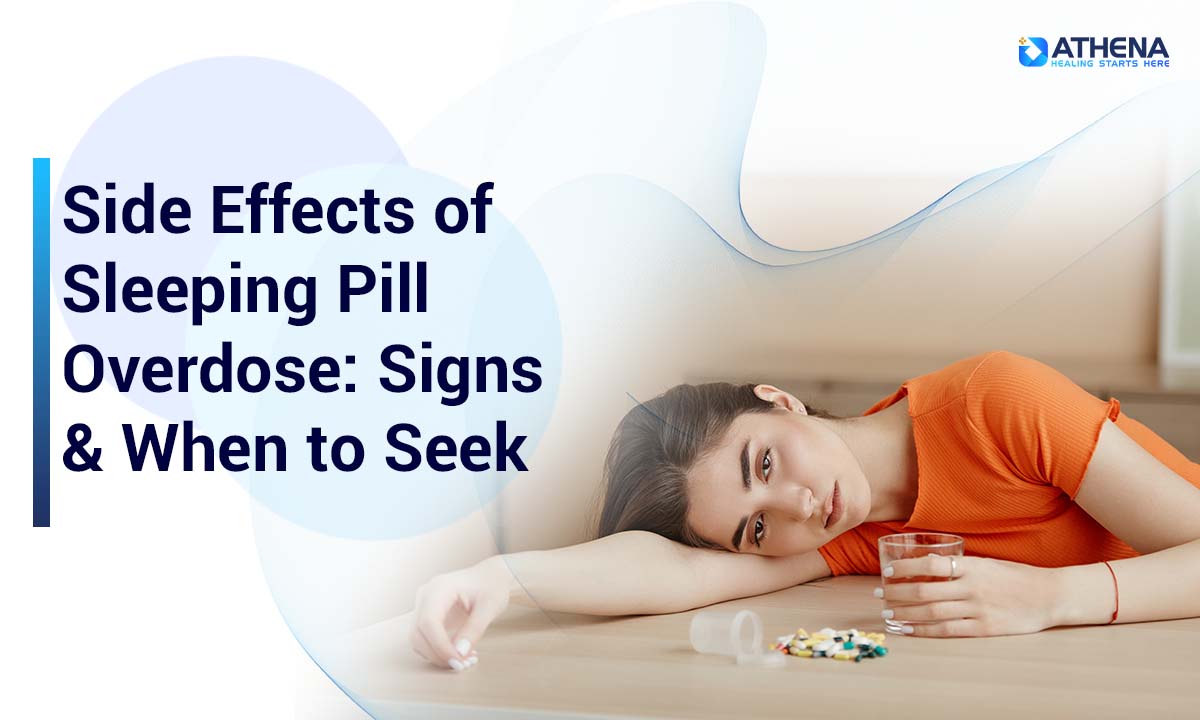

The side effects of sleeping pill overdose include extreme drowsiness, slowed or shallow breathing, confusion, poor coordination, and in severe cases, unconsciousness. These effects can appear within 30 minutes to a few hours after ingestion, and they often worsen quickly if the person mixes the pills with alcohol or other sedatives. Recognizing the side effects of sleeping pill overdose early and calling emergency services immediately can be the difference between a full recovery and permanent harm. This guide breaks down every side effect, sign, cause, and step you need to know in 2026.
What Counts as a Sleeping Pill Overdose
An overdose of a sleeping pill happens when a patient takes too much sedative hypnotic medicine for his/her body to manage. These are medications prescribed by physicians, such as Ambien, Lunesta, and Sonata, as well as other types of drugs, such as benzodiazepines, like Restoril, or over-the-counter drugs, including diphenhydramine (Benadryl) and melatonin. Therefore, the exact quantity leading to overdose depends on the kind of medication, the individual's tolerance, body weight, and other factors.
Usually, a person develops tolerance to medications with time and repeated consumption, which means that the amount needed to cause a certain impact increases. Thus, a person may accidentally take an amount exceeding the safety limits without even realizing it because he/she needs a bigger dose. On the contrary, an individual who did not use the drug before is likely to overdose in a smaller amount.
Common Sleeping Pills Linked to Overdose
Not all the drug types listed below carry the same level of risk. Benzodiazepines and barbiturates, for instance, have a much narrower safety margin than melatonin, which is why understanding which sleeping pill is dangerous before you or a loved one starts taking one matters just as much as knowing the overdose signs themselves.
Drug Type | Examples | Overdose Risk Level |
Z-drugs (Non-benzodiazepine hypnotics) | Ambien, Lunesta, Sonata | Moderate to high, especially when mixed with alcohol |
Benzodiazepines | Restoril, Xanax, Valium | High, particularly with opioids |
Antihistamines (OTC) | Benadryl, Unisom | Moderate, large doses affect the heart and brain |
Melatonin | Various OTC brands | Low, but high doses can still cause discomfort |
Barbiturates (older drugs) | Phenobarbital | Very high, narrow safety margin |
Early Side Effects of Sleeping Pill Overdose
Due to the similarity between some initial signs of sleeping pill overdose and normal drowsiness, many individuals fail to identify these symptoms at the beginning. Nevertheless, the main distinction between the two is the level of severity and how long it takes to feel better after the symptom occurs.
Extreme fatigue which does not go away after rest
Slow speech
Difficulty staying awake when having a conversation
Confusion, memory loss
Poor coordination
Nausea, stomach pain
The Importance of Early Recognition
Being aware of such symptoms can help prevent further complications. Thus, if you observe some of them in an individual shortly after they have taken a sleeping pill, you should not waste time observing if they get better and instead consult poison control centers/doctors immediately.
Severe Side Effects of Sleeping Pill Overdose That Require Emergency Help
As an overdose progresses, the central nervous system becomes increasingly depressed. Consequently, the symptoms shift from mild discomfort to life-threatening danger. Anyone showing the severe side effects of sleeping pill overdose listed below needs emergency medical attention immediately.
Severe Symptom | What It Indicates |
Slow or shallow breathing | The brain's respiratory drive is being suppressed |
Unresponsiveness or unconsciousness | The nervous system is severely depressed |
Bluish lips or fingertips | Oxygen levels in the blood are dropping |
Extremely low blood pressure | The cardiovascular system is struggling |
Seizures | The brain is reacting to toxic drug levels |
Irregular heartbeat | The heart is being affected by the overdose |
Behavioral and Cognitive Side Effects
In addition to physical symptoms, side effects of sleeping pill overdose can cause changes in behavior and thought processes. For example, some people perform sleep-related actions that they cannot recall afterwards, like sleepwalking, sleep eating, or sleep driving. Moreover, confusion, memory loss, and disorientation commonly occur when higher dosages are taken, especially when using Z drugs and benzodiazepines.
Long-term Side Effects of Sleeping Pill Overdose
Although the immediate threat subsides, an overdose can result in long-term consequences for health. In particular, prolonged lack of oxygen due to a serious overdose can cause:
Brain damage and mental deterioration
Memory and concentration impairment
Organ damage, especially to the liver, kidneys, and heart
Chronic breathing problems
Increased likelihood of future addiction
Why Sleeping Pill Overdoses Happen
Understanding the common causes helps prevent the side effects of sleeping pill overdose from occurring in the first place. Overdoses generally happen for one of the following reasons.
Accidental Misuse
Many people accidentally take more than the recommended dose, especially if they forget a previous dose or misunderstand the instructions. Similarly, taking a second dose after waking up in the middle of the night is a common accidental trigger.
Tolerance and Dependence
Since the body adapts to regular sedative use, people often need increasingly larger doses to fall asleep. Over time, this pattern raises the risk of accidental overdose significantly. Interestingly, insomnia and low mood often feed into each other, so anyone relying heavily on sleep medication should also consider whether an underlying mood disorder needs attention through proper depression treatment rather than more pills.
Mixing Substances
When one takes sleeping pills along with alcohol, opioids, and other kinds of sedatives, the effects become even more potent. It is, in fact, one of the leading factors contributing to overdose or even death, as they all inhibit the functioning of the central nervous system in the same way.
Intentional Overdose
Sometimes a person may take an excessive amount of sleeping pills deliberately, which is associated with an undiagnosed mood disorder. Considering that insomnia is one of the leading symptoms of depression, treating the underlying disorder can significantly cut the need to use sleeping pills. If you or somebody close to you feels like taking your own life or doing anything else harmful, contact the 988 Suicide & Crisis Lifeline (call or text 988 in the US).
What to Do If You Notice Side Effects of Sleeping Pill Overdose
When you suspect that someone has overdosed on sleeping pills, nothing is more important than responding fast. Here is what you need to do.
Contact emergency services immediately: Dial 911 or your local emergency number right away.
Give important information: Make sure the first responders know what kind of drugs were used, how much was ingested, and when it happened.
Wake up the person: If you can, try to keep them awake while waiting for the help.
Place them in a side-lying position: This will help reduce the risk of choking in case of vomiting.
Never attempt to make them vomit: Do not perform this procedure unless advised by a health professional.
Wait for the help: Monitor the breathing and responsiveness of the person.
Healthcare professionals will use reversal drugs, for example, flumazenil in case of benzodiazepines overdose, or provide supportive treatment while the body eliminates the drug.
How to Prevent the Side Effects of Sleeping Pill Overdose
Prevention remains far easier than treatment. Consequently, following a few consistent habits can significantly lower the risk.
Take medication exactly as prescribed and never exceed the recommended dose
Avoid mixing sleeping pills with alcohol or other sedatives
Store medication safely, away from children and anyone at risk of misuse
Talk to a doctor before combining sleep aids with other prescriptions
Explore non-medication approaches, such as cognitive behavioral therapy for insomnia (CBT-I) and better sleep hygiene, rather than relying solely on pills
Additionally, practices like breathing exercises, guided meditation, and gentle movement can calm the nervous system naturally at night. Programs such as Mindfulness, Yoga & Wellness are designed to build these habits gradually, so sleep improves without leaning on medication night after night.
When to Seek Professional Help
If you find yourself needing higher doses to feel the same effect, experiencing cravings for your sleep medication, or struggling to sleep without it, these are clear signs of dependence. In such cases, reaching out to a healthcare provider or addiction specialist sooner rather than later can prevent the situation from progressing toward the more severe side effects of sleeping pill overdose. For additional guidance on recognizing when professional support is needed, whether for medication dependence or a related substance concern, you can read Athena Behavioral Health's article on When to Seek Help for Addiction: Signs and Warnings.
It also helps to look beyond the medication itself. Since chronic insomnia frequently overlaps with anxiety and depression, a proper evaluation for depression treatment alongside structured Mindfulness, Yoga & Wellness support can address the root cause rather than just managing the symptom.
Conclusion
From mild fatigue to severe danger to life, the side effects of sleeping pill overdose can become progressively dangerous in a brief span of time. Due to the fact that some symptoms of the problem resemble common fatigue, it becomes important to be alert to changes in breathing, alertness, and behavior in the event of sedative consumption. In any case, the most efficient methods of safety will be to seek help immediately, avoid taking different substances at once, and get professional help in case of dependence.