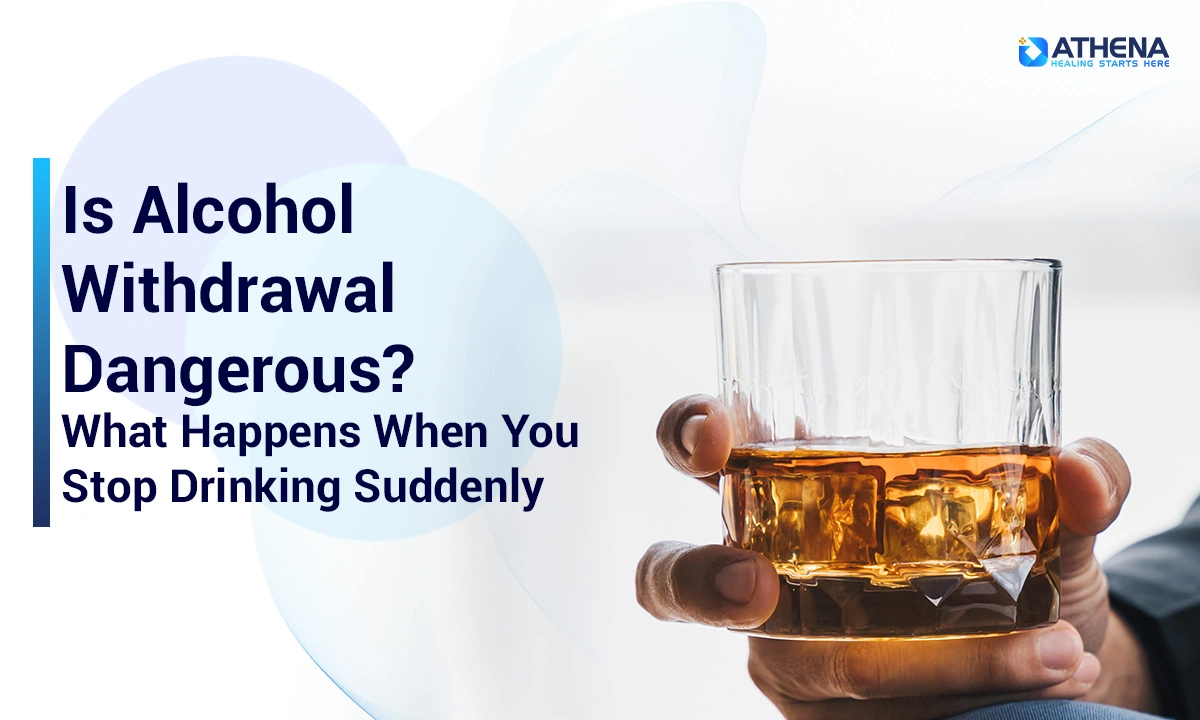

Yes, alcohol withdrawal can be dangerous, especially for people who have been drinking heavily or regularly for a long time. While some people experience mild symptoms such as anxiety and tremors, others may develop seizures or delirium tremens (DTs), which require immediate medical care. Professional assessment and medically supervised detox offer the safest path to recovery.
If you're wondering is alcohol withdrawal dangerous, the short answer is yes, it can be. Suddenly stopping alcohol after prolonged or heavy use may trigger withdrawal symptoms that range from mild discomfort to serious medical complications. At Athena Behavioral Health, individuals receive compassionate, evidence-based care through medically supervised alcohol addiction treatment, helping them begin recovery safely while reducing the risk of withdrawal-related complications.
What Is Alcohol Withdrawal?
Alcohol withdrawal is the body's response to the sudden absence of alcohol after it has become accustomed to regular or excessive drinking. Over time, alcohol changes the way the brain and nervous system function. Understanding what happens when you drink alcohol everyday explains how this physical dependency develops and why sudden cessation causes significant distress to the nervous system.
The severity of withdrawal differs from person to person. Factors such as how much and how often someone drinks, their overall health, age, and previous withdrawal history all influence how the body responds.
People who are at higher risk include:
Individuals who drink heavily every day
People with long-term alcohol dependence
Those who have experienced alcohol withdrawal before
Individuals with existing medical conditions
People with co-occurring mental health conditions
Is Alcohol Withdrawal Dangerous?
Many people search online asking, is alcohol withdrawal dangerous, because they want to know whether quitting alcohol abruptly could harm their health. The answer depends on the severity of alcohol dependence, but for some individuals, withdrawal can become a medical emergency.
Mild withdrawal symptoms may improve within a few days with appropriate medical guidance. However, severe alcohol withdrawal can affect the brain, heart, and nervous system, leading to complications such as seizures, hallucinations, or delirium tremens (DTs). Recognizing these risks and catching early alcohol not under control warning signs can help families seek professional intervention before sudden withdrawal becomes necessary.
Because it is difficult to predict how severe withdrawal will become without a medical evaluation, healthcare professionals strongly recommend seeking medical advice before attempting to stop drinking after prolonged alcohol use.
What Happens When You Stop Drinking Suddenly?
Withdrawal symptoms typically develop in stages.
First 6–12 Hours
Early symptoms often begin within several hours after the last drink. These may include:
Anxiety
Tremors
Sweating
Headache
Nausea
Difficulty sleeping
Restlessness
Although these symptoms are usually mild, they can worsen over time.
12–24 Hours
As the body continues adjusting, symptoms may become more noticeable.
Some people experience:
Increased heart rate
Elevated blood pressure
Continued shaking
Increased sweating
Hallucinations in certain cases
Hallucinations can occur even when a person remains fully aware of their surroundings and should always be evaluated by a healthcare professional.
24–72 Hours
This is often the most critical period.
During this stage, some individuals may develop:
Alcohol withdrawal seizures
Severe confusion
Delirium tremens (DTs)
High fever
Extreme agitation
Because these complications can become life-threatening, immediate medical care is essential.
After 72 Hours
For many people, physical symptoms gradually begin to improve after several days. However, fatigue, sleep disturbances, mood changes, and alcohol cravings may continue for weeks, making ongoing treatment and recovery support important.
Common Alcohol Withdrawal Symptoms
Symptoms can vary depending on the individual and the severity of alcohol dependence.
Mild Symptoms
Anxiety
Irritability
Sweating
Tremors
Nausea
Headache
Difficulty sleeping
Moderate Symptoms
Vomiting
Rapid heartbeat
Elevated blood pressure
Mild confusion
Fever
Increased agitation
Severe Symptoms
Seizures
Hallucinations
Delirium tremens
Severe confusion
Loss of consciousness
Extreme shaking
If severe symptoms develop, emergency medical care should be sought immediately.
Why Can Alcohol Withdrawal Become Life-Threatening?
Understanding is alcohol withdrawal dangerous requires knowing what happens inside the body.
Alcohol slows down activity in the central nervous system. Over time, the brain adapts to this effect. When alcohol is suddenly removed, the nervous system becomes overactive, creating a surge in brain activity.
This overactivity may result in:
Dangerous increases in blood pressure
Heart rhythm disturbances
Seizures
Severe dehydration
Electrolyte imbalances
Delirium tremens
Without prompt treatment, these complications may become life-threatening. Learning how alcohol affects the liver highlights how organ damage can further complicate the body's ability to safely process withdrawal and recover.
When Should You Seek Emergency Medical Care?
Anyone experiencing severe withdrawal symptoms should receive immediate medical attention.
Seek emergency care if someone develops:
Seizures
Hallucinations
Severe confusion
Difficulty breathing
Chest pain
Persistent high fever
Loss of consciousness
Extreme agitation or violent behaviour
Recognising these warning signs early can significantly reduce the risk of serious complications.
Can Alcohol Withdrawal Be Treated Safely?
Yes. Professional treatment significantly improves safety during withdrawal.
Treatment usually begins with a thorough medical assessment to evaluate the individual's alcohol use history, overall health, and risk of complications.
Depending on the person's needs, treatment may include:
Continuous medical monitoring
Symptom management
Nutritional support
Hydration
Vitamins to address deficiencies
Medications prescribed by qualified healthcare professionals when appropriate
People asking is alcohol withdrawal dangerous should remember that medically supervised detox is designed to manage withdrawal safely while reducing discomfort and preventing complications.
What Happens After Detox?
Detox is only the first stage of recovery.
Long-term recovery often includes:
Individual counselling
Cognitive Behavioural Therapy (CBT)
Group therapy
Family therapy
Relapse prevention planning
Lifestyle and wellness support
Ongoing aftercare
These therapies help individuals understand the underlying causes of alcohol use while building healthier coping strategies for long-term recovery.
When selecting a center, localized medical access is key. Families often seek top-rated regional facilities, such as the best alcohol rehabilitation center in Delhi NCR or the best alcohol rehabilitation center in Gurgaon, to ensure continuous medical supervision and support.
Can You Detox from Alcohol at Home?
Many people wonder whether home detox is safe. The answer depends on the person's drinking history and overall health.
Because is alcohol withdrawal dangerous is a question with potentially serious medical implications, it is never advisable to assume symptoms will remain mild. Even individuals who previously experienced only minor withdrawal symptoms can develop more severe complications in future episodes.
Before attempting to stop drinking, speaking with a qualified healthcare professional is the safest approach.
How to Support Someone Going Through Alcohol Withdrawal
Supporting a loved one during withdrawal can make a meaningful difference.
Helpful ways to provide support include:
Encourage them to seek professional medical care.
Stay calm and avoid judgment.
Monitor for worsening symptoms.
Help them stay hydrated if appropriate.
Do not leave them alone if severe symptoms develop.
Call emergency services immediately if seizures or confusion occur.
Compassion, patience, and timely medical intervention are essential during this period.
Conclusion
So, is alcohol withdrawal dangerous? Yes, it can be, particularly for people with alcohol dependence who stop drinking suddenly. While some individuals experience only mild symptoms, others may develop severe complications that require urgent medical care. Seeking professional guidance before beginning alcohol detox helps reduce risks and provides a safer, more supportive foundation for recovery.
Begin Your Recovery Safely with Athena Behavioral Health
If you or someone you love is struggling with alcohol dependence, you don't have to face withdrawal alone. Athena Behavioral Health offers comprehensive alcohol addiction treatment with medically supervised detox, personalised treatment plans, psychiatric support, evidence-based therapies, relapse prevention, and ongoing aftercare. Taking the first step toward professional treatment today can help you move confidently toward lasting recovery.