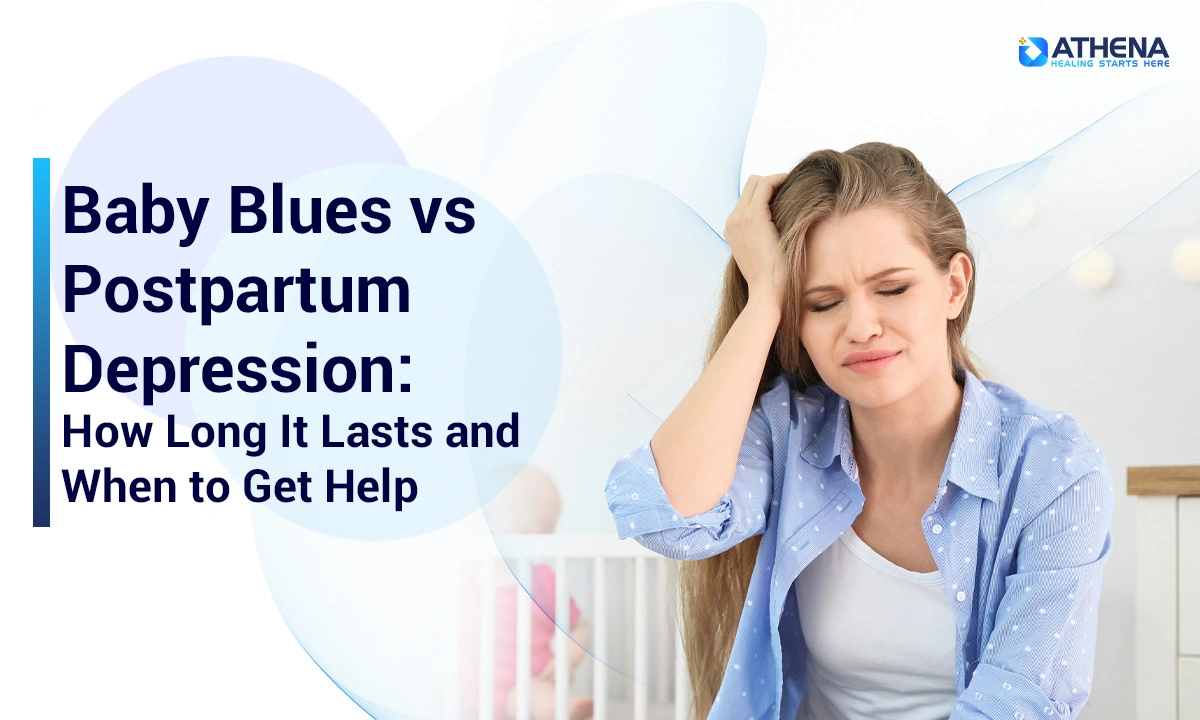

Baby blues vs postpartum depression can be distinguished by how long symptoms last and how much they affect daily life. Baby blues are common after childbirth and usually improve within two weeks. Postpartum depression is more persistent, often lasts for weeks or months, and requires professional evaluation and treatment. Knowing the difference helps mothers receive timely support and recover with confidence.
Baby blues vs postpartum depression is one of the most common questions new mothers and families ask after childbirth. While emotional changes are expected, symptoms that become intense or continue beyond two weeks deserve attention. At Athena Behavioral Health, we encourage early mental health support because prompt care can improve recovery for both mother and baby. Understanding the signs is the first step toward healing.
What Are Baby Blues?
Bringing a new baby home is a life-changing experience. Along with happiness and excitement, many mothers experience unexpected emotional ups and downs. These temporary feelings are commonly known as the baby blues.
Baby blues affect a large number of new mothers and usually begin within the first few days after delivery. Rapid hormonal changes, physical recovery, sleep deprivation, and adjusting to caring for a newborn all contribute to these emotional shifts.
Common symptoms include:
Frequent crying
Mood swings
Feeling overwhelmed
Irritability
Mild anxiety
Trouble sleeping even when the baby sleeps
Difficulty concentrating
Although these symptoms can feel distressing, they generally improve on their own within one to two weeks without medical treatment.
What Is Postpartum Depression?
Unlike baby blues, postpartum depression is a recognized mental health condition that goes beyond temporary emotional changes after childbirth. It affects a mother's thoughts, emotions, energy levels, and ability to function in everyday life.
Women with postpartum depression often struggle to enjoy activities they once loved and may find it difficult to care for themselves or their baby. Importantly, experiencing postpartum depression does not mean someone is a bad mother or lacks love for their child. It is a medical condition that deserves compassionate care.
Professional support can make a significant difference, and early treatment often leads to better long-term outcomes.
Baby Blues vs Postpartum Depression: Understanding the Difference
When comparing baby blues vs postpartum depression, the biggest differences are the severity of symptoms, their duration, and how much they interfere with daily life.
Feature | Baby Blues | Postpartum Depression |
Onset | Within a few days after birth | Within weeks or months after childbirth |
Duration | Usually less than two weeks | Several weeks or months without treatment |
Mood | Mild mood changes | Persistent sadness and hopelessness |
Daily activities | Usually unaffected | Often difficult to manage |
Bonding with baby | Generally maintained | May become challenging |
Treatment | Usually improves naturally | Professional evaluation and treatment recommended |
Recognizing these differences helps families know when emotional changes are part of normal recovery and when additional support is needed.
How Long Do Baby Blues Last?
Most mothers notice baby blues beginning around the third or fourth day after delivery. Symptoms typically improve gradually and disappear within two weeks.
As hormone levels stabilize, sleep patterns slowly improve, and mothers become more confident in caring for their newborn, emotional balance often returns naturally.
If symptoms continue beyond two weeks or become more severe instead of improving, it is important to consider whether postpartum depression may be developing.
How Long Can Postpartum Depression Last?
The duration of postpartum depression varies from person to person. Without appropriate treatment, symptoms may continue for several months or even longer, affecting relationships, parenting confidence, and overall well-being.
When fighting this deep sense of exhaustion, mothers often wonder
With timely care, many women experience significant improvement through evidence-based treatment, counseling, lifestyle support, and, when clinically appropriate, medication. Seeking help early often shortens recovery and reduces the impact on both mother and baby.
When Should You Get Professional Help?
Many mothers hesitate to ask for help because they worry they will be judged or seen as incapable. In reality, reaching out demonstrates strength and commitment to both personal health and the baby's well-being.
Professional evaluation is recommended if:
Symptoms last longer than two weeks
Sadness becomes overwhelming
Anxiety interferes with daily life
You lose interest in activities you once enjoyed
Bonding with your baby feels increasingly difficult
You feel hopeless or emotionally numb
Thoughts of harming yourself or your baby occur
Critical Note: Any thoughts of self-harm or harming the baby require immediate emergency medical attention.
For those experiencing severe symptoms, entering targeted tracks like specialized
Why Many Mothers Stay Silent
One of the greatest challenges surrounding baby blues vs postpartum depression is stigma.
Many mothers believe they should feel joyful all the time after childbirth. Social expectations, family pressure, and unrealistic portrayals of motherhood can make women feel ashamed of their emotions.
Some fear being labeled a "bad mother." Others worry that asking for help means they have failed.
The truth is that postpartum depression is a medical condition, not a personal weakness. Seeking treatment allows mothers to recover, care for themselves, and build healthy relationships with their children. Breaking this isolation is vital, and understanding how
Risk Factors for Postpartum Depression
While postpartum depression can affect anyone, certain factors may increase the likelihood of developing it.
Common risk factors include:
Previous depression or anxiety
Family history of mental health conditions
Hormonal changes
Difficult pregnancy or childbirth
Premature birth
Limited family support
Chronic sleep deprivation
Financial or relationship stress
Multiple births
Having one or more risk factors does not guarantee postpartum depression, but it highlights the importance of monitoring emotional well-being after childbirth.
How Families Can Help
Recovery becomes easier when mothers feel supported rather than judged.
Partners and family members can make a meaningful difference by:
Listening without criticism
Encouraging honest conversations
Helping with household responsibilities
Assisting with newborn care
Encouraging adequate rest
Offering to attend appointments together
Recognizing warning signs early
Even small acts of kindness can reduce feelings of isolation and encourage mothers to seek professional care when needed.
When structural demands or an underlying
When Is It an Emergency?
Postpartum psychosis is a rare but serious psychiatric emergency that differs from postpartum depression.
Emergency warning signs include:
Hallucinations
Delusions
Severe confusion
Extreme agitation
Losing touch with reality
Thoughts of harming oneself or the baby
If any of these symptoms appear, immediate emergency medical care should be sought.
Conclusion
Understanding baby blues vs postpartum depression allows mothers and families to recognize when emotional changes are a normal part of recovery and when additional care is needed. While baby blues usually resolve naturally within two weeks, postpartum depression is more persistent and should never be ignored. Early recognition, compassionate support, and professional treatment can make recovery smoother and help mothers regain confidence during one of life's most important transitions.
You Don't Have to Navigate This Alone
If you or someone you love is struggling to tell the difference between baby blues vs postpartum depression, compassionate help is available. Athena Behavioral Health provides confidential, evidence-based mental health care tailored to the unique needs of new mothers and their families. Our experienced professionals offer comprehensive assessment, therapy, and personalized treatment in a supportive, judgment-free environment. Don't let fear or stigma delay your recovery, contact Athena Behavioral Health today and take the first step toward healing, hope, and a healthier future for you and your baby.