
Women Depression and Addiction Treatment in Gurgaon
Athena Behavioral Health provides women's depression and addiction treatment in Gurgaon for the moments when low mood and substance use have become tangled together in ways that general treatment, or treatment designed without women in mind, simply doesn't reach.
- Women-focused Psychiatric Assessment & Diagnosis
- Supervised detox in a private, secure setting
- Antidepressant management alongside de-addiction care
- Treatment built around both conditions, together
- Family sessions that include partners, parents, or children where relevant
- Long-term Relapse Prevention & Aftercare
Book Your Appointment

Female Depression and Addiction Treatment Center in Gurgaon: A Pattern That Often Stays Hidden Longer
For many women, this pattern develops quietly, behind a routine that looks completely functional from the outside. A drink at the end of an exhausting day, a prescription refilled a little too often, a habit that starts as a way to cope with a low mood no one else has noticed. Over time, the substance stops helping and starts adding to the very feelings it was meant to ease, and the effort to hide it becomes its own source of exhaustion and shame. Treating either condition without the other rarely holds, especially once both have become part of daily functioning.
At Athena Behavioral Health, addiction and depression treatment for women in Gurgaon begins with one integrated Psychiatric Assessment & Diagnosis, conducted with an understanding of how mood, substance use, and the demands placed on women, at home and at work, often interact. We look at what's actually been driving the substance use, how long it's been concealed, and what role it has served, before building a plan around the full picture rather than a partial one.
"If someone is expressing suicidal thoughts, particularly during a low mood episode worsened by substance use, this requires immediate attention. Contact your local emergency number or the nearest hospital right away. Safety always comes first, before anything else."
Meet Our Psychiatrists for Women Depression and Addiction Treatment in Gurgaon

Prof. (Dr.) Nimesh G. Desai

Dr. Ashish Mittal

Dr. Rahul Rai

Dr. Supriya Mathur

Dr. Adwitiya Ray

Dr. Mrigakshi Parasor

Dr. Anindo Mitra
Inside Our Gurgaon Centre: What Care Designed for Women Actually Includes
A Private Assessment That Doesn't Rush the Full Story
The evaluation gives space to disclose substance use that's often been hidden out of shame or fear of judgement, alongside a full depressive symptom history.
Detox in a Secure, Women-Only Setting
Where withdrawal management is needed, it takes place with privacy and dignity built in, with mood tracked closely throughout since withdrawal can worsen depressive symptoms sharply in the short term.
Both Conditions Are Treated at the Same Time
We don't ask a patient to get sober before we address her depression, or stabilise her mood before addressing substance use. The two are worked on together, in parallel.
Flexible Structure for Women Balancing Multiple Roles
For patients managing caregiving, work, or family responsibilities alongside treatment, our Day Care Programme provides supervised hours at the centre without requiring full residential admission.
Medication Decisions Made With the Full Context
Antidepressants are selected with attention to substance use history, and where relevant, to reproductive health and hormonal factors that can influence both mood and treatment response.
Recovery That Includes the Body, Not Just Conversation
Mindfulness, Yoga & Wellness sessions offer a practical outlet for the restlessness, fatigue, or emotional flooding that often precede relapse.
Clinical Excellence
A Clinical Team That Understands This Diagnosis in Women Specifically

Our psychiatrists and clinical psychologists recognise that depression and addiction in women frequently present differently, and are frequently missed differently, than in men. Searches for the best Depression and Addiction Treatment for female patients in Gurgaon often come from women who've had a substance use pattern dismissed as stress, or a depression dismissed as exhaustion, for years before either was properly named.
No two women arrive at this point the same way. Someone using alcohol to manage a depression rooted in years of caregiving strain needs a different plan from someone whose low mood developed after substance use became a fixture of daily life. Working women managing this dual diagnosis alongside demanding careers can draw on our Corporate Wellness & EAP and Executive & High-Performance Care programmes, and younger patients are supported through Child & Adolescent Psychiatry.
One clinical team stays with a patient's case from the first assessment through long-term stability, so nothing has to be re-explained to someone unfamiliar with her history.
Modern Lifetime Challenges
Why This Combination Is Missed So Often in Women Across Gurgaon
The pressure to appear consistently composed while managing work, home, and caregiving at once, a tendency to read exhaustion and low mood as an unavoidable part of that load, and the added stigma that still attaches to women's drinking or substance use, all keep this pattern hidden for far longer in women than it typically does in men. Over time, she may begin to rely on a drink or a pill simply to switch off at the end of the day, while the people around her see only someone who is coping well.
There's an important difference between using a substance to get through a difficult season and substance use that's actually being driven by an underlying depression. Knowing where that line falls helps women and their families recognise the problem early, before secrecy, guilt, and dependence make it much harder to address. A confidential assessment at a trusted psychiatric hospital in Gurgaon can look at mood and substance use together, so the plan treats both side by side.
Situational substance use: Tied to a specific stressor, like a stretch of caregiving strain or a difficult life event, and tends to ease once that stressor resolves. She can usually cut back when circumstances improve, and her mood stays fairly steady between stressful periods.
Depression-linked substance use: Becomes the standing way to manage a mood that never fully lifts, with each condition making the other progressively harder to treat. Over time, sleep, energy, relationships, and daily responsibilities suffer, and attempts to stop on her own often fail because the underlying depression remains untreated.

How This Pattern Tends to Look Across Different Roles Women Carry
No two women arrive at this point the same way, and the role someone is carrying often shapes exactly how depression and substance use have been hiding together. This table reflects patterns our team commonly sees during assessment, based on the specific pressures behind them.
| Role or Life Stage | What the Pattern Often Looks Like | What Treatment Needs to Address |
| Full-Time Caregiver | A drink or medication used nightly to switch off after a day of childcare or eldercare, dismissed as "just how tiring caregiving is," with exhaustion that never fully lifts | Depression rooted in caregiving strain, alongside substance use that has become a nightly coping ritual |
| Working Professional | Alcohol used to manage the gap between a demanding job and an equally demanding home life, with a low mood dismissed as ordinary burnout | Both conditions treated together, without requiring her to step away from her career |
| New or Postpartum Mother | Medication or alcohol relied on to cope with an overwhelming, disconnected feeling that gets dismissed as "normal" new-mother exhaustion | Screening specifically for postpartum depression alongside any substance use that has developed around it |
| Woman in a Difficult or Unsupportive Relationship | Substance use as a private way to cope with ongoing emotional strain at home, hidden out of fear of judgement, and mistaken for an unrelated personal habit | A private, judgement-free space to disclose both the relationship strain and the substance use tied to it |
| Woman Managing Multiple Roles at Once | A pattern that's shifted so gradually across caregiving, work, and home that neither she nor her family can pinpoint when it started, often explained away as "she's always been like this" | A full history-taking process that traces the actual timeline, rather than assuming the current state is simply who she is |
Signs That Often Get Explained Away Before They're Named
Because women are frequently expected to manage everything without visible strain, these signs are often rationalised for far too long, by the patient herself and by the people around her.
Substance Use Rising Alongside a Worsening Mood
Drinking or medication misuse that quietly increases as feelings of exhaustion, hopelessness, or emotional flatness deepen.
Using Substances Just to Function, Not to Feel Good
Relying on alcohol, sedatives, or other substances simply to get through a day of caregiving, work, or both.
Low Mood That Sharpens Around Substance Use
Guilt, irritability, or hopelessness that becomes noticeably worse in the hours or days following use.
Relapsing Right After a Period of Real Improvement
Completing treatment for one condition, or responding well to antidepressants, only to slide back once the other resurfaces.
Quietly Discontinuing Prescribed Treatment
Stopping antidepressants without telling anyone, sometimes due to interactions with substance use, sometimes from a belief that asking for more help isn't an option.
Family Members Sensing Something Is Wrong but Unable to Name It
Loved ones notice changes in mood or behaviour without being able to tell whether depression, substance use, or both are behind it.
Not Sure If This Is You? Talk to a Specialist
Confidential Support, available 24×7
ABOUT THERAPY AT ATHENA
Phase by Phase: How Treatment Unfolds for Women at Our Gurgaon Centre
Phase One, Integrated Assessment
A psychiatrist conducts one comprehensive Psychiatric Assessment & Diagnosis covering depressive symptom history, substance use patterns, and the specific pressures that may have shaped both.
Phase Two, Detox With Mood Monitoring
Where withdrawal is needed, it happens in a private, secure setting with depressive symptoms tracked throughout, since withdrawal can significantly worsen low mood temporarily.
Phase Three, Simultaneous Treatment
Antidepressant management and structured Psychotherapy & Counselling run alongside addiction-focused CBT, at the same time, not sequentially.
Phase Four, Long-Term Stability
As both conditions stabilise, treatment shifts toward Mindfulness, Yoga & Wellness practices, a sustainable routine, and a Relapse Prevention & Aftercare plan addressing triggers for both depression and substance use together.
Why Choose Us
What Sets Our Approach to Women's Dual Diagnosis Apart

Every case is managed jointly by a psychiatrist and a clinical psychologist working from the same understanding of both conditions, in a setting built with women's privacy and comfort in mind, not a general programme adapted after the fact. This matters, because treating depression while substance use continues unaddressed, or the reverse, reliably brings both conditions back. Working from one shared picture also means she never receives conflicting advice, and the plan is reviewed regularly so it keeps pace with how she is actually responding.
Progress isn't the end of the story. Depression can recur, and periods of major life change, a new caregiving demand, a career shift, a health event, can bring both low mood and cravings back even after real, sustained improvement. That is why she leaves with a clear, written plan for recognising early warning signs and returning for support before a difficult stretch turns into a full setback.
For women who need more structure than weekly therapy but not full residential admission, our Day Care Programme bridges that gap with supervised hours each day while allowing her to continue living at home. It offers steady support and accountability during the most vulnerable early weeks, without pulling her away from family routines, work, or the caregiving responsibilities she carries.
How We Help
Your First Step, and Everything That Follows
Reaching out is often harder for women who've spent a long time managing everything quietly on their own. Here's what happens once that first step is taken.
Call our helpline or message us on WhatsApp, and get confirmation of your first appointment the same day.
A psychiatrist carries out a full Psychiatric Assessment & Diagnosis covering both conditions together, either in person or through a private video consultation.
Medical detox where needed, antidepressant management, Psychotherapy & Counselling, family sessions, and where appropriate, our Day Care Programme, combined around her actual circumstances.
Our Relapse Prevention & Aftercare programme tracks triggers for both depression and substance use together, since they rarely resurface separately.
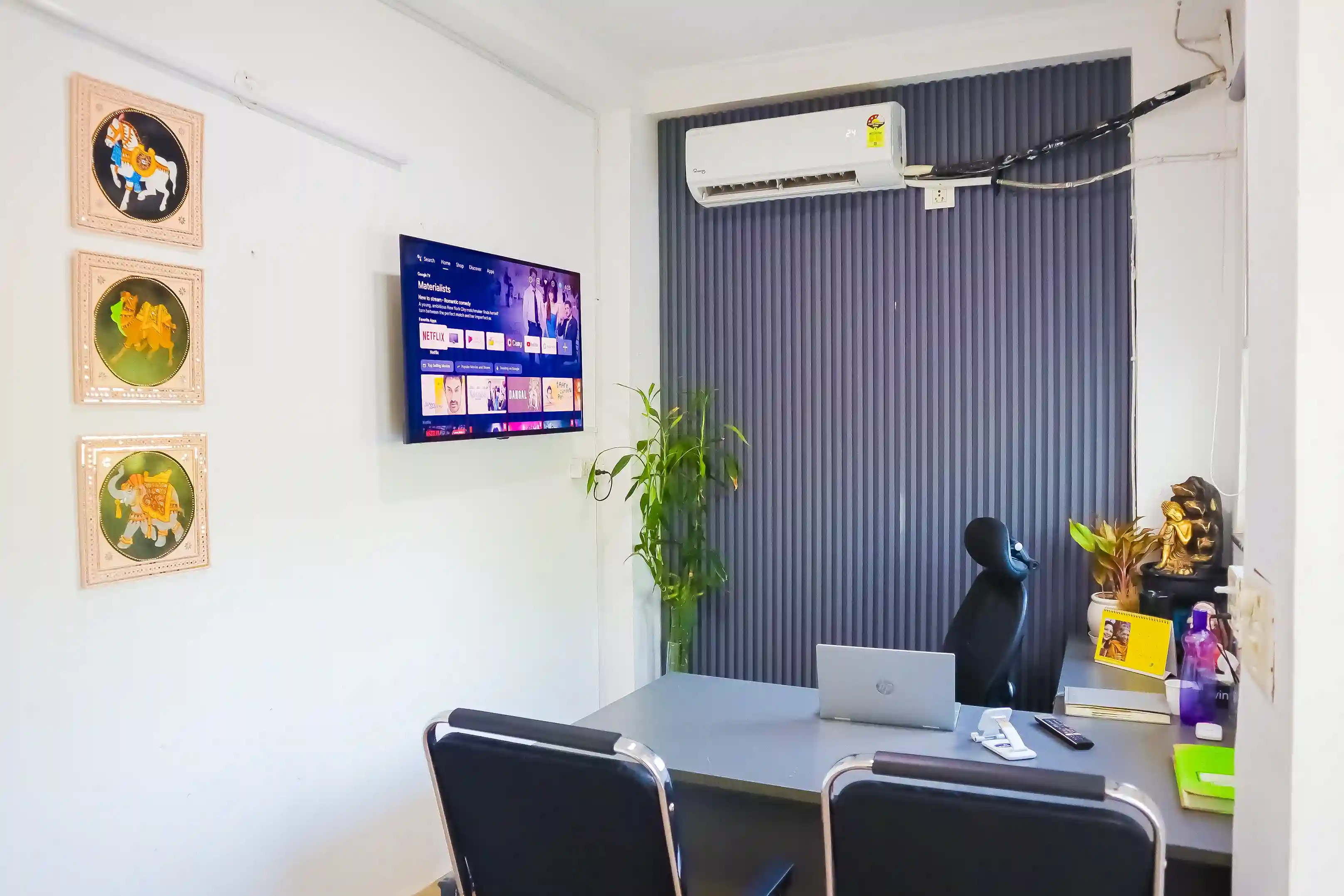
Take a Look Inside Our Gurgaon OKAS Facility







Conditions We Treat















.png)






WHAT OUR PATIENTS SAY
Frequently Asked Questions
Substance use in women is frequently dismissed as stress relief or overlooked entirely, while depression gets read as ordinary exhaustion from managing multiple roles, which lets both conditions run unaddressed for far longer than they should.
This is carefully evaluated during assessment, since certain interactions and risks need specific attention, including any relevant reproductive health considerations. Medication choices and monitoring are adjusted accordingly.
Where withdrawal is medically necessary, it happens first under close, private supervision with mood tracked throughout. Depression treatment then continues right alongside ongoing addiction care.
No, Many cases are managed through outpatient care or our Day Care Programme. More acute situations, particularly active suicidal risk, may need closer supervision for a period.
Yes, Sustained integrated care, medication management, therapy, and family involvement together produce meaningfully better long-term outcomes than treating each condition on its own.
Neither goes first. Integrated, simultaneous treatment of both is the most effective approach, since addressing one while ignoring the other consistently leads to relapse in whichever condition was left untreated.
Look at the pattern. If it's being relied on specifically to get through low periods, exhaustion, or overwhelm, rather than for enjoyment, that's a strong sign the two are connected, and a proper assessment can confirm it.
A significant one. Family sessions help partners, parents, or children understand how depression and substance use have been reinforcing each other, which changes how they respond and support recovery going forward.
This depends heavily on severity and history, but ongoing management and follow-up matter significantly, this isn't a fixed-length programme with a hard end date.
Depressive symptom history, substance use patterns, family and caregiving context, and specifically how the two have been interacting, all mapped out together to build one treatment plan from the very start.
How to reach Athena - Gurgaon OKAS
Athena OKAS, Gurgaon
446, Sector 39, Gurugram, Haryana 122003
Landmark: Sector 39, Gurugram
- Sector 39, 40, 41, 42, 43, 44
- Golf Course Extension Road
- Sohna Road nearby sectors
Contact us: +919289086193
Speak to Our Care Team - 24×7 Confidential Support
Confidential help is just a call or chat away. Our team is ready to listen - without judgment, without pressure.
