 WhatsApp
 Emergency
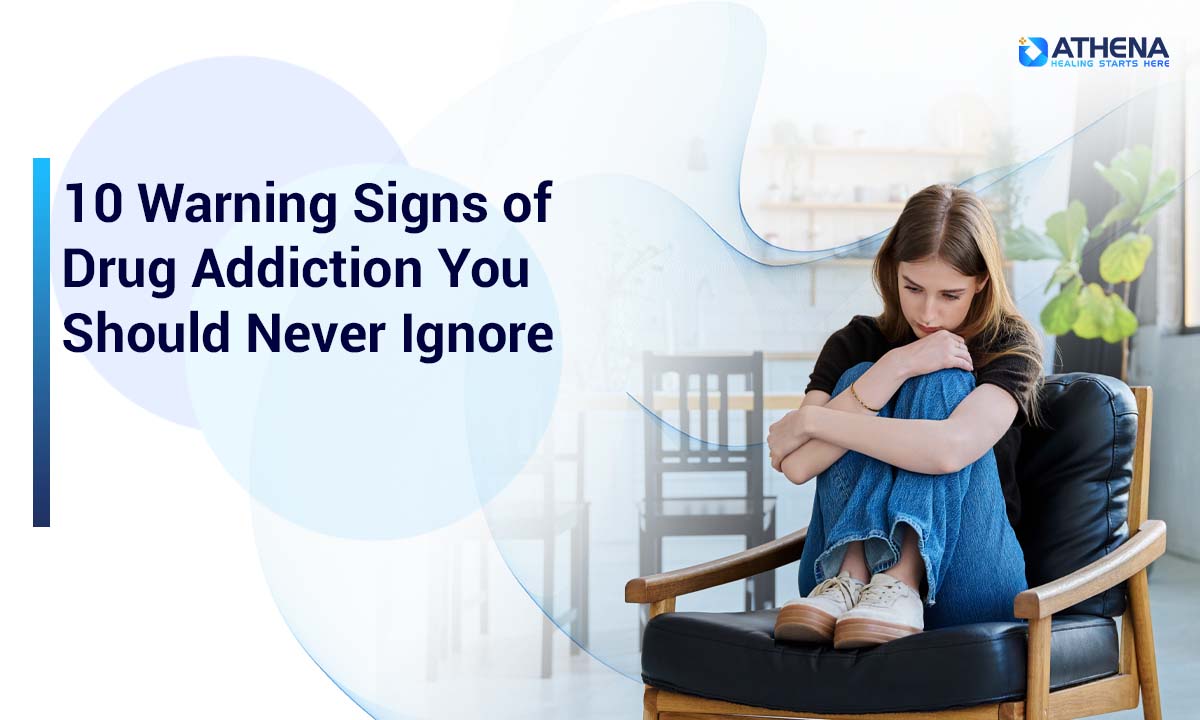
10 Warning Signs of Drug Addiction You Should Never Ignore
 Share
Share
Drug addiction does not occur at a single instance; it occurs silently as it creeps slowly and gradually in changes in mood, in habits, and in health, which many individuals often ignore. Early detection of the signs of drug addiction can be the difference between receiving early assistance and having severe repercussions resulting in both the individual and the family.
This blog will find out the 10 major warning signs of drug addiction, the early warning signs to look out for, the most common causes of drug addiction, and how professional drug addiction treatment and rehab centers, such as Athena Behavioral Health, can assist you.
Signs to Recognize Drug Addiction Early
Learn to identify these warning signs can make it easier to intervene early and guide someone toward professional treatment.
1. Loss of Control over Substance Use
The loss of control over the quantity and frequency with which a person takes a substance is one of the most telling indicators of addiction to drugs. They can vow to reduce but end up consuming more than they planned, longer than they planned or under hazardous circumstances.
You may notice repeated unsuccessful attempts to quit, promises that always last time, or reasons like I can quit anytime I want, even though what they do displays otherwise. The fact that they cannot control the use means that the drug is starting to take over the reward and impulse systems in their brain.
2. Loss of Interest in Daily Activities
An individual who was a responsible person might start missing deadlines, attending classes or failing to perform well in the job because he/she uses drugs. They can be late, sick a lot or evade significant duties and family commitments.
In the long run, this indifference may result in workplace warnings, inadequate school performance or even a growing family conflict. It is a good sign of addiction development when the use of substances is recurrently preceding the duty.
3. Explosive Behavior and Personalities
Drug addiction may completely change the mood, the personality, and the manner in which one interacts with others in life. A previously calm and friendly person can turn irritable, secretive, withdrawn, or abnormally violent.
You can experience regular mood swings, unaccountable anger, paranoia, or bouts of euphoria and subsequent profound depressions. Such changes usually represent the effects of the drug on the brain chemistry and the pressure of secrecy of the addiction.
4. Physical Symptoms and Change of Health
There are a lot of drugs that have physical manifestations, which become more noticeable with the increase in addiction. Typical physical warning signs are:
- Bloodshot/red eyes, enlarged/pinkeye pupils.
- Bloody diarrhea or constipation.
- The low personal hygiene or untidy look.
- Strange body smells, trembling hands, or slurred speech.
- Nosebleeds (when snorted), needle marks (when injected drugs).
Although they may also be caused by some other medical factors, in combination with behavioral changes, they highly indicate the possibility of drug misuse.
5. Defensive or Guarded Behavior
With addiction, the body becomes used to the drug, hence the individual requires more and more of the drug or increasing doses to achieve the same effect; this has been termed as tolerance. They can discuss the apparent failure of drugs and begin using more potent drugs.
They can also experience withdrawal symptoms, which include sweating, shaking, nausea, headache, insomnia, anxiety or irritability when they attempt to reduce or omit a dose. The primary indication that one is dependent and addicted is the need to take the drug to be normal.
6. Guilt by Association or Guilt by Innuendo.
Addicted individuals tend to be secretive to conceal their drug abuse from their relatives, friends or even their co-workers. They can shut their door, evade, lie about where they went, or be defensive when required to answer the question of their actions.
Hiding bottles, rolled-up notes, foil-burned syringes, or unrecognized pills may be found. There are also common patterns of making sudden changes in the friend groups, going out in the middle of the night without a reason or having some unclear excuses.
7. Financial Problems and Unexplained Expenses
Addiction to drugs is not cheap, and poverty is one of the usual warning signs. The person may:
- Borrow and/or demand money often without reason.
- Dispose of possessions or valuables.
- Owes no money, no debts, or unexpected bank problems.
- Not able to explain what becomes of their money.
In case financial issues increase with other indications of drug use, then addiction is something to be considered.
8. Social Withdrawal and Relationship Problems
A drug abuser is likely to drop any family activities, hobbies, and other activities that he/she previously enjoyed. They can stop attending with old friends and associate more with the new individuals who are also into substances, or they can be alone.
Lying, broken promises, irritability or aggressive behavior can lead to strained relationships. Family and social life are often evidenced by such complaints as an increased number of arguments, loss of trust, and emotional distance.
9. Risk and Impulsive Behaviors
Drug addiction often results in poor judgment and unwise behavior. The person may:
- Drive under the influence
- Engage in unsafe sex
- Fight or be involved in legal trouble.
- Use harmful doses or combine drugs.
These actions may lead to accidents, injuries or lawsuits, yet the individual keeps consuming them despite the possible danger. This is an important characteristic of addiction, namely, use despite harm.
10. Ignoring the Negative Consequences
The worst and probably the most dangerous indicator of drug addiction is the persistent use, even though the individual is witnessing the harm that it is inflicting on him. They could be aware that the drugs are damaging their health, their career, their finances or their relationships, but may not be able to quit.
You may hear people say that they know it is bad, but they need it, or you may watch them downplay serious issues that they bring about by their use. This trend demonstrates the extent to which addiction has occupied their minds, hearts, and actions.
Early Signs of Drug Addiction You Should Watch For
Early intervention can prevent many of the long-term consequences of addiction. Some early signs of drug addiction include:
- Using drugs “to cope” with stress, sadness, or boredom
- Increasing frequency of use on weekends or after work
- Experimenting with stronger substances or multiple drugs
- Hiding the amount used or feeling guilty after using
- Thinking about the drug often or planning days around using
If you notice these early signs in yourself or someone you care about, it is important not to wait until things get worse. Seeking professional help at this stage often leads to faster and more effective recovery.
Common Causes of Drug Addiction
The problem of drug addiction is seldom caused by only one type of factor; a combination of biological, psychological, and social factors is usually the outcome of the problem. This can be caused by some common causes and risk factors, which include:
- Genetic and biological: Previous family addiction, brain chemistry variations, and some mental illnesses might make it more susceptible.
- Psychological condition: Stress, trauma, anxiety, depression, and low self- esteem may drive individuals to engage in taking drugs as a coping mechanism.
- Social and environmental: Peer influence, easy access to drugs, individual lack of family support, working in a high-stress environment (home, work or school) are significant factors.
- Early exposure: When people start using drugs at a young age, this can change the process of brain development and dramatically expose the individual to addiction later in life.
- Co-occurring mental health disorders: Substance use disorders are commonly associated with such conditions as depression, bipolar disorder, PTSD, or personality disorders.
Knowing these reasons enables lessening the stigma that addiction is not a case of poor willpower but a complicated medical disorder that requires organized treatment and care.
How Drug Addiction Treatment Helps
Successful drug addiction therapy is not only about ceasing the use of drugs, but also about the impactful approach of mentality, physique, and feelings. The center of professional drug addiction treatment customarily provides:
- Detox under medical supervision to control withdrawal.
- Individual therapy to focus on the triggers, feelings and thinking styles.
- Peer support and shared learning group therapy.
- Family therapy to restore trust and enhance communication.
- Post-discharge follow-up and relapse prevention.
The treatment will be provided in inpatient (residential), outpatient, or day-care, based on the severity of addiction and needs of the individual. Organized therapy has a great potential to increase long-term recovery and a healthier and more stable life.
Read Also: How to Say No Drugs?
Why Choose a Drug Addiction Treatment Center like Athena Behavioral Health?
In a drug addiction treatment center that is specialized, safe, confidential, and therapeutic environment, healing really starts. Athena Behavioral Health targets evidence-based treatment programs that are premised on the history, mental health, and life situation of individual persons.
Athena has a multidisciplinary group of psychiatrists, psychologists, counselors and support staff members, which means that any co-occurring mental health problems coupled with substance use are met. They do not merely aim to be short-term sober but long-term recovering, to have better relationships and a better life.
Start your recovery today: Athena Behavioral Health
If you recognize these warning signs of drug addiction in yourself or someone close to you, don’t wait for the situation to worsen. Early action can prevent serious health, legal, and relationship consequences and open the door to a healthier, more stable life.
Athena Behavioral Health offers evidence-based, confidential, and compassionate treatment of drug addiction that suits your needs. Call us today and talk to a specialist, learn about your options, and begin a planned recovery plan. All you need to do is to make a simple call or message, but it can alter the course of your life or that of your loved one.