
 WhatsApp
 Emergency
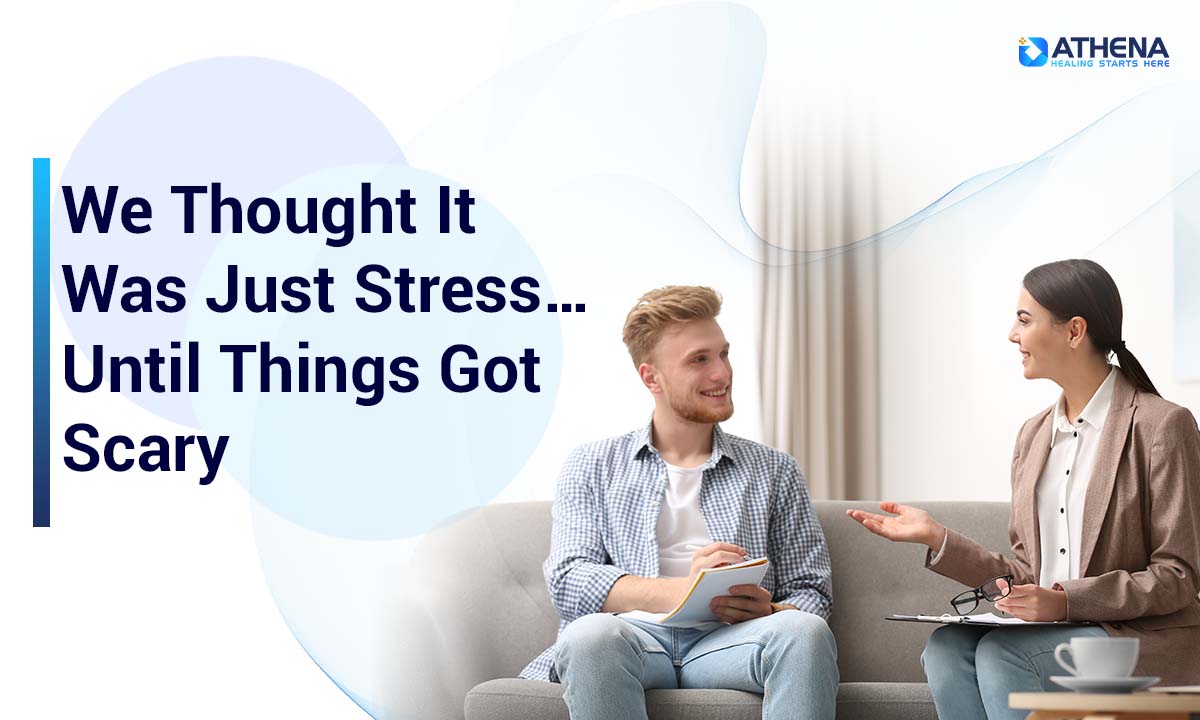
We Thought It Was Just Stress… Until Things Got Scary?
 Share
Share
Stress can be unobtrusive. Some unhappy nights. A little irritation. A constant headache. A feeling that your mind is running faster than your body can handle. Initially, most individuals report the same thing: that it is merely stress. However, there are cases when it appears that it is merely everyday stress, but gradually, it becomes more of a stress and mental health exhaustion, emotional burnout, anxiety, psychological distress, or even a serious mental health crisis.
The World Health Organization (WHO) defines stress as a worry or mental tension brought about by a stressful situation, and everybody has experienced it to some extent. However, our reaction to stress may have a powerful impact on our general well-being.
When does “Normal Stress” stop feeling normal?
Even minor stress may motivate us to accomplish tasks, handle duties, or address challenges. However, long-term stress is not the same. It does not just fade away after a weekend or even one good night's sleep. It keeps building. You can begin to notice your change in the form of:
- Even when resting, feeling exhausted.
- Fussing about minor issues.
- Getting bored with work or family time.
- Overthinking everything
- Headaches, body aches or belly pain.
- Difficulty sleeping
- Feeling emotionally numb
- Avoiding people
- Crying or panicking suddenly.
Stress can impact the body, thoughts, feelings, and behavior. Stress that is not managed can be a contributing factor in health issues like high blood pressure, heart disease, obesity, diabetes, and stroke.
It is here that the relationship between Stress and Mental Health will be relevant. Stress is not necessarily about being busy. It may influence your modes of thinking, your moods, your actions, and how secure you feel in yourself.
The Scary Part: When Stress Becomes Psychological Distress
Most individuals do not care about stress until it gets scary. They can begin to feel that they are not in control of their thoughts and feel emotionally overwhelmed. Others have panic attacks. Some others cease to eat correctly, are too sleepy, or are unable to sleep.
This step can be referred to as psychological distress- a situation when emotional suffering starts interfering with daily life, relationships, work, decision-making, and self-control.
You must not overlook such signs as:
- Having a sense of hopelessness or being entrapped.
- Thoughts of self-harm
- Extreme anxiety or panic.
- Not being able to function at work or home
- Emotional outbursts or sudden aggression.
- Use of substances to deal with stress.
- A sense of being out of control.
In case of a safety risk, the immediate assistance of a professional is required. Stress is not a disease; however, silent suffering must not be a matter of course.
Mental Exhaustion: The Mind Feels Empty.
Mental Exhaustion occurs when your brain feels overused, overloaded, and unable to recuperate. You might even think that even simple things demand excessive effort. It can be cumbersome to answer calls, respond to messages, attend meetings or make simple decisions. Mental exhaustion may occur as a result of work pressure, family strife, financial stress, caring, relationship problems, trauma, or unresolved emotional pain.
People often say:
- Why I feel so fatigued, I know not.
- I simply want all this to be over.
- I am not able to think clearly anymore.
- I am always irritated.
It is not idleness. It is an indication that your mind requires care, organization and composition.
Emotional Burnout: When You Stop Feeling Like Yourself
Emotional Burnout is more than tiredness. It is a condition in which an individual is emotionally exhausted, detached and not able to provide energy to the things that he/she once cared about. Chronic stress has also been associated with burnout, particularly when one has to work and without sufficient rest.
An emotionally burnt person might become quiet, withdrawn, negative, impatient or abnormally sensitive. They might look good on the surface and disintegrate inside.
That is why professional assistance is important. You need not wait until stress becomes a crisis before seeking assistance.
How to Reduce Stress Naturally
There are a lot of people searching using the keywords how to reduce stress naturally and natural stress management may be helpful when symptoms are mild to moderate. The following steps may help in maintaining emotional equilibrium:
1. Adjust Your Sleep Habit- Sleep is not a luxury. It is the recovery system of the mind. Attempt to sleep and get up at regular times. It is recommended not to scroll your feed late at night, avoid caffeine too close to bedtime and do not work in bed.
2. Move Your Body- Light exercise, walking, yoga, stretching, swimming, or any other form of light exercise can help relieve tension. You do not need a strict workout program. Several minutes (20-30) of movement can help relieve stress.
3. Breathe Slowly- The nervous system can be calmed down by deep breathing, grounding methods, and mindfulness. Increased stress levels can be relieved by slow breathing, which enables your body to come out of panic mode.
4. Speak to a Safe Person- Keep not all in. Disclose to a close friend, family member, counselor or therapist. Open talking can help decrease the emotional pressure.
5. Reduce Stimulants- Excessive caffeine, alcohol, nicotine, or unhealthy screen time may aggravate anxiety and sleep issues.
6. Create Boundaries- Stress can tend to increase as long as individuals continue to say yes to all. You have to learn to say no, take a break and guard your emotional space.
The NHS (National Health Service) also suggests some practical steps to reduce stress, like identifying causes, taking control where possible, staying active, connecting with people, and avoiding unhealthy coping methods such as smoking or excessive drinking.
When Natural Methods Are Not Enough
Natural techniques are helpful, though not necessarily sufficient. When stress is taking its toll on your sleep, appetite, work, relationships, mood, or your safety, it may be time to consider
Stress Management Therapy- Therapy makes you realize what is causing stress, how your thoughts are responding to it and what patterns are to be changed. It also assists you in developing healthier coping mechanisms. Professional support might comprise:
- Counseling
- Cognitive Behavioral Therapy
- Stress management therapy
- Psychiatric consultation
- Anxiety treatment
- Burnout recovery support
- Family therapy
- Inpatient care, in case of severe symptoms.
The first step in seeking help can be searching the Internet as Stress Counseling near me or Stress and Anxiety Treatment, which can be the first step to seeking help before the condition becomes more serious.
Stress and Anxiety Treatment at Athena Behavioral Health
Athena Behavioral Health provides mental health services and rehabilitation services in Gurgaon and Delhi NCR, and offers treatment support to a broad spectrum of mental health issues. According to its official web page, Athena is a mental health and de-addiction facility that provides tailor-made treatment programs.
To those who search online, seeking a mental hospital in Gurgaon, or the best mental health hospital in Gurgaon, or a rehab center in Gurgaon, the right place to say is Gurgaon or Gurugram. Athena Behavioral Health is located in the Gurgaon/Delhi NCR region and focuses on providing support towards mental health disorders, addiction issues, anxiety, panic attacks, trauma-related issues and so on.
At Athena Behavioral Health, reducing symptoms is not the sole objective. It is aimed at making people realize their stress, restore their emotional strength and get down to healthier daily functioning.
Why Choose Professional Help Early?
Many families only contact when the situation has become serious. However, stress can be avoided by early intervention, before it escalates into deeper emotional or behavioral difficulties. You can receive professional assistance in case:
- You feel constantly overwhelmed
- Your stress is affecting your relationships
- You are unable to concentrate at work or at school.
- You are coping with alcohol, drugs, or medication.
- There is a growing anxiety or panic.
- You are emotionally dead or despairing.
- A family member is concerned about you.
Stress can lead to physical, emotional and behavioral reactions, but stress management skills can enable people to better cope with the stress.
The Truth: Stress Is Not a Weakness
Stress does not imply that you are a weak person. It is a sign that pressure is getting to your mind and body. However, at times when the pressure is too high, it needs to be supported.
Stress does not go away by ignoring. Burnout cannot be cured by overworking. Faking that you are fine is not a way to preserve your mental well-being.
Awareness, acceptance, healthy coping, and timely treatment are helpful.
Final Thoughts
Until we begin to experience sleep disturbances, mood swings, and problems with our bodies, relationships, and even safety, we tend to think that stress is not harmful. What starts as mere stress can lead to mental exhaustion, emotional burnout, anxiety, or psychological distress.
The positive news is that stress can be controlled. Recovery can be achieved with the proper support, therapy, change of lifestyle, and guidance of professional assistance.
When someone is experiencing difficulty or when someone close to them is struggling, then Athena Behavioral Health will guide you to take the first step towards having better mental health. Call now at +91 9289086193 a mental hospital in Gurgaon.



 Get Help Today