
PTSD and Addiction Treatment in Greater Noida
Athena Behavioral Health offers PTSD and addiction treatment in Noida for patients whose trauma symptoms and substance use have become so intertwined that fixing one without the other keeps failing.
- Trauma-focused Psychiatric Assessment & Diagnosis
- Medically supervised alcohol detox where withdrawal risk is present
- Medication management run alongside de-addiction care
- One coordinated treatment plan, not two separate tracks
- Family sessions explaining how trauma and substance use are linked
- Structured Relapse Prevention & Aftercare
Book Your Appointment

PTSD and Addiction Treatment in Noida: Two Conditions That Feed Each Other
Typically, trauma is not silent in nature. It manifests itself in the form of a nervous system that is constantly alert, and alcohol or some other drug emerges as the fastest means to calm down that state of alertness. Drink to cope with the flashbacks, consume something to dampen the hypervigilant state or suppress the nightmares, and everything seems to be fine for some time. Slowly, the substance begins affecting one’s sleep and emotions negatively and the withdrawal phase may cause the same panic response due to physiological factors as the original trauma did.
At Athena Behavioral Health in Greater Noida, PTSD and addiction treatment starts with a single Psychiatric Assessment & Diagnosis covering trauma history and substance use together, instead of a psychiatrist treating one and a counsellor treating the other with no coordination between them. We establish when the substance use began relative to the trauma, what purpose it has actually been serving, and build a single plan around that complete picture.
"If someone is expressing suicidal thoughts, particularly during a PTSD episode worsened by substance use, this requires immediate attention. Contact your local emergency number or the nearest hospital right away. Safety always comes first, before anything else."
Meet Our Psychiatrists for PTSD and Addiction Treatment in Greater Noida

Prof. (Dr.) Nimesh G. Desai

Dr. Tanul Jain

Dr. Prachi Jain
What a Day of Integrated Trauma and Addiction Care Looks Like Here
One Assessment Handles the Entire History
The intake will assess the patient’s trauma timeline, their current state of post-traumatic stress disorder (PTSD) and substance use, pinpointing precisely which has been influencing the other.
Detox Acknowledges All Trauma Symptoms Through Withdrawal
If alcohol or substance detoxification is needed, then hypervigilance, flashbacks and disturbed sleep will be closely observed, as the process of withdrawal might aggravate trauma symptoms immediately.
Dealing with Trauma and De-Addiction Together
Our patients are not asked to become sober before the trauma work starts, or to stabilise emotionally before de-addiction is attempted. They begin both processes on day one.
Intensity of Treatment Tailored to Each Case
Patients who cannot attend once-a-week outpatient sessions, but do not require a full-fledged residential treatment, can rely on our Day Care Program, spending several hours under supervision at our clinic every day.
Medication Considered Taking into Account Substance Abuse History
Antidepressants and anti-anxiety drugs are prescribed taking into account the history of substance abuse, as there are some interactions that may pose a threat.
Grounding Work for the Nervous System, Not Just Conversation
Mindfulness, Yoga & Wellness sessions give patients practical tools for the hyperarousal and restlessness that commonly precede relapse.
Clinical Excellence
A Team That Treats Trauma and Substance Use as One Case File

The psychiatric team at our clinic views PTSD and addiction as one dual diagnosis rather than two different diagnoses handled by separate clinicians. Individuals looking for the best PTSD and Addiction Treatment in Noida are usually individuals who have undergone de-addiction without addressing the trauma and relapsed once flashbacks or hyper-arousal started.
Each patient is unique. The individual dealing with the consequences of just one traumatic event is not going to have the same strategy as the individual whose addiction is developed on years of trauma exposure. Professionals managing this dual diagnosis alongside a demanding job can use our Corporate Wellness & EAP and Executive & High-Performance Care programmes, and younger patients are supported through Child & Adolescent Psychiatry.
A single clinical team stays with the case from intake through long-term follow-up, so the trauma history never has to be repeated to someone new.
Modern Lifetime Challenges
Why Trauma and Substance Use Go Unnoticed Together Across Noida
A demanding, fast-turnover work culture leaves little room to process difficult experiences properly. Persistent anxiety and poor sleep get labelled as ordinary stress rather than examined closely. And admitting that a specific event still affects daily life carries a stigma many patients would rather avoid. Together, these factors let PTSD and substance use continue side by side for years before anyone intervenes.
There is a real difference between drinking your way through a difficult period and substance use that's actually rooted in unresolved trauma. On the surface, both can look fairly similar, but the underlying cause, and more importantly, the way forward, are quite different, which is exactly why speaking to a therapist in Noida early on can help identify which pattern is actually at play.
Situational substance use is connected to a specific, temporary stressor, something like a job change, a personal setback, or a short-lived crisis. Once that particular stressor passes and life settles back into a more manageable rhythm, the reliance on substances tends to fade naturally along with it.
Trauma-linked substance use, on the other hand, works differently. It becomes the ongoing, almost automatic way of managing flashbacks, hypervigilance, or emotional numbing that simply doesn't resolve on its own with time. Left unaddressed, this keeps both conditions, the trauma and the addiction, running side by side, each one quietly reinforcing the other.

A Quick Reference for Families Watching Both Conditions Together
Reading the signs of trauma and substance use side by side can be confusing when you are living with someone every day, not just observing symptoms on a page. The table below covers practical, everyday markers that families in Noida often overlook because they show up in ordinary routines rather than obvious crises.
| Everyday Marker | What Families Usually Notice First | Why It Matters |
| Sleep and bedtime routine | Staying up late, avoiding the bedroom, or needing background noise or a drink before lying down | Points to an unsettled nervous system rather than simple insomnia |
| Work or study performance | Missed deadlines, sudden absenteeism, or difficulty concentrating that appears without a clear cause | Often the first place strain surfaces before it reaches home |
| Physical complaints | Frequent headaches, stomach issues, or fatigue with no medical explanation found after routine checkups | The body often carries stress the person has not put into words |
| Anniversaries or specific dates | A noticeable dip in mood or an increase in drinking around a particular date, season, or event each year | Suggests a specific memory is driving the pattern, not general stress |
| Social contact and withdrawal | Cancelling plans, avoiding gatherings, or only feeling comfortable drinking in private rather than socially | Signals the substance use has shifted from social to coping in nature |
Warning Signs Families Often Read as Unconnected
Most families notice either the drinking or the anxiety first, rarely both, and rarely as parts of the same underlying pattern.
Substance Use That Climbs With Nightmares or Flashbacks
Drinking or drug use that increases quietly alongside intrusive memories or a rising sense of being constantly on edge.
Substance Use Aimed at Numbing, Not Socialising
Alcohol or drugs used specifically to blunt emotional reactivity or avoid thinking about a particular event or period.
Irritability That Sharpens After Use
Jumpiness, anger, or an exaggerated startle response that becomes noticeably worse in the hours following substance use.
Relapse Right After Trauma Symptoms Seemed to Settle
Completing a de-addiction programme, only to relapse once flashbacks or hypervigilance return.
Avoiding Sleep or Specific Places Without a Clear Reason
Consistently avoiding sleep, certain locations, or conversations, often paired with a quiet increase in substance use.
Family Unable to Identify What Is Actually Driving the Behaviour
Loved ones unsure whether they are seeing trauma, addiction, or one feeding directly into the other.
Not Sure If This Is You? Talk to a Specialist
Confidential Support, available 24×7
ABOUT THERAPY AT ATHENA
How PTSD and Addiction Treatment Progresses at Our Noida Centre
Step One: Combined Assessment
There is an assessment done by a psychiatrist that covers all the aspects of trauma in the past, PTSD symptoms, and substance abuse and their connection.
Step Two: Supervised Detox With Trauma Symptoms Monitoring
When detoxification from alcohol or substances is necessary, then it happens under strict monitoring of hypervigilance and sleep disturbances.
Step Three: Parallel Delivery of the Treatments
The treatments of trauma in Psychotherapy & Counselling and of substance abuse in CBT take place simultaneously.
Step Four: Building Up to Stability
With the stabilization of both conditions, the focus goes to Mindfulness, Yoga & Wellness, nervous system stability practices, and relapse prevention program for both disorders.
Why Choose Us
What Makes This Approach to Trauma and Addiction Different

Every patient is managed jointly by a psychiatrist and a clinical psychologist working from the same case notes, not two specialists each holding only part of the picture and piecing things together separately. This matters far more than it might initially seem. When addiction is treated while trauma symptoms remain unaddressed, or trauma is worked through while substance use continues unchecked, both conditions reliably find their way back, often within a short span of time.
Recovery, too, is not a single finish line a person crosses and then leaves behind for good. Trauma responses can resurface unexpectedly, triggered by ordinary stress, an anniversary, or an unplanned reminder, and bring substance cravings rushing back even after real, sustained progress has already been made. This is precisely why continued, attentive care remains essential well beyond the initial signs of improvement.
For patients who need more than occasional weekly sessions but aren't quite at the point of requiring a residential stay, our Day Care Programme offers a practical middle path. It provides structured, supervised hours each day, built around therapy and psychiatric support, while the person continues living at home and managing everyday responsibilities alongside their ongoing treatment.
How We Help
What Happens After You Reach Out
Reaching out can feel harder when it is unclear whether to lead with the drinking or with what is causing the flashbacks. Here is what follows once that first step is taken.
Call our helpline or reach us on WhatsApp, and get your first appointment confirmed the same day.
A psychiatrist conducts a complete Psychiatric Assessment & Diagnosis covering both conditions together, in person or through a private video consultation.
Medical detox where needed, medication management, trauma-focused Psychotherapy & Counselling, family sessions, and our Day Care Programme where appropriate, combined based on what the case actually requires.
Our Relapse Prevention & Aftercare programme tracks triggers for both trauma symptoms and substance use together, since they rarely return one at a time.
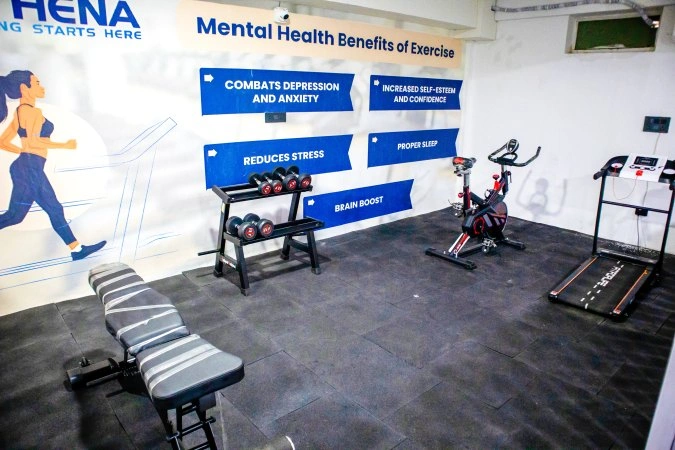
Take a Look Inside Our Noida Facility







Conditions We Treat















.png)






WHAT OUR PATIENTS SAY
Frequently Asked Questions
Substance use frequently begins as a way to numb flashbacks, hypervigilance, or emotional numbing linked to trauma. It can feel like relief at first, but it tends to worsen PTSD symptoms over time, so the two conditions end up reinforcing each other.
This is assessed carefully during intake, since certain combinations and interactions require specific attention. Medication choice and monitoring are adjusted based on that history.
When withdrawal management is medically necessary, it happens first, under close supervision, with trauma symptoms tracked throughout. PTSD treatment then continues alongside ongoing addiction care rather than as a separate, later phase.
No, Many cases are managed through outpatient care or our Day Care Programme. More severe situations, particularly where there is active suicidal risk, may need closer supervision for a period.
Yes, Sustained, integrated care combining medication management, trauma-focused therapy, and family involvement produces meaningfully better long-term outcomes than treating either condition in isolation.
Neither is treated first. Both need to be addressed at the same time, since focusing on one while ignoring the other consistently leads to relapse in whichever condition was left untreated.
Look at why it is happening. If substance use is being relied on specifically to numb flashbacks, avoid reminders, or manage hyperarousal rather than for enjoyment, that points to a real connection, and a full assessment can confirm it.
More than most expect. Family sessions help loved ones understand how trauma responses and substance use have been reinforcing each other, which changes how they respond and support recovery from that point on.
It depends on severity and history, and ongoing follow-up matters more than any fixed timeline. This is not a programme with a set end date.
Trauma history, current PTSD symptoms, substance use patterns, and specifically how the two have been interacting, mapped out together to shape one treatment plan from day one.
How to reach Athena - Noida
Athena Behavioral Health, Noida
opposite Vaibhav Heritage, near Ek murti chowk, Sector 16B, Roza Yakubpur, Greater Noida, Uttar Pradesh 201318
Landmark: Near Ek murti chowk, Sector 16 B,
- Sector 18, 62, 63, 71
- Greater Noida
- Noida Extension
- Ghaziabad border areas
Contact us: +919289086193
Speak to Our Care Team - 24×7 Confidential Support
Confidential help is just a call or chat away. Our team is ready to listen - without judgment, without pressure.
